|
|
|
| Heterogeneous hierarchical task offloading and resource optimization for Smart Internet of Vehicles |
Xianzhi LAI( ),Fan YANG,Jie HUANG*(),Chengbo YU,Xingxing LI ),Fan YANG,Jie HUANG*(),Chengbo YU,Xingxing LI |
| School of Electrical and Electronic Engineering, Chongqing University of Technology, Chongqing 400054, China |
|
|
|
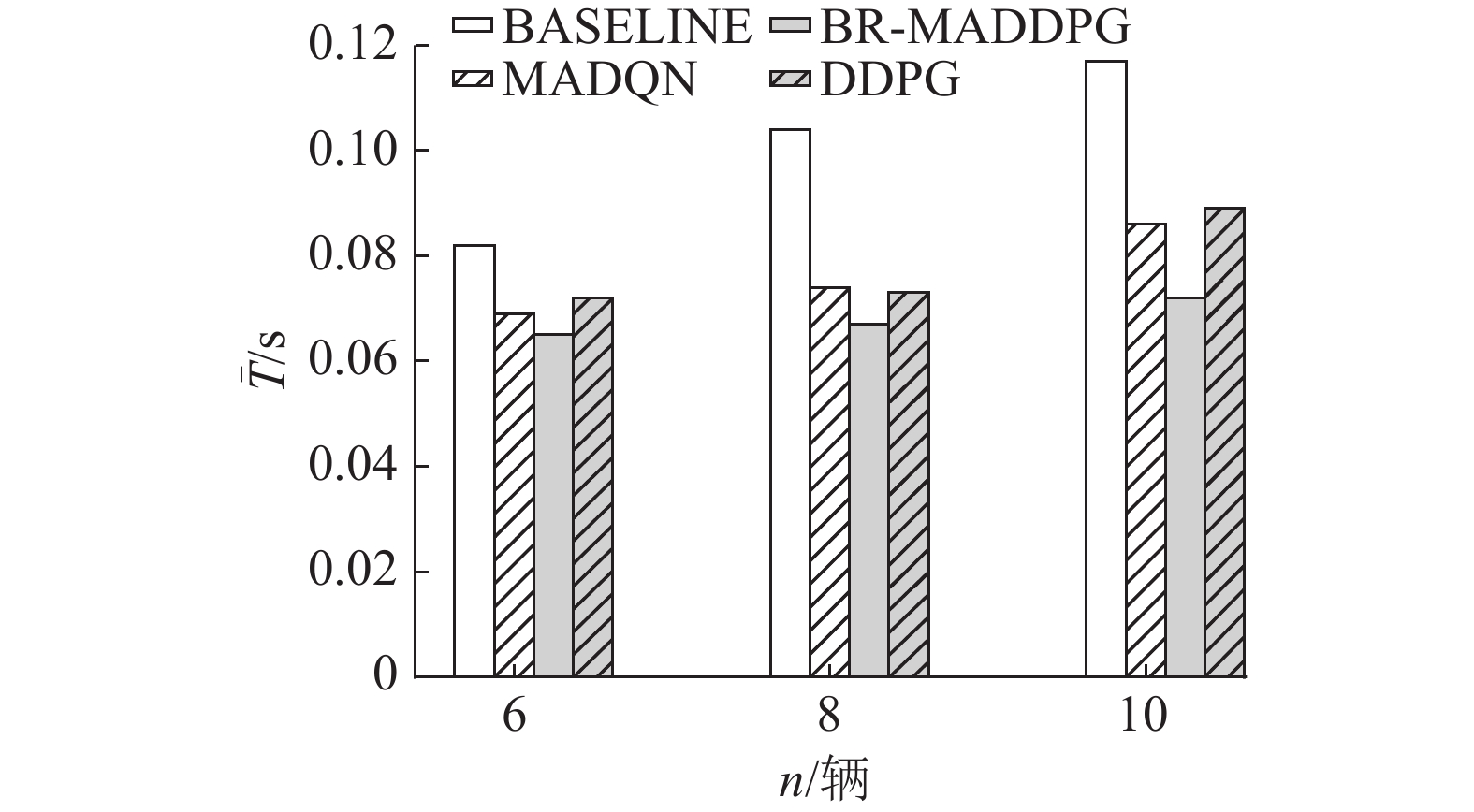
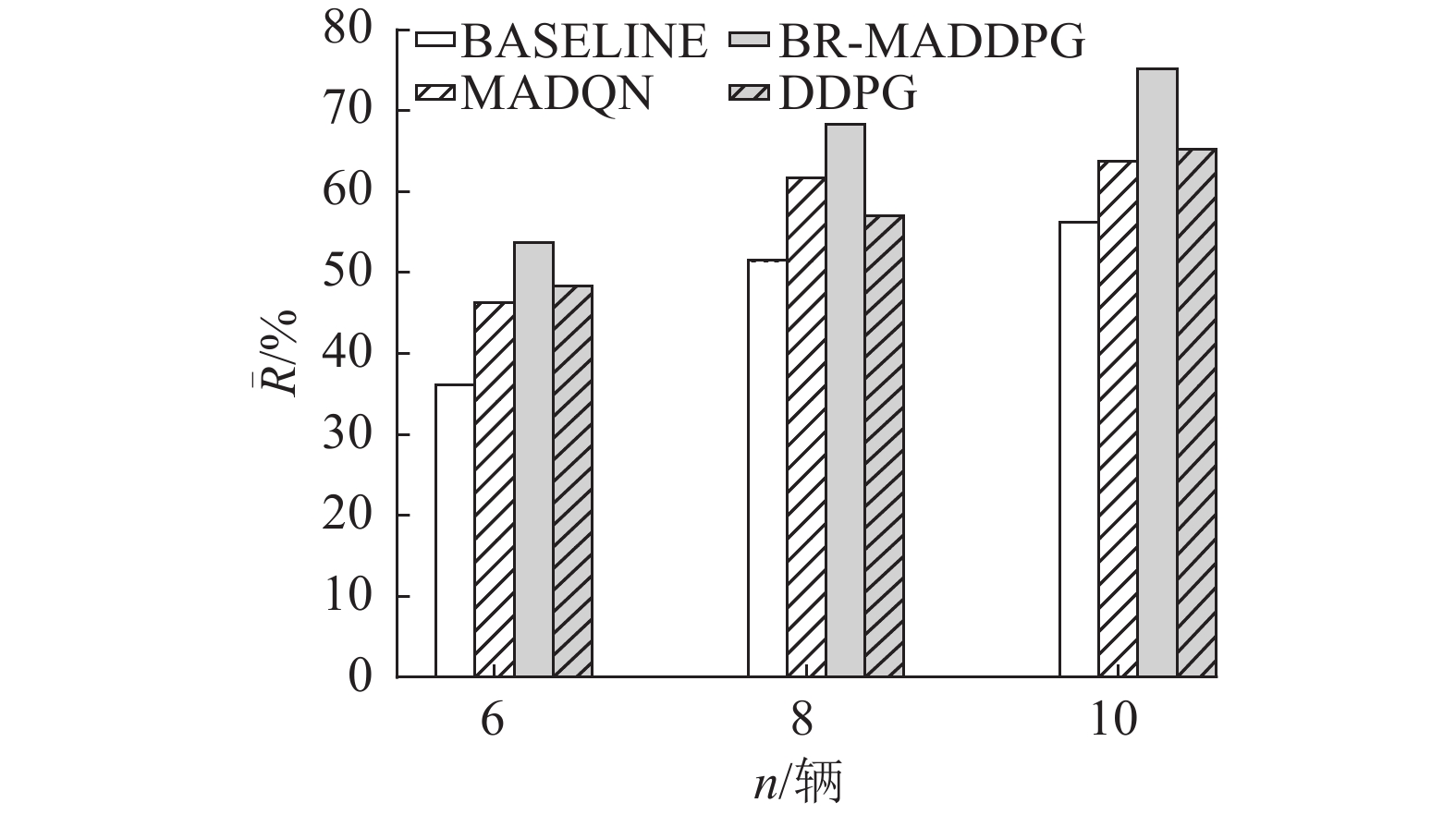
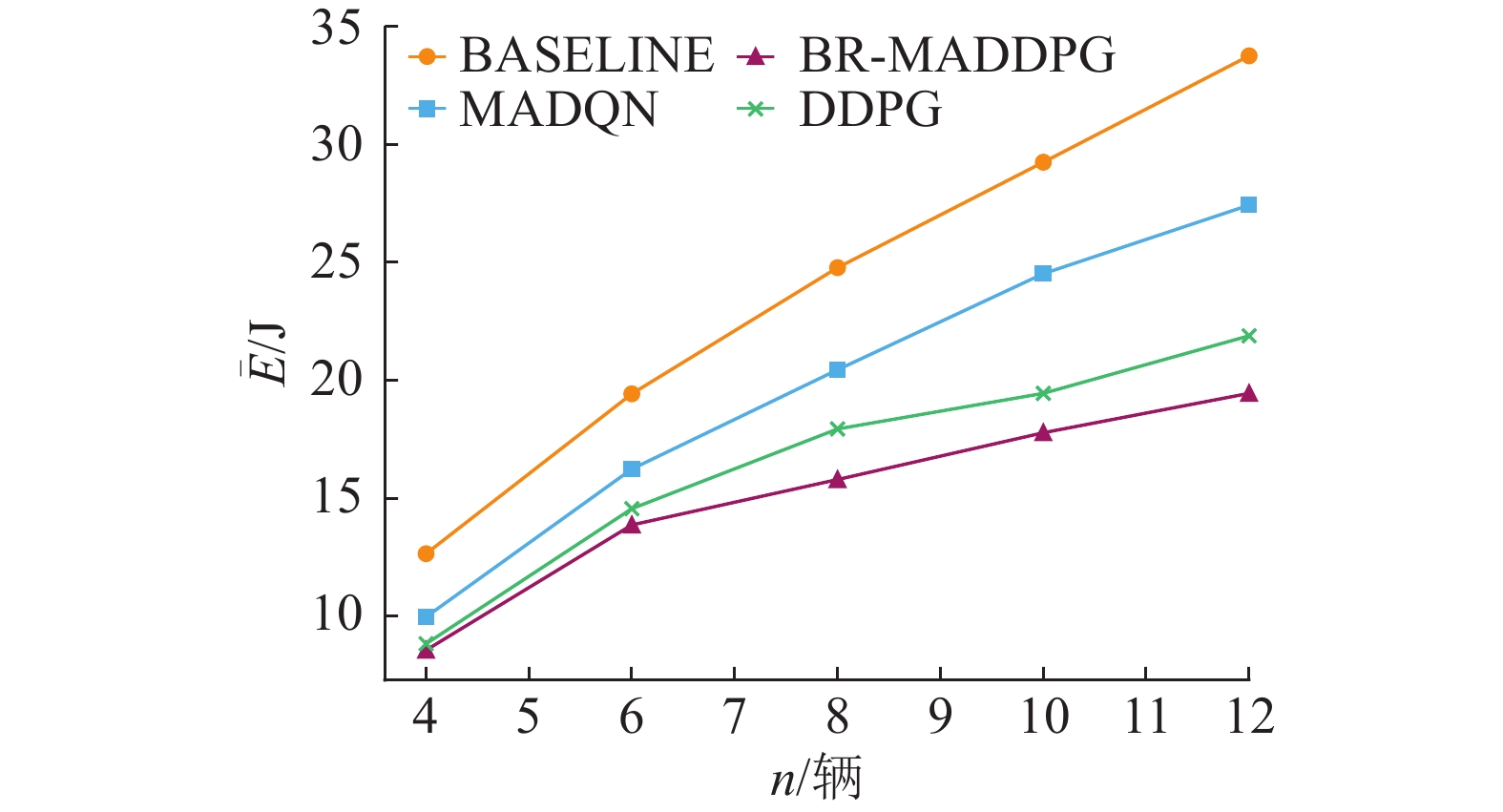
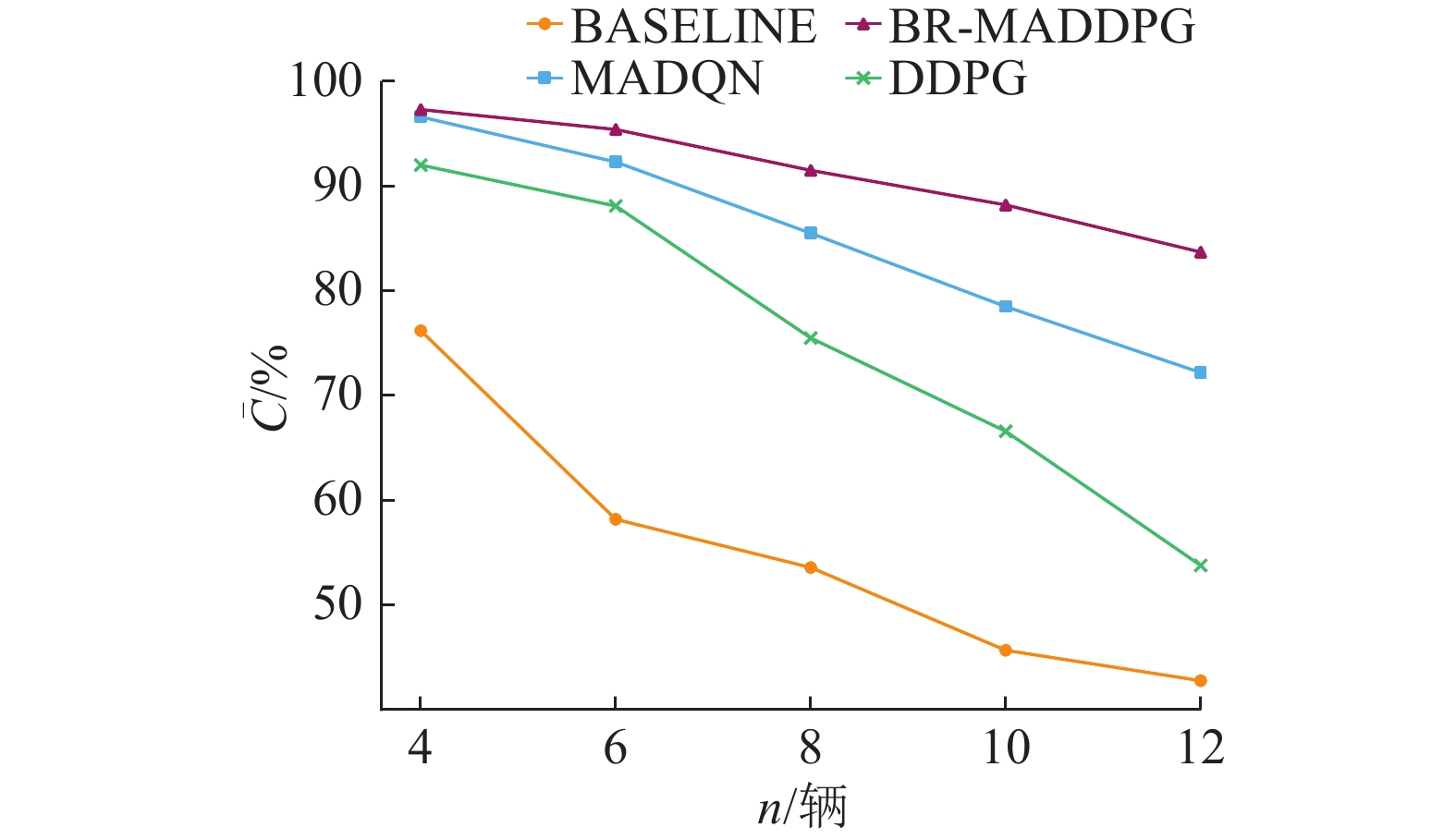
Abstract Research was conducted on task heterogeneity and hierarchical dependencies, in order to enhance the real-time performance of multi-task processing, improve resource scheduling efficiency, and control energy consumption in smart vehicular networks. An efficient task offloading and resource allocation algorithm based on deep deterministic policy gradients was proposed. A hypergraph structure was adopted to extract task dependency features, through which complex inter-task relationships were characterized. A queueing mechanism integrating task priority and latency constraints was introduced, and a centralized training with decentralized execution architecture was employed to improve policy stability, enabling real-time offloading decisions and resource allocation. A cooperative optimization model was further constructed based on a multi-agent deep deterministic policy gradient framework, where edge computing load, wireless network conditions, and task deadlines were jointly incorporated into the design of the state space and reward function. Simulation results showed that the proposed algorithm can detect node computing power bottlenecks in real time based on network changes and generate scheduling strategies that meet the requirements of low latency, high reliability, and low energy consumption. Compared with existing algorithms, the proposed method reduced task scheduling latency by 18.17%, increased resource utilization by 13.21%, and lowered average energy consumption by 21.73% on average. These results demonstrate that the method exhibits superior performance in multi-task scheduling and resource optimization.
|
|
Received: 09 August 2025
Published: 28 July 2026
|
|
|
| Fund: 国家自然科学基金资助项目(62301094);重庆市技术创新与应用发展专项重大项目(CSTB2024TIAD-STX0034);重庆市教育委员会科技研究计划资助项目(KJQN202201157,KJQN202301135);重庆理工大学科研创新团队培育计划资助项目(2023TDZ003). |
|
Corresponding Authors:
Jie HUANG
E-mail: 1207075676@qq.com;huangjie_cq@cqut.edu.cn
|
面向智能车联网的异构分层任务卸载与资源优化
为了提升智能车联网中多任务处理的实时性、资源调度效率和能耗控制水平,针对任务的异构特性与分层依赖关系开展研究,提出基于深度确定性策略梯度的高效任务卸载与资源分配算法. 采用超图结构提取任务依赖特征,以刻画任务间复杂关联关系. 引入融合优先级及时延约束的排队机制,并采用集中训练与分布执行架构,提高策略稳定性,实现卸载决策与资源分配的实时输出. 利用多智能体深度确定性策略梯度框架构,结合边缘节点算力负载、无线网络状态与任务截止期限设计状态空间与奖励函数,以实现协同优化. 仿真结果表明,所提算法能够根据网络变化实时感知节点算力瓶颈,生成调度策略满足低延迟、高可靠及低能耗要求. 与现有算法相比,所提算法的任务调度完成时延平均降低18.17%,资源利用效率平均提升13.21%,平均能耗降低 21.73%. 实验结果证明了所提方法在多任务调度与资源优化方面具有优越性能.
关键词:
车联网,
资源分配,
边缘计算,
任务卸载,
超图
|
|
| [1] |
QUAN H, ZHANG Q, ZHAO J Federated learning assisted intelligent IoV mobile edge computing[J]. IEEE Transactions on Green Communications and Networking, 2025, 9 (1): 228- 241
doi: 10.1109/TGCN.2024.3421357
|
|
|
| [2] |
冯姣, 白若冰, 李鹏, 等 车联网异构业务共存的任务卸载和计算资源分配[J]. 电讯技术, 2025, 65 (1): 9- 17
FENG Jiao, BAI Ruobing, LI Peng, et al Task offloading and computation resource allocation for heterogeneous services in Internet of vehicles[J]. Telecommunication Engineering, 2025, 65 (1): 9- 17
|
|
|
| [3] |
吴微, 徐涴砯 IRS-D2D混合通信车联网场景下的资源优化策略[J]. 计算机应用研究, 2025, 42 (2): 560- 565
WU Wei, XU Wanping Resource optimization strategies for IRS-D2D hybrid communication in Internet of Vehicles scenarios[J]. Application Research of Computers, 2025, 42 (2): 560- 565
|
|
|
| [4] |
吴一川 基于A3C的车联网任务卸载和资源分配算法[J]. 计算机与现代化, 2025, (4): 56- 62
WU Yichuan A3C based task offloading and resource allocation algorithm for Internet of vehicles[J]. Computer and Modernization, 2025, (4): 56- 62
|
|
|
| [5] |
TIAN S, XIANG S, ZHOU Z, et al Task offloading and resource allocation based on reinforcement learning and load balancing in vehicular networking[J]. IEEE Transactions on Consumer Electronics, 2025, 71 (1): 2217- 2230
doi: 10.1109/TCE.2025.3542133
|
|
|
| [6] |
HUANG J, WAN J, LV B, et al Joint computation offloading and resource allocation for edge-cloud collaboration in Internet of vehicles via deep reinforcement learning[J]. IEEE Systems Journal, 2023, 17 (2): 2500- 2511
doi: 10.1109/JSYST.2023.3249217
|
|
|
| [7] |
ERNEST T Z H, MADHUKUMAR A S Computation offloading in MEC-enabled IoV networks: average energy efficiency analysis and learning-based maximization[J]. IEEE Transactions on Mobile Computing, 2024, 23 (5): 6074- 6087
doi: 10.1109/TMC.2023.3315275
|
|
|
| [8] |
LIU L, CHEN Z Joint optimization of multiuser computation offloading and wireless-caching resource allocation with linearly related requests in vehicular edge computing system[J]. IEEE Internet of Things Journal, 2024, 11 (1): 1534- 1547
doi: 10.1109/JIOT.2023.3289994
|
|
|
| [9] |
WANG X, WANG S, GAO X, et al AMTOS: an ADMM-based multilayer computation offloading and resource allocation optimization scheme in IoV-MEC system[J]. IEEE Internet of Things Journal, 2024, 11 (19): 30953- 30964
doi: 10.1109/JIOT.2024.3416171
|
|
|
| [10] |
LIAO Z, XU S, HUANG J, et al Task migration and resource allocation scheme in IoV with roadside unit[J]. IEEE Transactions on Network and Service Management, 2023, 20 (4): 4528- 4541
doi: 10.1109/TNSM.2023.3262878
|
|
|
| [11] |
YANG Y, YU H, ZHAO Y, et al A dynamic-pricing-based offloading and resource allocation scheme with data security for vehicle platoon[J]. IEEE Internet of Things Journal, 2025, 12 (6): 7149- 7163
doi: 10.1109/JIOT.2024.3492694
|
|
|
| [12] |
DAI C, BAO S, CHEN S, et al Precision-adaptive task offloading and resource allocation for efficient positioning and sensing in near-field IoV systems[J]. IEEE Internet of Things Journal, 2025, 12 (13): 22635- 22646
doi: 10.1109/JIOT.2025.3557431
|
|
|
| [13] |
FAN W, LIU J, HUA M, et al Joint task offloading and resource allocation for multi-access edge computing assisted by parked and moving vehicles[J]. IEEE Transactions on Vehicular Technology, 2022, 71 (5): 5314- 5330
doi: 10.1109/TVT.2022.3149937
|
|
|
| [14] |
HE Y, HUANG F, WANG D, et al Performance analysis and optimization design of AAV-assisted vehicle platooning in NOMA-enhanced Internet of vehicles[J]. IEEE Transactions on Intelligent Transportation Systems, 2025, 26 (6): 8810- 8819
doi: 10.1109/TITS.2025.3542402
|
|
|
| [15] |
YIN L, LUO J, QIU C, et al Joint task offloading and resources allocation for hybrid vehicle edge computing systems[J]. IEEE Transactions on Intelligent Transportation Systems, 2024, 25 (8): 10355- 10368
doi: 10.1109/TITS.2024.3351635
|
|
|
| [16] |
LIU X, LIU J, LI W Truthful mechanism for resource allocation and pricing in vehicle-assisted mobile edge computing[J]. IEEE Transactions on Vehicular Technology, 2025, 74 (5): 8171- 8186
doi: 10.1109/TVT.2025.3526935
|
|
|
| [17] |
QIN W, LI Y, YAO H, et al Two-layer computing resource management for blockchain-enabled Internet of vehicles[J]. IEEE Transactions on Vehicular Technology, 2024, 73 (9): 13724- 13737
doi: 10.1109/TVT.2024.3390690
|
|
|
| [18] |
YAN H, LI H, XU X, et al UAV-enhanced service caching for IoT systems in extreme environments[J]. IEEE Internet of Things Journal, 2024, 11 (16): 26741- 26750
doi: 10.1109/JIOT.2023.3288200
|
|
|
| [19] |
CHEN Z, HUANG Z, ZHANG J, et al Resource allocation and collaborative offloading in multi-UAV-assisted IoV with federated deep reinforcement learning[J]. IEEE Internet of Things Journal, 2025, 12 (5): 4629- 4640
doi: 10.1109/JIOT.2024.3516838
|
|
|
| [20] |
ZHAO J, QUAN H, XIA M, et al Adaptive resource allocation for mobile edge computing in Internet of vehicles: a deep reinforcement learning approach[J]. IEEE Transactions on Vehicular Technology, 2024, 73 (4): 5834- 5848
doi: 10.1109/TVT.2023.3335663
|
|
|
| [21] |
王辛果, 王昶 一种采用联邦深度强化学习的车联网资源分配方法[J]. 电讯技术, 2024, 64 (7): 1065- 1071
WANG Xinguo, WANG Chang A resource allocation method using federated deep reinforcement learning in vehicular networks[J]. Telecommunication Engineering, 2024, 64 (7): 1065- 1071
|
|
|
| [22] |
CHEN Z, HUANG S, MIN G, et al Mobility-aware seamless service migration and resource allocation in multi-edge IoV systems[J]. IEEE Transactions on Mobile Computing, 2025, 24 (7): 6315- 6332
doi: 10.1109/TMC.2025.3540407
|
|
|
| [23] |
WANG D, SONG B, LIN P, et al Resource management for edge intelligence (EI)-assisted IoV using quantum-inspired reinforcement learning[J]. IEEE Internet of Things Journal, 2022, 9 (14): 12588- 12600
doi: 10.1109/JIOT.2021.3137984
|
|
|
| [24] |
ZHAN Z, WANG X, LIU Y, et al Integration and optimization strategy of blockchain-enabled edge computing system for Internet of vehicles[J]. Journal of Cyber Security and Mobility, 2025, 14 (2): 391- 432
doi: 10.13052/jcsm2245-1439.1426
|
|
|
| [25] |
HOU P, HUANG Y, ZHU H, et al Intelligent decision-based edge server sleep for green computing in MEC-enabled IoV networks[J]. IEEE Transactions on Intelligent Vehicles, 2024, 9 (2): 3687- 3703
doi: 10.1109/TIV.2023.3347833
|
|
|
| [26] |
YAN M, XIONG R, WANG Y, et al Edge computing task offloading optimization for a UAV-assisted Internet of vehicles via deep reinforcement learning[J]. IEEE Transactions on Vehicular Technology, 2024, 73 (4): 5647- 5658
doi: 10.1109/TVT.2023.3331363
|
|
|
| [27] |
WU D, WANG Z, PAN H, et al In-network computing empowered mobile edge offloading architecture for Internet of Things[J]. IEEE Transactions on Services Computing, 2024, 17 (6): 3817- 3829
doi: 10.1109/TSC.2024.3463475
|
|
|
| [28] |
ANUSHA V S, NITHYA G K, RAO S N. A comprehensive survey of electromagnetic propagation models [C]// Proceedings of the International Conference on Communication and Signal Processing. Chennai: IEEE, 2018: 1457–1462.
|
|
|
| [29] |
GUO Y, XIE W, WANG Q, et al Betweenness approximation for edge computing with hypergraph neural networks[J]. Tsinghua Science and Technology, 2025, 30 (1): 331- 344
doi: 10.26599/TST.2023.9010106
|
|
|
| [30] |
ZHANG L, ZHANG H, YU L, et al. Virtual resource allocation for mobile edge computing: a hypergraph matching approach [C]// Proceedings of the IEEE Global Communications Conference. Waikoloa: IEEE, 2020: 1–6.
|
|
|
|
Viewed |
|
|
|
Full text
|
|
|
|
|
Abstract
|
|
|
|
|
Cited |
|
|
|
|
| |
Shared |
|
|
|
|
| |
Discussed |
|
|
|
|