Please wait a minute...
工程设计学报  2024, Vol. 31 Issue (4): 438-445    DOI: 10.3785/j.issn.1006-754X.2024.04.121
机器人与机构设计     
基于张拉整体结构的可变形移动机器人的设计与实验研究
张淏1(),杨琪1,连宾宾1(),孙涛1,2
1.天津大学 机械工程学院,天津 300000
2.天津大学 浙江国际创新设计与智造研究院,浙江 绍兴 311800
Design and experimental research of deformable mobile robot based on tensegrity structure
Hao ZHANG1(),Qi YANG1,Binbin LIAN1(),Tao SUN1,2
1.School of Mechanical Engineering, Tianjin University, Tianjin 300000, China
2.International Institute for Innovative Design and Manufacturing of Tianjin University in Zhejiang, Shaoxing 311800, China
 全文: PDF(3938 KB)   HTML
摘要:

移动机器人可以代替人进入火灾、地震现场等高危环境进行地形探索及伤员搜寻等工作,然而大多数机器人难以同时适应障碍、直角墙壁、墙面过渡等多种复杂地形,且其控制系统相对复杂,需要外部能源输入。为此,设计了一款具有多种功能、控制相对简单且无系留的可变形移动机器人。首先,将二杆四索张拉整体结构作为基本单元,设计了可实现弯曲变形的张拉整体结构躯干;其次,基于吸附力及结构参数的分析,设计了负压吸附装置,并将它与可变形躯干结合,形成了机器人整体结构;接着,对机器人进行运动学分析,获得了机器人位姿与电机转角的映射关系,并据此规划了机器人墙面过渡、从墙面穿越狭小空间及翻转上台阶的步态;最后,完成了机器人样机的研制,并针对不同地形开展了机器人运动实验,验证了机器人步态规划的合理性。研究结果为多功能移动机器人的设计与制造提供了一定的参考价值。

关键词: 张拉整体结构负压吸附可变形机器人    
Abstract:

Mobile robots can replace people into dangerous environments such as fire and earthquake sites for terrain exploration and casualty search, but most robots are difficult to adapt to obstacles, right-angle walls, wall transitions and other complex terrain at the same time, and their control systems are relatively complex, requiring external energy input. Therefore, a deformable mobile robot with multiple functions, relatively simple control and no tethering was designed. Firstly, taking the 2-bar 4-cable tensioning integral structure as the basic unit, the body of the tensioning integral structure which could realize bending deformation was designed. Secondly, based on the analysis of adsorption force and structural parameters, the negative pressure adsorption device was designed and combined with the deformable body to form the overall structure of the robot. Then, the kinematic analysis of the robot was carried out, and the mapping relationship between the robot pose and the motor angle was obtained. Based on this, the robot's gaits of wall surface transition, traversing the narrow space from the wall surface and flipping up steps were planned. Finally, the robot prototype was developed, and the robot movement experiments were carried out according to different terrain, and the rationality of the robot gait planning was verified. The research results provide a certain reference value for the design and manufacture of multi-functional mobile robots.

Key words: tensegrity structure    negative pressure adsorption    deformable robot
收稿日期: 2024-03-15 出版日期: 2024-08-26
CLC:  TH 122  
基金资助: 国家自然科学基金资助项目(52275028)
通讯作者: 连宾宾     E-mail: 1056801740@qq.com;lianbinbin@tju.edu.cn
作者简介: 张 淏(1999—),男,硕士生,从事张拉整体结构、机器人设计及应用研究,E-mail: 1056801740@qq.com
服务  
把本文推荐给朋友
加入引用管理器
E-mail Alert
RSS
作者相关文章  
张淏
杨琪
连宾宾
孙涛

引用本文:

张淏,杨琪,连宾宾,孙涛. 基于张拉整体结构的可变形移动机器人的设计与实验研究[J]. 工程设计学报, 2024, 31(4): 438-445.

Hao ZHANG,Qi YANG,Binbin LIAN,Tao SUN. Design and experimental research of deformable mobile robot based on tensegrity structure[J]. Chinese Journal of Engineering Design, 2024, 31(4): 438-445.

链接本文:

https://www.zjujournals.com/gcsjxb/CN/10.3785/j.issn.1006-754X.2024.04.121        https://www.zjujournals.com/gcsjxb/CN/Y2024/V31/I4/438

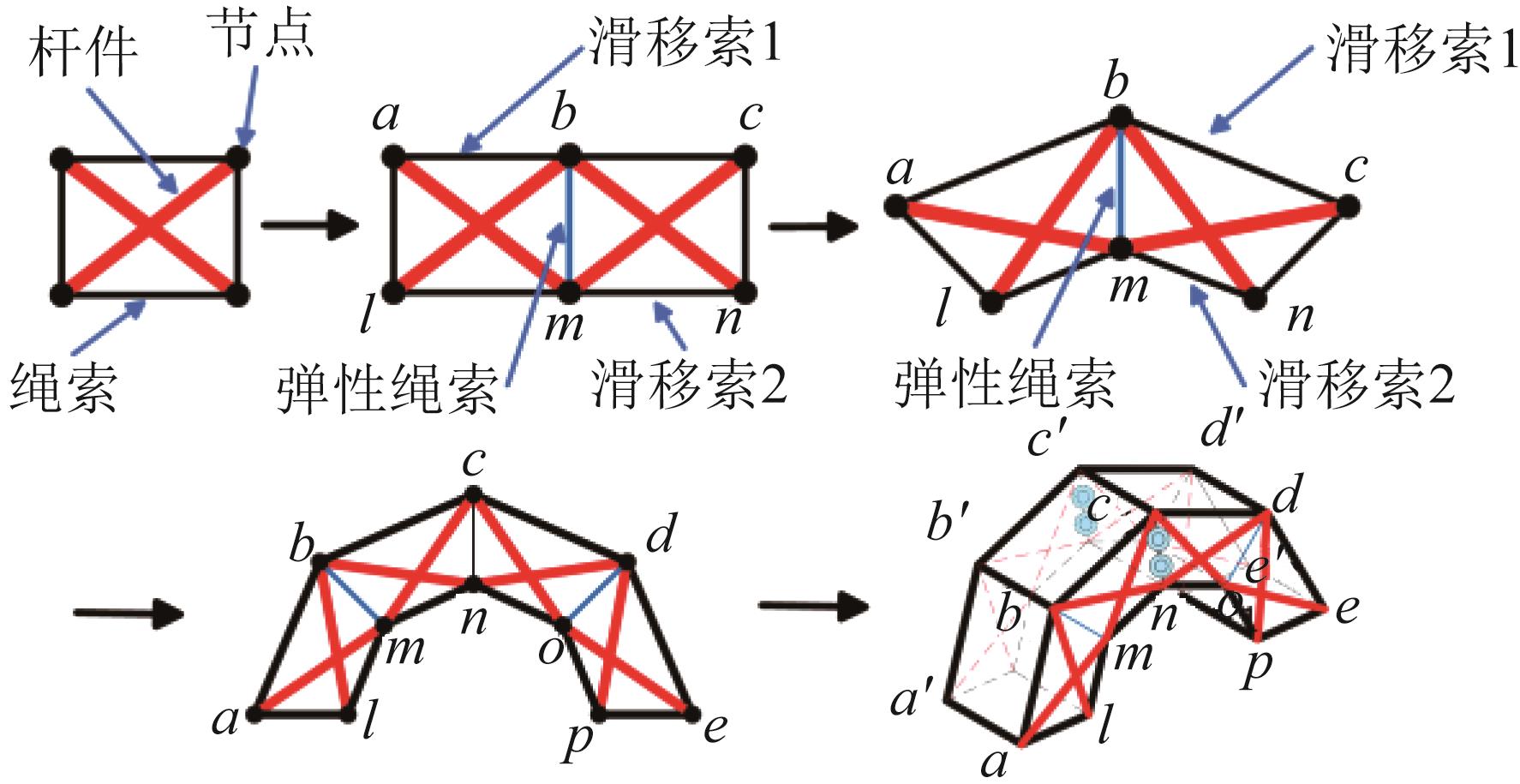
图1  机器人可变形躯干设计示意
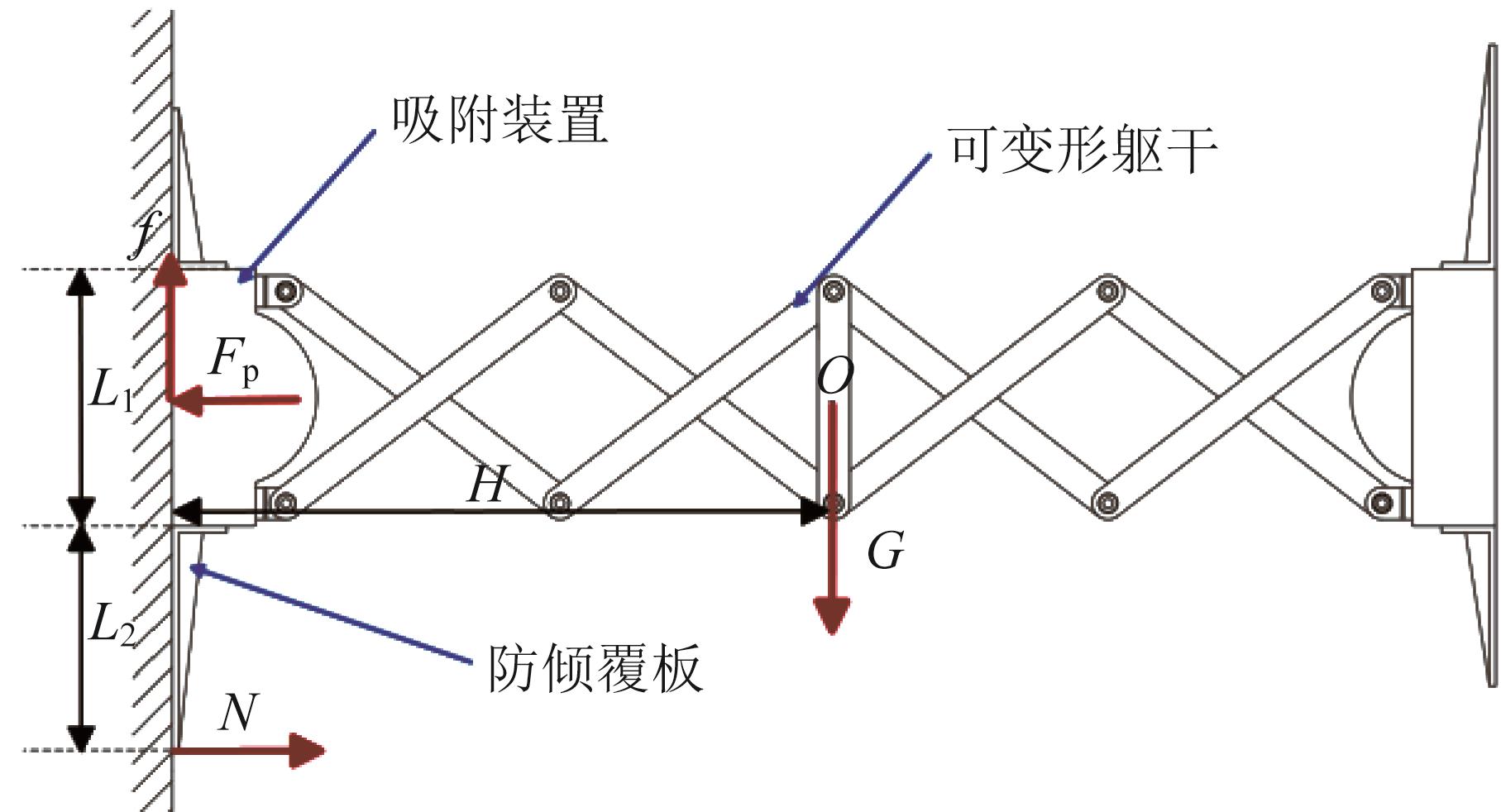
图2  墙面上机器人极限位姿受力分析
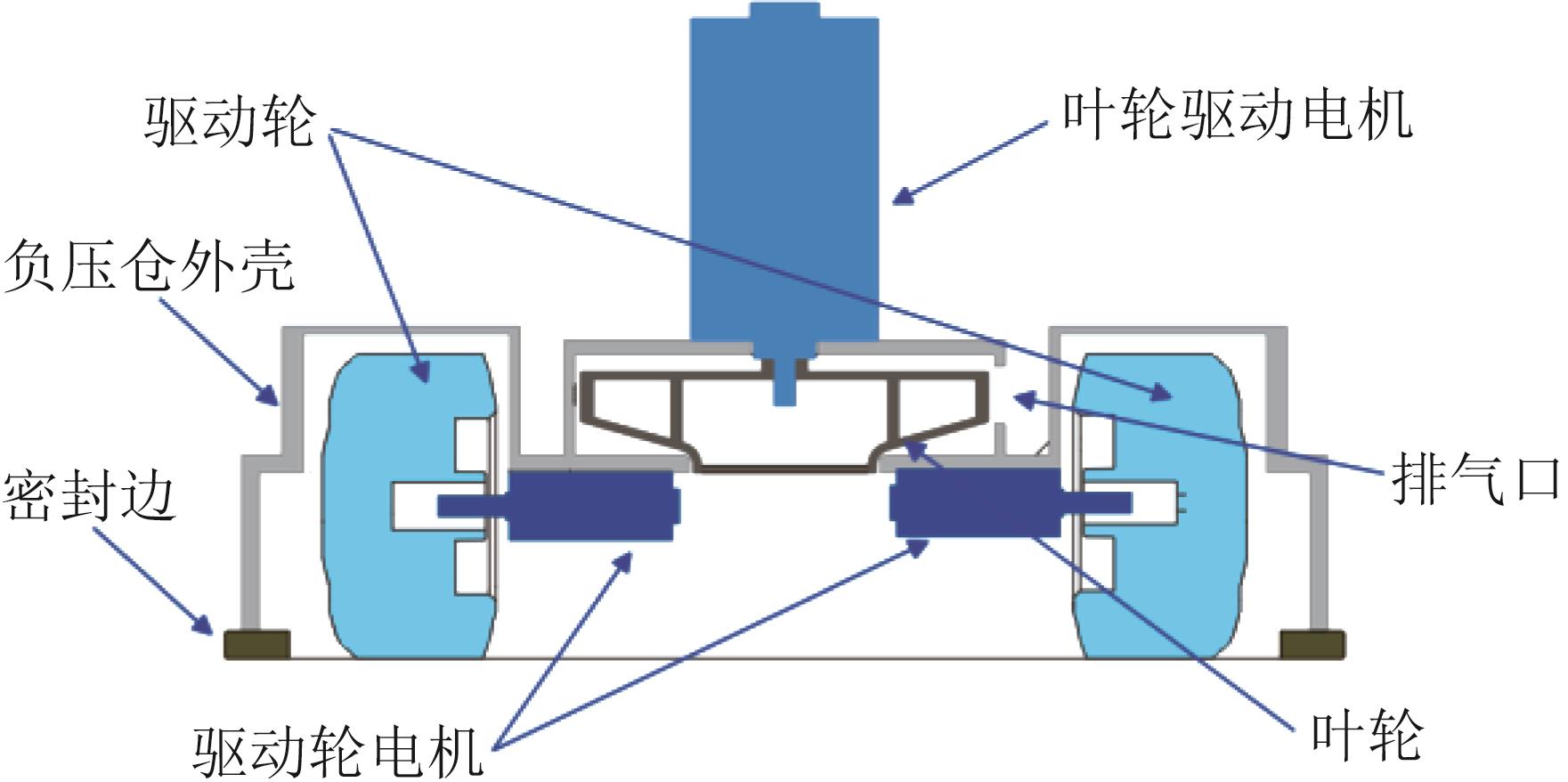
图3  负压吸附装置的结构
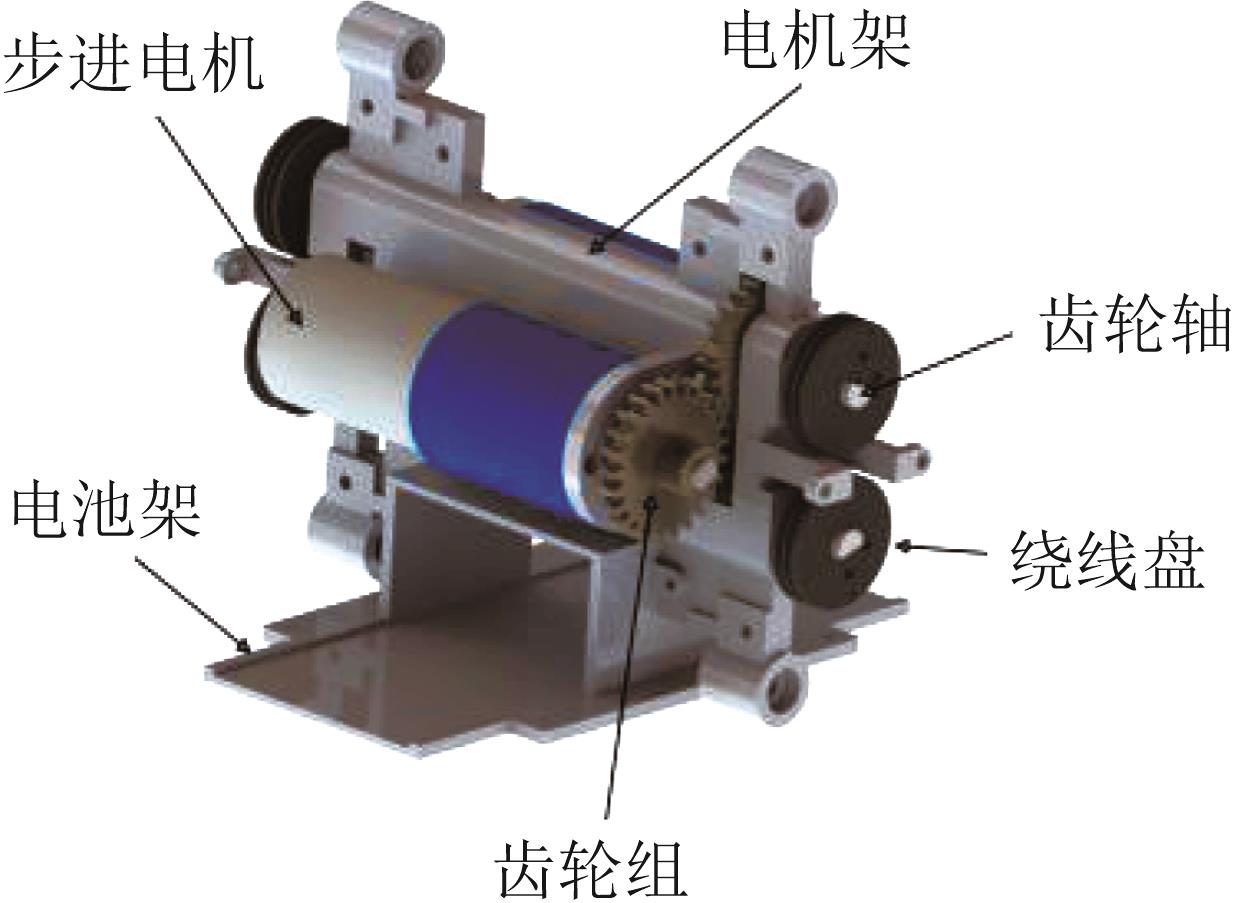
图4  电机组的组成
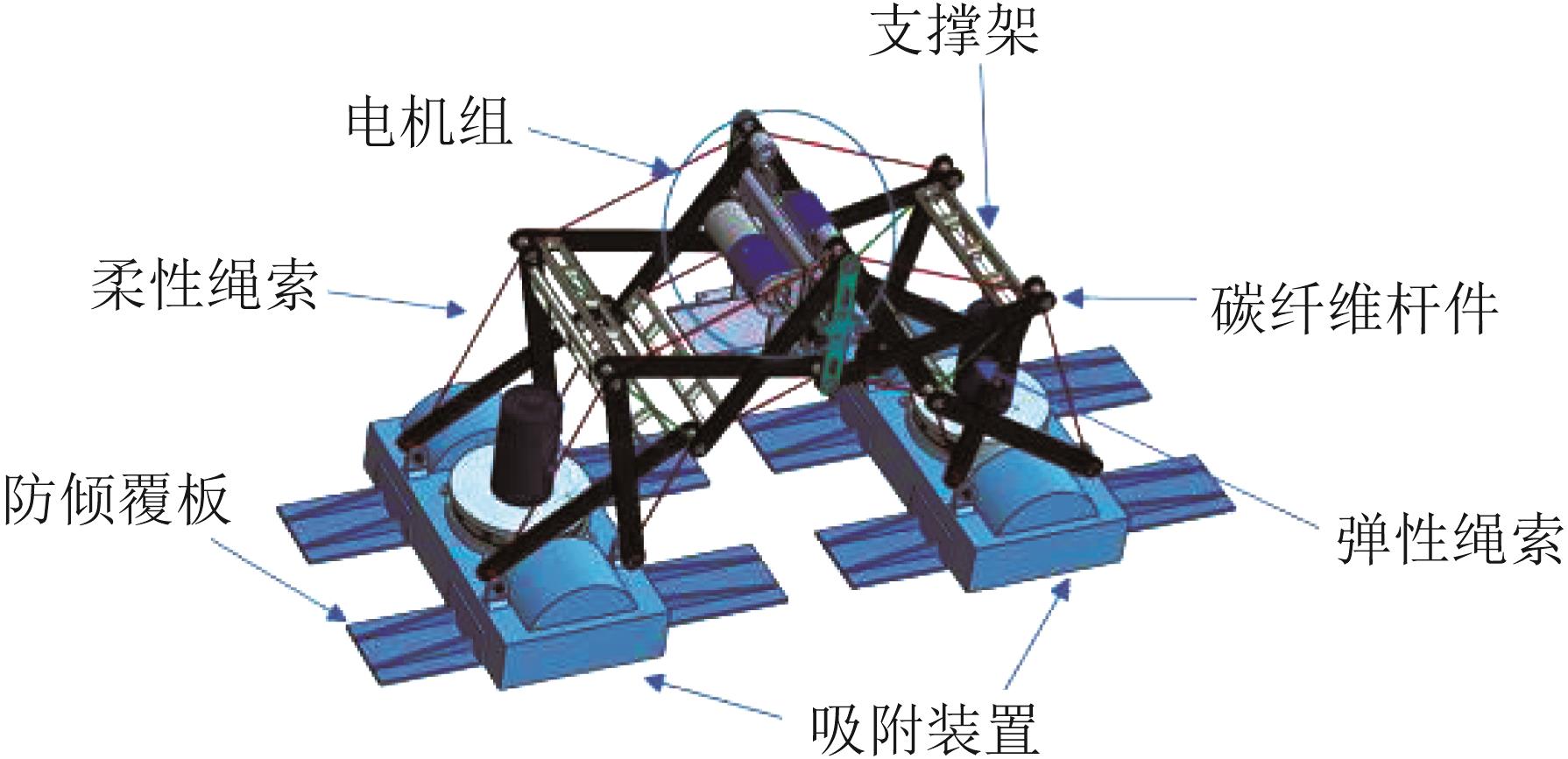
图5  可变形移动机器人整体结构
电机名称电机类型数量/个额定扭矩/(N·m)

额定转速/

(r/min)

鸣志PG2271步进电机20.274 5
朗宇电机直流电机20.09835 000
GA12电机直流电机40.24540
表1  电机型号及参数
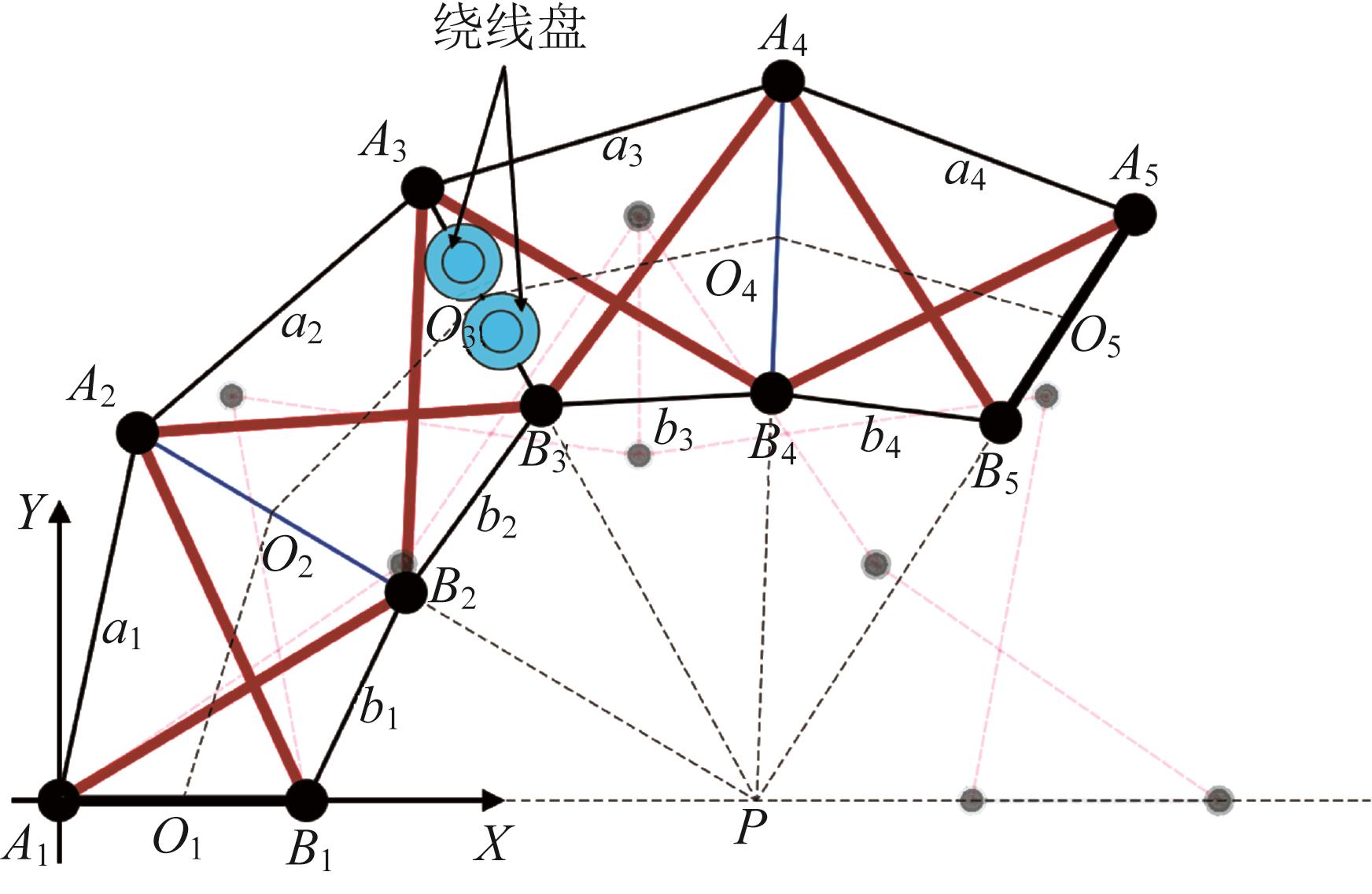
图6  可变形移动机器人简化构型
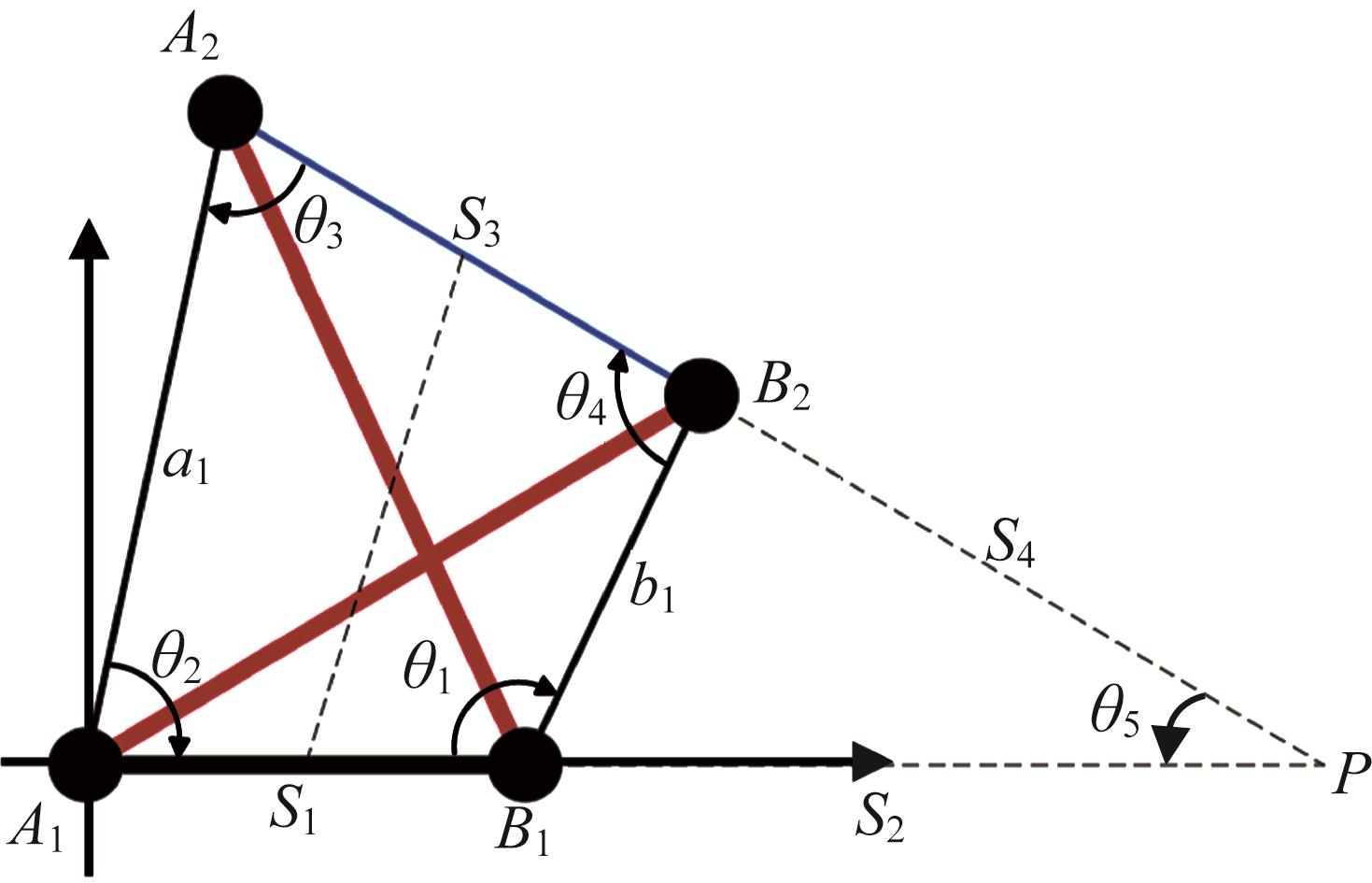
图7  可变形移动机器人简化单元
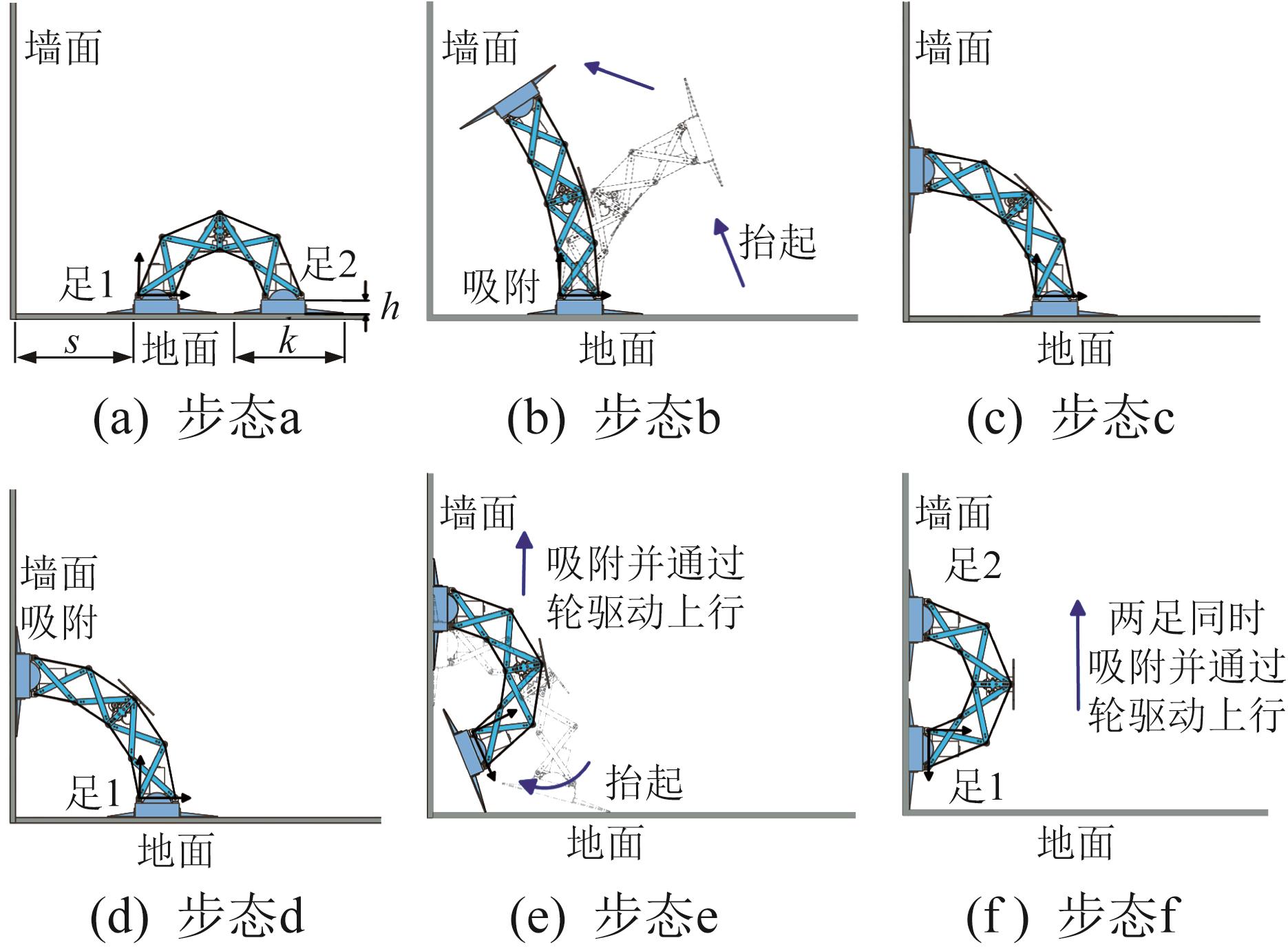
图8  机器人从水平地面攀爬到竖直墙面的步态序列
参数步态a步态d步态f
a1b1的关系a1>b1a1<b1a1<b1
m1101
m2011
n1001
n2011
θ5π/4π/8π/4
表2  攀爬时机器人不同步态所对应的参数
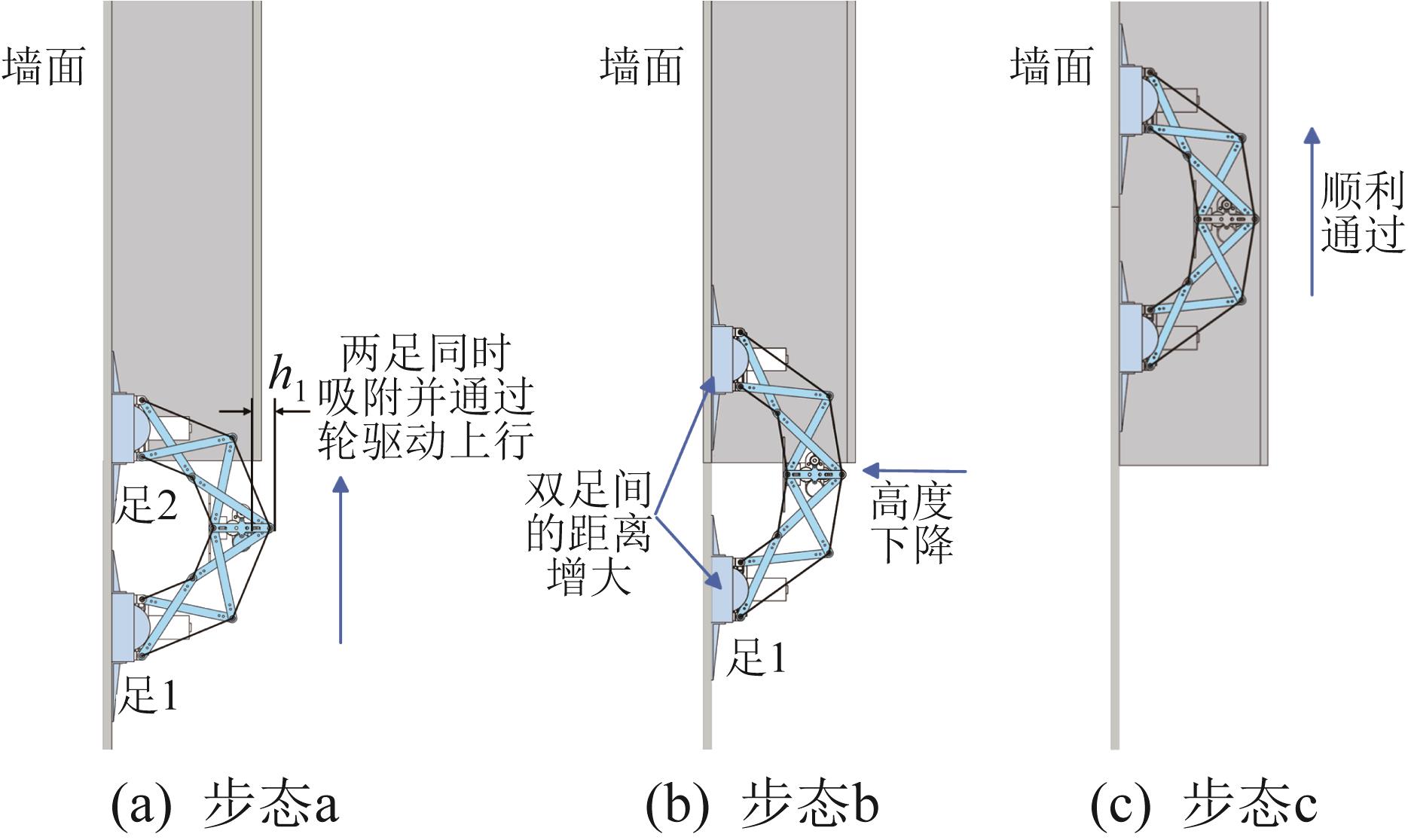
图9  机器人从竖直墙面穿越狭小空间的步态序列
参数步态a步态b步态c
m1111
m2111
n1101
n2111
表3  穿越时机器人不同步态所对应的参数
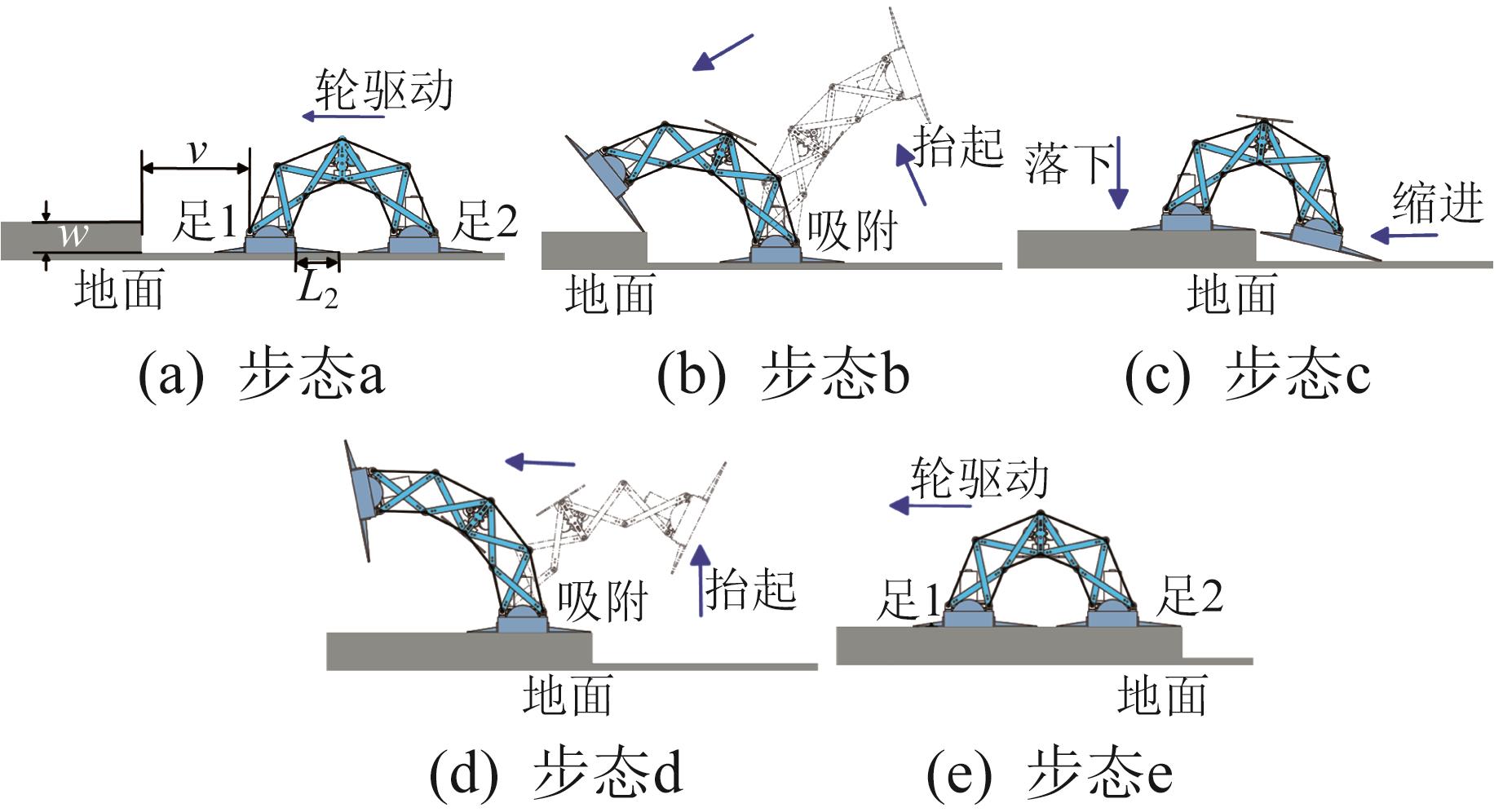
图10  机器人从水平地面翻越上台阶的步态序列
参数步态a步态c步态e
a1b1的关系a1>b1a1<b1a1>b1
m1100
m2010
n1001
n2001
θ5π/4δπ/4
表4  翻越时机器人不同步态所对应的参数
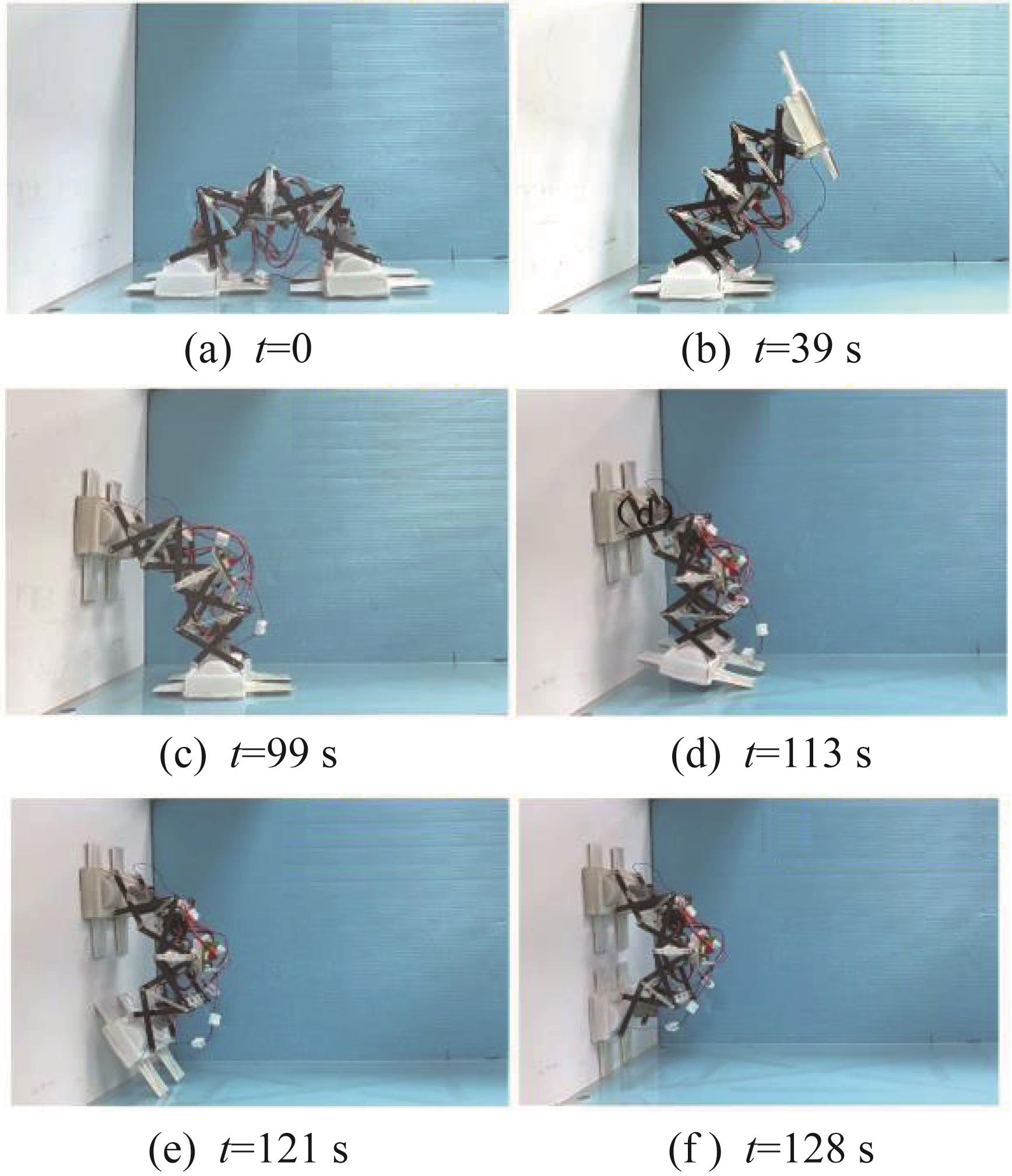
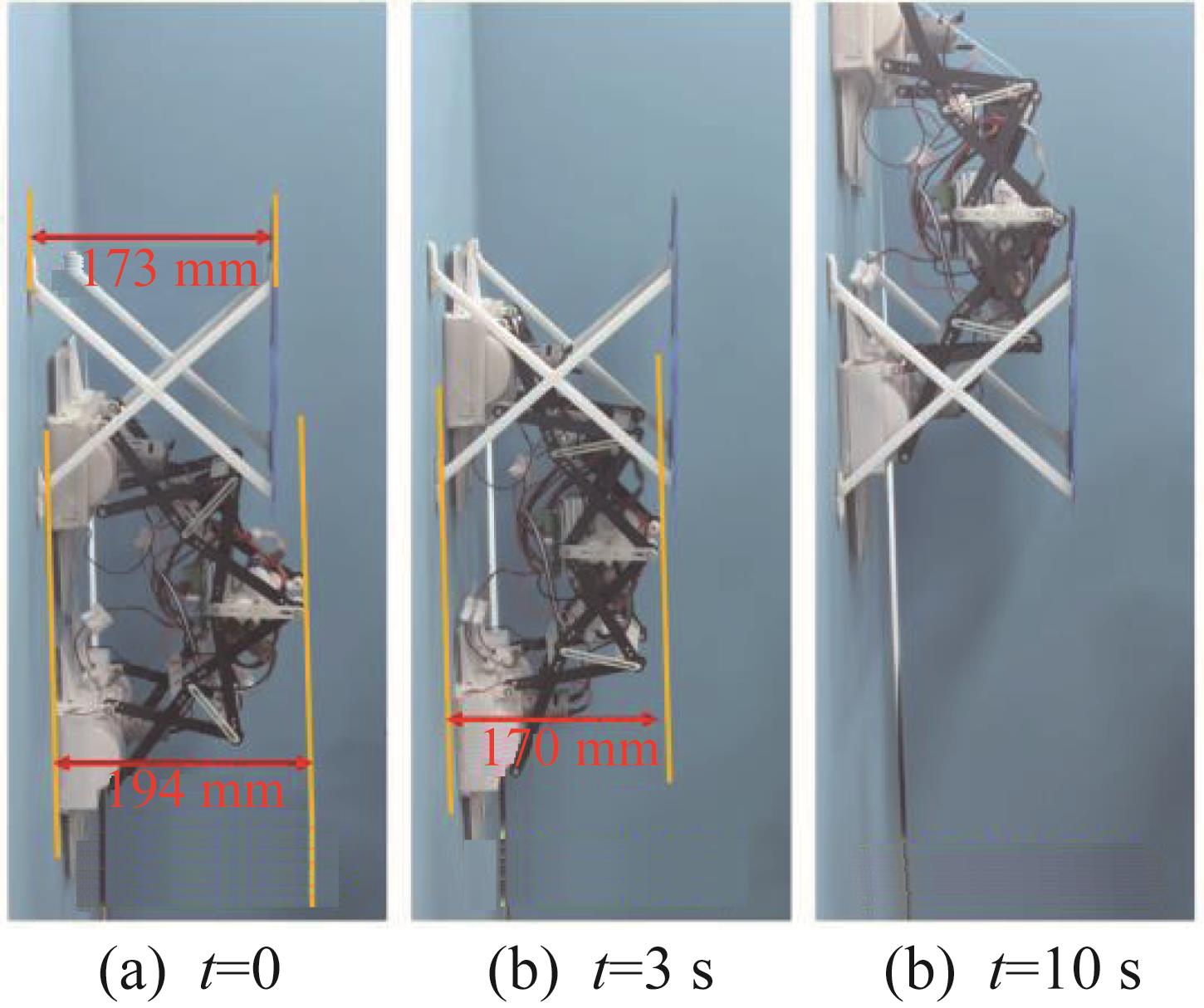
图11  机器人从水平地面攀爬到竖直墙面的实验
图12  机器人从竖直墙面穿越狭小空间的实验
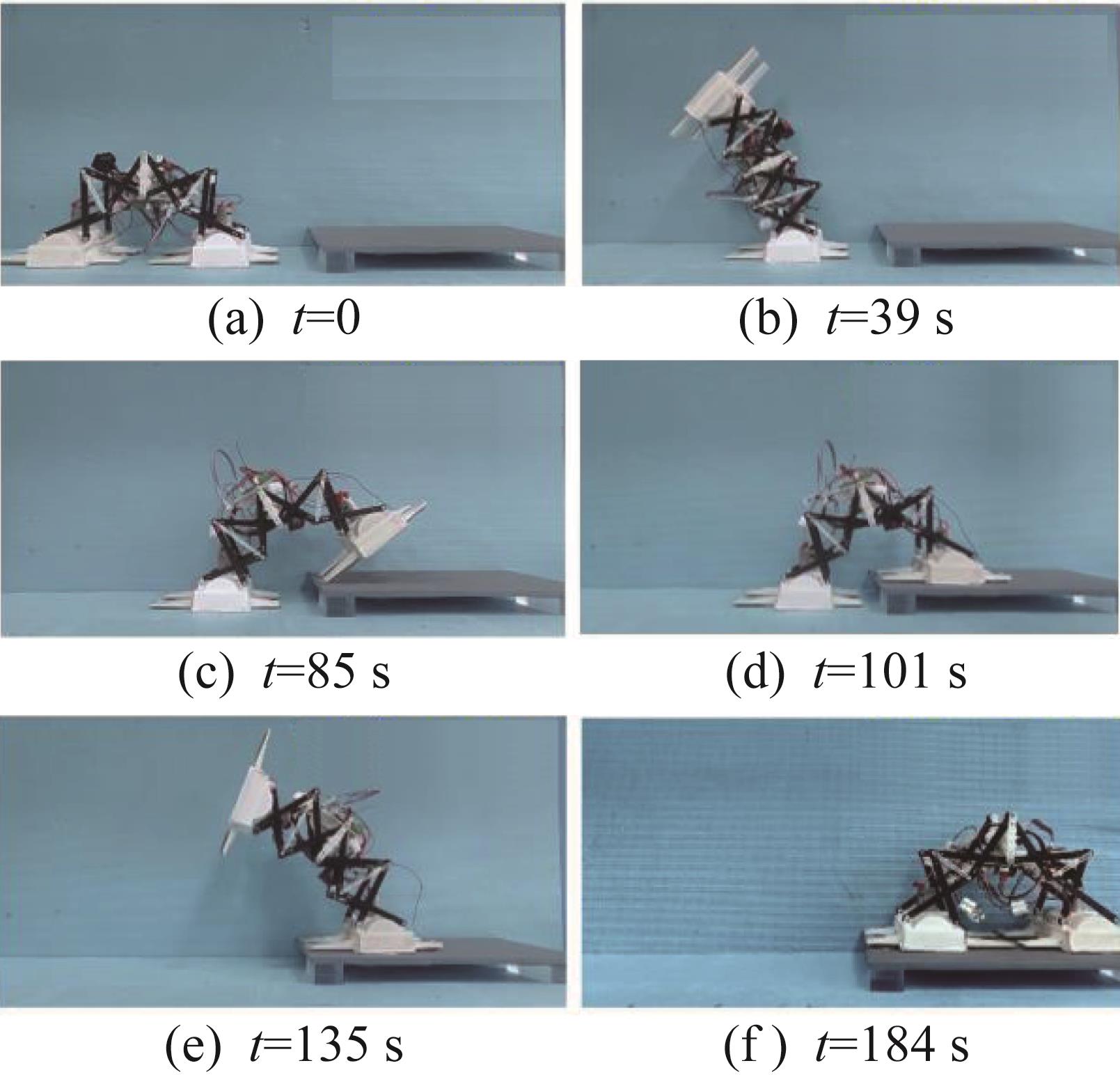
图13  机器人从水平地面翻越上台阶的实验
12 黄龙,张卫华,陈今茂,等. 爬壁机器人的研究现状与发展趋势[J].机械工程与技术,2021,10(3):345-363. doi:10.12677/met.2021.103040
HUANG L, ZHANG W H, CHEN J M, et al. A review and trend of wall-climbing robots[J]. Mechanical Engineering and Technology, 2021, 10(3): 345-363.
doi: 10.12677/met.2021.103040
1 王洋,张小俊,张明路,等.可自适应变曲率立面的分体柔性爬壁机器人设计与分析[J].机械工程学报,2021,57(3):49-58. doi:10.3901/jme.2021.03.049
WANG Y, ZHANG X J, ZHANG M L, et al. Design and analysis of split-flexible wall-climbing robot with adaptive variable curvature facade[J]. Journal of Mechanical Engineering, 2021, 57(3): 49-58.
doi: 10.3901/jme.2021.03.049
2 GUO W, ZHONG M, LI M, et al. Design of a six legged wall-climbing robot[C]//2008 IEEE Workshop on Advanced Robotics and Its Social Impacts, Taipei, Taiwan, China, Oct. 17, 2008.
3 杨春,罗天洪. 一种新型爬壁机器人越障过程的运动及动力学分析[J].机械传动,2019,43(9):87-92,95.doi:10.16578/j.issn.1004.2539.2019.09.014 .
YANG C, LUO T H. Kinematics and dynamics analysis of obstacle negotiation process for a novel climbing robot[J]. Journal of Mechanical Transmission, 2019,43(9):87-92, 95.
doi: 10.16578/j.issn.1004.2539.2019.09.014
4 刘彦伟,王李梦,刘三娃,等. 一种仿尺蠖爬壁机器人设计与分析[J].机械传动,2019,43(8):87-91.doi:10.16578/j.issn.1004.2539.2019.08.016 .
LIU Y W, WANG L M, LIU S W, et al. Design and analysis of an inchworm-inspired wall-climbing robot[J]. Journal of Mechanical Transmission, 2019, 43(8): 87-91.
doi: 10.16578/j.issn.1004.2539.2019.08.016
5 栗晋杰. 灾害现场环境下被动自适应机器人运动学分析[D].天津:河北工业大学,2014.
LI J J. Passive adaptive robot kinematics analysis under the disaster site circumstance[D]. Tianjin: Hebei University of Technology, 2014.
6 肖世贵,章亚男,沈林勇,等. 一种双体负压吸附爬壁机器人的研究[J].工业控制计算机,2018,31(6):85-87. doi:10.3969/j.issn.1001-182X.2018.06.036
XIAO S G, ZHANG Y N, SHEN L Y, et al. Research on a twin-body negative pressure wall-climbing robot[J]. Industrial Control Computer, 2018, 31(6): 85-87.
doi: 10.3969/j.issn.1001-182X.2018.06.036
7 FURUYA H. Concept of deployable tensegrity structures in space application[J]. International Journal of Space Structures, 1992, 7(2): 143-151.
8 SHIBATA M, HIRAI S. Rolling Locomotion of deformable tensegrity structure[EB/OL].[2024-03-07]..
9 CHUNG Y S, LEE J H, JANG J H, et al. Jumping tensegrity robot based on torsionally pre-strained SMA springs[J]. ACS Applied Materials & Interfaces, 2019, 11(43): 40793-40799.
10 BÖHM V, ZIMMERMANN K. Vibration-driven mobile robots based on single actuated tensegrity structures[C]//IEEE International Conference on Robotics and Automation, Karlsruhe, Germany, May 6, 2013.
[1] 沈剑雄,刘迎圆,王乐勤. 基于深度学习的翼型参数化建模方法[J]. 工程设计学报, 2024, 31(3): 292-300.
[2] 蔡锦云,刘忠,王罡,赵庆斌,安宁,杜旭伟,李东良,李源周. 基于响应面法的绞磨机辅助拉尾绳装置优化设计[J]. 工程设计学报, 2024, 31(2): 178-187.
[3] 李新革,廖红玉,周敏,陈萌萌,谢良喜. 抹灰机摆动喷涂机构创新设计与分析[J]. 工程设计学报, 2024, 31(2): 248-253.
[4] 杨开科,罗俊鹏,马文静,耿远超,王德恩,袁强. 高带宽压电片变形镜的动力学仿真与优化方法研究[J]. 工程设计学报, 2024, 31(1): 130-136.
[5] 陈振中,黄冬宇,田娇,李晓科,吴子豪. 基于二阶抛物线近似的结构可靠性分析方法[J]. 工程设计学报, 2024, 31(1): 50-58.
[6] 张雷,方俊伟,苏金,蔡闯,赵云起. 基于FSRce模型的机电产品绿色概念设计方案生成方法[J]. 工程设计学报, 2024, 31(1): 10-19.
[7] 李佳,宋梅利,冯君,汤海斌. 面向激光增材制造的仿生薄壁结构抗冲击研究[J]. 工程设计学报, 2024, 31(1): 67-73.
[8] 田立勇,唐瑞,于宁,陈洪月. 带式输送机更换托辊用皮带举升机构设计与应用[J]. 工程设计学报, 2023, 30(6): 667-677.
[9] 陈明方,黄良恩,张永霞,姚国一. 3-PUU并联机构的运动学分析与验证[J]. 工程设计学报, 2023, 30(6): 763-778.
[10] 白仲航,艾琳璟. 基于功能表面驱动与可拓工具的产品人机工程问题确定方法研究[J]. 工程设计学报, 2023, 30(5): 531-544.
[11] 谢博伟,金莫辉,杨洲,段洁利,屈明宇,李锦辉. 3D打印TPU材料的力学性能及模型参数研究[J]. 工程设计学报, 2023, 30(4): 419-428.
[12] 杜雪林,易文慧,邹家华,周灿,毛立,邓利诗,刘颖. 多关节蛇形机器人的结构设计和运动实现[J]. 工程设计学报, 2023, 30(4): 438-448.
[13] 王金栋,谢宇鸿,陈燚,吴展扬. 基于河狸门齿的锤片式粉碎机锤片仿生设计[J]. 工程设计学报, 2023, 30(4): 476-484.
[14] 官俊,丁医华,葛青涛,赵帅,陆杨,张婕. 基于多材料3D打印技术的RFID天线快速制造[J]. 工程设计学报, 2023, 30(3): 288-296.
[15] 杨展,李其朋,唐威,秦可成,陈岁繁,王铠迪,刘阳,邹俊. 小型陆空变形两栖机器人的设计与分析[J]. 工程设计学报, 2023, 30(3): 325-333.