Please wait a minute...
Journal of ZheJiang University (Engineering Science)  2026, Vol. 60 Issue (8): 1760-1769    DOI: 10.3785/j.issn.1008-973X.2026.08.015
    
Seizure prediction method based on multi-domain feature and GATv2 network
Zhe HAN1,2(),Qingfang MENG1,2,*(),Qiang ZHANG3,Xianglong ZHANG1,2,Yaou ZHAO1,2
1. School of Information Science and Engineering, University of Jinan, Jinan 250022, China
2. Shandong Key Laboratory of Ubiquitous Intelligent Computing, University of Jinan, Jinan 250022, China
3. Jinan Jingheng Electronics Limited Company, Jinan 250014, China
Download: HTML     PDF(1818KB) HTML
Export: BibTeX | EndNote (RIS)      

Abstract  

To reduce seizure-related injury risks for seizure patients and optimize treatment strategies, an seizure prediction method based on multi-domain feature fusion and a graph attention network was proposed. Multi-dimensional features were extracted from the time domain, the frequency domain, and the complex network domain. A novel triple attention mechanism was employed for deep feature fusion, constructing node feature representations. Additionally, by modeling the spatial topological relationships between electrodes, an adjacency matrix was generated. The node feature matrix, together with the generated adjacency matrix, was then fed into a GATv2 model for deep analysis, achieving accurate seizure prediction. Experimental results on the CHB-MIT dataset demonstrate that the proposed method achieves a classification accuracy of 97.58% in seizure prediction tasks.


Key wordsseizure prediction      EEG      complex network      multi-domain feature      graph attention network     
Received: 18 July 2025      Published: 16 July 2026
CLC:  TP 391  
Fund:  山东省自然科学基金资助项目(ZR2024MF124);济南大学学科交叉融合建设项目 2023(XKJC-202308);济南市高校创新团队项目(2019GXRC015).
Corresponding Authors: Qingfang MENG     E-mail: 202321100407@stu.ujn.edu.cn;ise_mengqf@ujn.edu.cn
Cite this article:

Zhe HAN,Qingfang MENG,Qiang ZHANG,Xianglong ZHANG,Yaou ZHAO. Seizure prediction method based on multi-domain feature and GATv2 network. Journal of ZheJiang University (Engineering Science), 2026, 60(8): 1760-1769.

URL:

https://www.zjujournals.com/eng/10.3785/j.issn.1008-973X.2026.08.015     OR     https://www.zjujournals.com/eng/Y2026/V60/I8/1760


基于多域特征和GATv2网络的癫痫发作预测方法

为了降低癫痫患者的发作伤害风险并优化治疗策略,提出基于多域特征融合和图注意力网络的癫痫发作预测方法. 提取时域、频域和复杂网络域的特征,采用新颖的三元注意力机制对特征进行深度融合,构建节点特征表示. 建模电极间的空间拓扑关系生成邻接矩阵,节点特征矩阵与邻接矩阵联合输入GATv2模型进行深度分析,实现癫痫发作的精准预测. 基于CHB-MIT数据集的实验结果表明,所提方法在癫痫发作预测任务中的分类准确率达到97.58%.


关键词: 癫痫发作预测,  脑电图,  复杂网络,  多域特征,  图注意力网络 
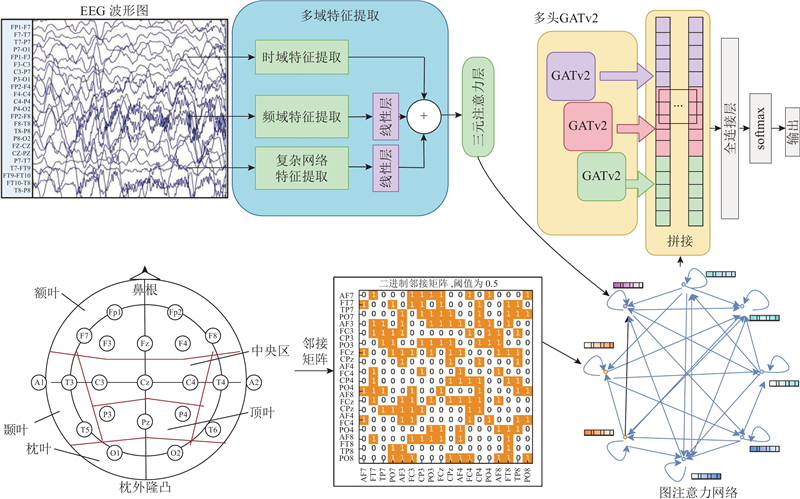
Fig.1 Overall workflow of proposed seizure prediction method
特征描述
最大值$ {X}_{\text{Max}} $=max$ \{{x}_{1},{x}_{2},\cdots, {x}_{n}\} $
最小值$ {X}_{\text{Min}} $=min$ \{{x}_{1},{x}_{2},\cdots, {x}_{n}\} $
中值奇数时为中间元素,偶数时为中间2个元素和取均值
众数频率最高的值
方差$ {X}_{\text{Var}} $=$ \dfrac{1}{N}\displaystyle\sum\nolimits_{n=1}^{N}{\left(\overline{X}-{{X}_{n}}\right)}^{2} $
均值$ \overline{X} $=$ \dfrac{1}{N}\displaystyle\sum\nolimits_{n=1}^{N}{X}_{n} $
标准差$ \sigma $=$ \sqrt{\dfrac{1}{N}\displaystyle\sum\nolimits_{n=1}^{N}{\left(\overline{X}-{{X}_{n}}\right)}^{2}} $
取值范围$ {X}_{\text{Ra}} = {X}_{\text{Max}} $$- {X}_{\text{Min}} $
四分位距$ {I}_{\text{QR}} = {Q}_{3}- {Q}_{1} $
偏度$ {X}_{\text{Ske}} = \dfrac{1}{N}\displaystyle\sum\nolimits_{i=1}^{N}\dfrac{{\left(x_i-\overline{x}\right)}^{3}}{{\sigma }^{3}} $
峰度$ {X}_{\text{kurt}} $=$ \dfrac{1}{N}\displaystyle\sum\nolimits_{i=1}^{N}\dfrac{{\left(x_i-\overline{x}\right)}^{4}}{{\sigma }^{4}} $?3
波动系数${\mathrm{CV}}= \dfrac{\sigma }{\overline{x}} $
分形维数$ D=\underset{\epsilon \rightarrow 0}{\lim } \dfrac{\lg \;({N}(\epsilon))}{\lg \;(1/ \epsilon)} $
样本熵$ \mathrm{SampEn}\;(m,r)=-\ln \left[\dfrac{{B}^{m+1}(r)}{{B}^{m}(r)}\right] $
排列熵$ {H}_{\text{pe}}({P}_{j})=-\displaystyle\sum\limits_{{j}=1}^{{k}}{P}_{j}\ln ({P}_{j}) $
模糊熵$ \text{FuzzyEn}\left(m,r\right)=-\ln \left(\dfrac{A(m,r)}{B(m,r)}\right) $
Tab.1 Statistical characteristics of time domain
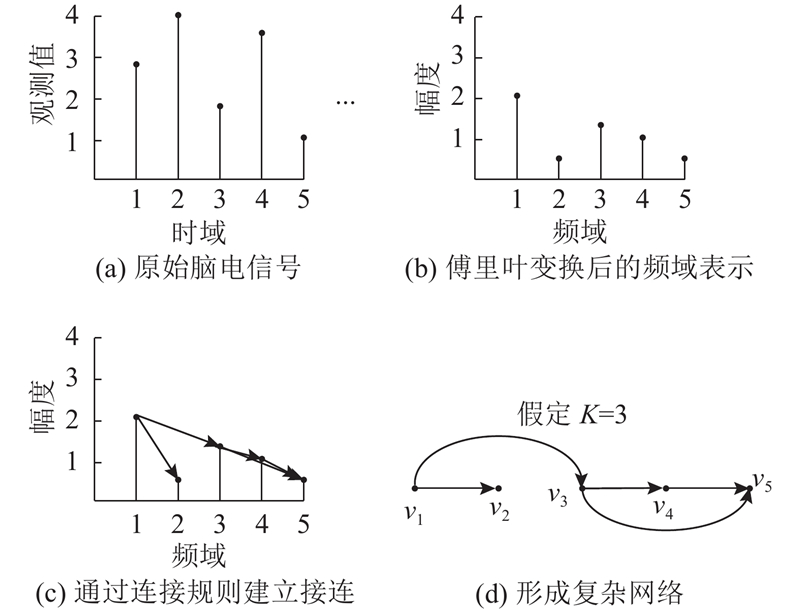
Fig.2 Flowchart of weighted neighborhood field graph construction for EEG signal complex network
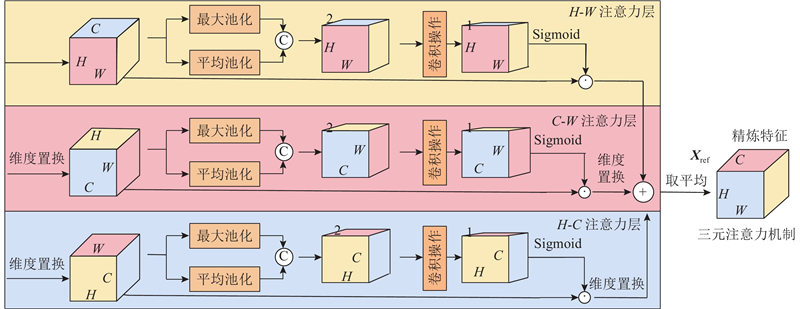
Fig.3 Structure diagram of triple attention mechanism
病例AccSenSpeF1AUC
chb198.0099.5696.7598.9298.48
chb297.7498.0598.1897.8099.14
chb398.0397.2598.9697.2398.39
chb497.4596.9496.9296.9798.70
chb592.9596.3995.7493.3496.82
chb695.5096.2895.7295.4696.80
chb798.6798.8697.2499.3298.75
chb998.5998.5597.7796.5898.21
chb1099.6399.6299.9399.4399.86
chb1197.0098.3497.0197.5298.81
chb1398.5997.2898.8397.8398.84
chb1495.1094.3996.5095.2197.98
chb1798.0099.0397.5698.8699.85
chb1898.5298.4895.4397.4299.21
chb1997.5098.0796.9897.3898.86
chb2098.5199.5196.9799.2698.95
chb2198.0698.6797.4598.4299.88
chb2299.5399.6299.3899.5496.85
chb2398.5799.1197.2698.0799.58
平均值97.5898.1197.8897.6198.63
Tab.2 Evaluation results of proposed seizure prediction method on CHB-MIT dataset %
编号AccSenSpeF1AUC
0000000296.8898.5295.2196.9698.18
0000158793.0296.0692.7395.0694.41
0000252186.1477.2184.3683.5681.25
0000320894.5591.3792.7394.5893.63
0000030288.3689.1487.5490.3989.64
0000725278.5376.9877.0781.5579.63
平均值89.5888.2188.2790.3589.45
Tab.3 Evaluation results of proposed seizure prediction method on TUSZ dataset %
病例AccSenSpeF1AUC
chb180.9486.0074.0079.2177.54
chb280.0078.4580.0082.5882.64
chb378.9685.7971.0074.3277.25
chb456.2349.5657.0052.7549
chb584.2181.5482.9981.2182.54
chb648.1742.6844.1048.9144.73
chb780.0981.0072.2573.2476.12
chb990.9796.7880.5689.5290.32
chb1072.3167.0481.3368.2569.21
chb1188.5688.2183.9990.2390.89
chb1357.2153.1262.3455.2349.56
chb1454.3955.8263.7558.2254.88
chb1789.5689.7987.9687.4489.51
chb1886.1482.9891.5685.2586.52
chb1991.4696.5093.9790.4591.23
chb2052.1743.5651.2348.7851.21
chb2153.9853.4652.1457.3253.63
chb2296.5397.2197.4598.5196.24
chb2385.6478.5689.9984.5684.12
平均值75.1374.1074.6173.9973.53
Tab.4 Cross-subject experimental results %
方法AccSenSpe
STFT+RDANet[21]92.5889.2592.67
CSP+CNN[20]92.1793.1492.26
TA-STS-ConvNet[22]97.2496.7096.53
FBCSP+CNN[23]90.0996.1094.72
STFT+TLG[24]96.8998.3297.17
F+ResNET[25]94.9295.8698.68
本研究97.5898.1197.88
Tab.5 Comparison of evaluation results among different prediction methods %
方法AccSenSpe
决策树87.4488.5392.36
KNN91.4495.3491.56
SVM92.6391.5993.68
XGboost95.4196.2596.54
本研究97.5898.1197.88
Tab.6 Comparison of evaluation results among different learning methods %
特征AccSenSpe
时域特征87.9788.6288.26
频域特征86.5689.2588.23
复杂网络域92.5693.1592.65
时域+频域92.4492.5493.65
时域+频域+复杂网络域97.5898.1197.88
Tab.7 Impact of multi-dimensional features on model performance %
$ \alpha $AccSenSpeF1AUC
0.0197.3497.8997.5796.8197.89
0.1097.5898.1197.8897.6198.63
0.2097.2897.8298.0197.2497.99
0.5096.8297.5194.1296.8198.13
Tab.8 Impact of decay parameters on model performance %
模型AccSenSpe
移除三元注意力网络90.4191.3389.65
使用自注意力模块94.3393.6694.98
替换图注意力网络93.2692.9893.54
本研究97.5898.1197.88
Tab.9 Module ablation study results %
[3]   NISO G, ROMERO E, MOREAU J T, et al Wireless EEG: a survey of systems and studies[J]. NeuroImage, 2023, 269: 119774
doi: 10.1016/j.neuroimage.2022.119774
[4]   ZHANG H, ZHOU Q Q, CHEN H, et al The applied principles of EEG analysis methods in neuroscience and clinical neurology[J]. Military Medical Research, 2023, 10 (1): 67
doi: 10.1186/s40779-023-00502-7
[5]   XIANG J, LI Y, WU X, et al Synchronization-based graph spatio-temporal attention network for seizure prediction[J]. Scientific Reports, 2025, 15: 4080
doi: 10.1038/s41598-025-88492-5
[6]   LI C, DENG Z, SONG R, et al EEG-based seizure prediction via model uncertainty learning[J]. IEEE Transactions on Neural Systems and Rehabilitation Engineering, 2023, 31: 180- 191
doi: 10.1109/TNSRE.2022.3217929
[7]   GAO Y, CHEN X, LIU A, et al Pediatric seizure prediction in scalp EEG using a multi-scale neural network with dilated convolutions[J]. IEEE Journal of Translational Engineering in Health and Medicine, 2022, 10: 4900209
doi: 10.1109/jtehm.2022.3144037
[8]   张培玲, 候康 基于多尺度自适应残差网络的癫痫检测方法[J]. 中国医学物理学杂志, 2025, 42 (3): 381- 387
ZHANG Peiling, HOU Kang Epilepsy detection method based on multi-scale adaptive residual network[J]. Chinese Journal of Medical Physics, 2025, 42 (3): 381- 387
doi: 10.3969/j.issn.1005-202X.2025.03.015
[9]   张喜珍, 张晓莉, 吕洋, 等 基于2D-CNN和Cox-Stuart早停机制的癫痫预测模型[J]. 中国医学物理学杂志, 2025, 42 (1): 82- 94
ZHANG Xizhen, ZHANG Xiaoli, LÜYang, et al Epilepsy prediction model based on 2D-CNN and Cox-Stuart early stopping mechanism[J]. Chinese Journal of Medical Physics, 2025, 42 (1): 82- 94
[10]   SHARMILA A, GEETHANJALI P Evaluation of time domain features on detection of epileptic seizure from EEG signals[J]. Health and Technology, 2020, 10 (3): 711- 722
doi: 10.1007/s12553-019-00363-y
[11]   SHAKER H, LI J, KOBAYASHI M, et al Is high-frequency activity at seizure onset inhibitory? A stereoelectroencephalographic study of motor cortex seizures[J]. Annals of Neurology, 2024, 95 (6): 1127- 1137
doi: 10.1002/ana.26883
[12]   DONG X, HE L, LI H, et al Deep learning based automatic seizure prediction with EEG time-frequency representation[J]. Biomedical Signal Processing and Control, 2024, 95: 106447
doi: 10.1016/j.bspc.2024.106447
[1]   MAIMAITI B, MENG H, LV Y, et al An overview of EEG-based machine learning methods in seizure prediction and opportunities for neurologists in this field[J]. Neuroscience, 2022, 481: 197- 218
doi: 10.1016/j.neuroscience.2021.11.017
[2]   SHOKA A A E, DESSOUKY M M, EL-SAYED A, et al EEG seizure detection: concepts, techniques, challenges, and future trends[J]. Multimedia Tools and Applications, 2023, 82 (27): 42021- 42051
doi: 10.1007/s11042-023-15052-2
[13]   YU X, WU Y, MENG F, et al A review of graph and complex network theory in water distribution networks: mathematical foundation, application and prospects[J]. Water Research, 2024, 253: 121238
doi: 10.1016/j.watres.2024.121238
[14]   LIU Y, ZHOU H, GUAN M, et al Scalp EEG-based automatic detection of epileptiform events via graph convolutional network and bi-directional LSTM co-embedded broad learning system[J]. IEEE Signal Processing Letters, 2023, 30: 448- 452
doi: 10.1109/LSP.2023.3263433
[15]   CHEN X, ZHENG Y, NIU Y, et al. Epilepsy classification for mining deeper relationships between EEG channels based on GCN [C]// Proceedings of the International Conference on Computer Vision, Image and Deep Learning. Chongqing: IEEE, 2020: 701–706.
[16]   WANG J, GAO R, ZHENG H, et al SSGCNet: a sparse spectra graph convolutional network for epileptic EEG signal classification[J]. IEEE Transactions on Neural Networks and Learning Systems, 2024, 35 (9): 12157- 12171
doi: 10.1109/TNNLS.2023.3252569
[17]   HUANG Z, SU L, WU J, et al Rock image classification based on EfficientNet and triplet attention mechanism[J]. Applied Sciences, 2023, 13 (5): 3180
doi: 10.3390/app13053180
[18]   CHANG W, LIU W SAT-GATv2: a dynamic attention-based graph neural network for solving Boolean satisfiability problem[J]. Electronics, 2025, 14 (3): 423
doi: 10.3390/electronics14030423
[19]   MAIWALD T, WINTERHALDER M, ASCHENBRENNER-SCHEIBE R, et al Comparison of three nonlinear seizure prediction methods by means of the seizure prediction characteristic[J]. Physica D: Nonlinear Phenomena, 2004, 194 (3/4): 357- 368
doi: 10.1016/j.physd.2004.02.013
[20]   ZHANG Y, GUO Y, YANG P, et al Epilepsy seizure prediction on EEG using common spatial pattern and convolutional neural network[J]. IEEE Journal of Biomedical and Health Informatics, 2020, 24 (2): 465- 474
doi: 10.1109/JBHI.2019.2933046
[21]   YANG X, ZHAO J, SUN Q, et al An effective dual self-attention residual network for seizure prediction[J]. IEEE Transactions on Neural Systems and Rehabilitation Engineering, 2021, 29: 1604- 1613
doi: 10.1109/TNSRE.2021.3103210
[22]   GUO L, YU T, ZHAO S, et al CLEP: contrastive learning for epileptic seizure prediction using a spatio-temporal-spectral network[J]. IEEE Transactions on Neural Systems and Rehabilitation Engineering, 2023, 31: 3915- 3926
doi: 10.1109/TNSRE.2023.3322275
[23]   JEMAL I, MEZGHANI N, ABOU-ABBAS L, et al An interpretable deep learning classifier for epileptic seizure prediction using EEG data[J]. IEEE Access, 2022, 10: 60141- 60150
doi: 10.1109/ACCESS.2022.3176367
[24]   ZHU R, PAN W X, LIU J X, et al Epileptic seizure prediction via multidimensional Transformer and recurrent neural network fusion[J]. Journal of Translational Medicine, 2024, 22 (1): 895
doi: 10.1186/s12967-024-05678-7
[1] Shifeng LIU,Jianning SU,Shutao ZHANG,Shijie WANG,Kai QIU,Wenjin YANG. Identification of core driving factors for product architecture design based on dual-layer complex network[J]. Journal of ZheJiang University (Engineering Science), 2026, 60(8): 1650-1661.
[2] Chunli WANG,Yuxin GAO,Jinxu LI. Auditory attention decoding analysis based on band-specific spatial-temporal frequency fusion[J]. Journal of ZheJiang University (Engineering Science), 2026, 60(4): 887-895.
[3] Zihao YAO,Hairong JIA,Yarong LI,Guijun CHEN. Speech-evoked EEG decoding based on Multi-scale Attention Temporal Encoding Network[J]. Journal of ZheJiang University (Engineering Science), 2026, 60(4): 896-905.
[4] Guanghui YAN,Xiao HUANG,Wenwen CHANG. Emergency braking behavior recognition based on EEG multi-scale features and graph neural networks[J]. Journal of ZheJiang University (Engineering Science), 2026, 60(2): 404-414.
[5] Wenxin CHENG,Guanghui YAN,Wenwen CHANG,Baijing WU,Yaning HUANG. Channel-weighted multimodal feature fusion for EEG-based fatigue driving detection[J]. Journal of ZheJiang University (Engineering Science), 2025, 59(9): 1775-1783.
[6] Xuan MENG,Xueying ZHANG,Ying SUN,Yaru ZHOU. EEG emotion recognition based on electrode arrangement and Transformer[J]. Journal of ZheJiang University (Engineering Science), 2025, 59(9): 1872-1880.
[7] Zhentao DONG,Kaimin XU,Qingying WAN,Xiaofei LIU,Hao SHEN,Shuhan LI,Geqi QI. Multimodal emotional feature analysis based on short video resources of traffic incidents[J]. Journal of ZheJiang University (Engineering Science), 2025, 59(4): 661-668.
[8] Wenqiang CHEN,Dongdan WANG,Wenying ZHU,Yongjie WANG,Tao WANG. Vehicle multimodal trajectory prediction model based on spatio-temporal graph attention network[J]. Journal of ZheJiang University (Engineering Science), 2025, 59(3): 443-450.
[9] Yanpu YANG,Wenhao MENG,Zhihong WU,Jialing LIU,Yueming ZHUO. Intermuscular coupling and collaboration of upper limb in overhead work[J]. Journal of ZheJiang University (Engineering Science), 2025, 59(11): 2269-2276.
[10] Shuo YANG,Xu LOU,Shuo LIU,Jiarui LI,Lei WANG. Analysis of clinical difference in Parkinson’s disease subtype based on non-parametric brain network[J]. Journal of ZheJiang University (Engineering Science), 2025, 59(11): 2451-2458.
[11] Yixuan LI,Ying LI,Qian XIAO,Lingyue WANG,Ning YIN,Shuo YANG. EEG microstate functional network analysis of different emotional false memories[J]. Journal of ZheJiang University (Engineering Science), 2025, 59(1): 49-61.
[12] Qing SHU,Xiping LIU,Zhao TAN,Xi LI,Changxuan WAN,Dexi LIU,Guoqiong LIAO. SQL generation method based on dependency relational graphattention network[J]. Journal of ZheJiang University (Engineering Science), 2024, 58(5): 908-917.
[13] Bo ZHONG,Pengfei WANG,Yiqiao WANG,Xiaoling WANG. Survey of deep learning based EEG data analysis technology[J]. Journal of ZheJiang University (Engineering Science), 2024, 58(5): 879-890.
[14] Fei MA,Xiaolin WEI,Qipeng SUN,Qing LIU,Huiyan GOU. Robustness of multimodal passenger transport network in urban agglomeration considering complementary effect[J]. Journal of ZheJiang University (Engineering Science), 2024, 58(2): 388-398.
[15] Yue LIU,Xueying ZHANG,Guijun CHEN,Lixia HUANG,Ying SUN. EEG-fNIRS emotion recognition based on multi-brain attention mechanism capsule fusion network[J]. Journal of ZheJiang University (Engineering Science), 2024, 58(11): 2247-2257.