Please wait a minute...
浙江大学学报(工学版)  2026, Vol. 60 Issue (4): 876-886    DOI: 10.3785/j.issn.1008-973X.2026.04.019
土木工程、交通工程     
融合多车风格感知与交互特征的换道行为预测
韩泽一(),王文璇*(),王元庆
长安大学 运输工程学院,陕西 西安 710064
Prediction of lane-changing behavior integrating multi-vehicle style perception and interaction features
Zeyi HAN(),Wenxuan WANG*(),Yuanqing WANG
School of Transportation Engineering, Chang’an University, Xi’an 710064, China
 全文: PDF(3155 KB)   HTML
摘要:

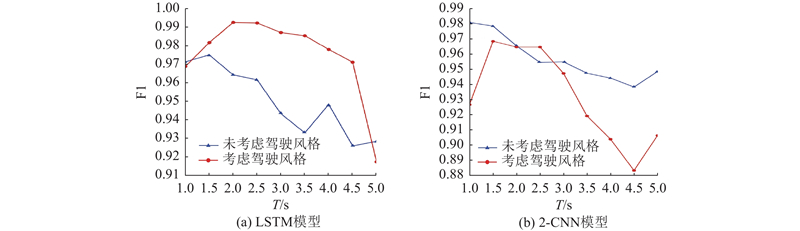
现有换道预测模型未能有效建模换道车辆与周围车辆的多车驾驶风格及车辆交互特征,且对换道行为影响因素考虑不足. 为此,提出综合驾驶风格识别、车辆特征、交互特征、交通流特征、货车比例的换道行为预测方法. 基于HighD数据集,提取换道车辆及周围车辆的基础特征和交互特征,并计算不同窗口时间下的统计学指标,通过主成分分析与K-means聚类量化换道多车驾驶风格. 使用长短时记忆网络模型和双层卷积神经网络模型对不同时间窗口下的预测性能进行比较. 结果显示,多车驾驶风格及车辆交互特征建模使预测精度提升了5.64%;长短时记忆模型在2.0 s时间窗口下的F1值最高,为99.26%;车辆长度、货车比例、交通流密度与考虑车辆交互特征的换道车辆驾驶风格的联合特征贡献率达11.08%. 结果表明,所提出的换道行为预测方法能有效提升预测的准确性,并增强对换道行为影响因素的可解释性,为自动驾驶与交通管理提供参考.

关键词: 换道行为预测LSTM模型HighD数据车辆交互特征交通流特征驾驶风格    
Abstract:

A comprehensive lane-change prediction method integrating driving style recognition, vehicle characteristics, interaction features, traffic flow characteristics, and truck ratio was proposed, in order to address the limitations of existing lane-change prediction models in modeling the multi-vehicle driving styles of lane-changing and surrounding vehicles and their interaction features, as well as their insufficient consideration of the influencing factors of lane-changing behavior. Based on the HighD dataset, basic and interaction features of lane-changing and surrounding vehicles were extracted, and statistical indicators under different time windows were calculated. Principal component analysis and K-means clustering were employed to quantify multi-vehicle driving styles during lane-changing. Subsequently, Long Short-Term Memory (LSTM) networks and double-layer Convolutional Neural Networks (2-CNN) were used to compare predictive performance across time windows. Results showed that incorporating multi-vehicle driving styles and interaction features improved accuracy by 5.64%, with the LSTM achieving a maximum F1-score of 99.26% under a 2.0-second window. Furthermore, the combined contribution of vehicle length, truck ratio, traffic density, and the interaction-aware driving style features of lane-changing vehicles reached 11.08%. Overall, the proposed method enhanced the accuracy of lane-change behavior prediction and the interpretability of influencing factors, providing insights for autonomous driving and traffic management.

Key words: prediction of lane-changing behavior    LSTM model    HighD data    vehicle interaction characteristics    traffic flow characteristics    driving style
收稿日期: 2025-04-23 出版日期: 2026-03-19
CLC:  U 491.2  
基金资助: 国家自然科学基金资助项目(52362050);陕西省重点研发计划资助项目(2024GX-ZDCYL-02-14,2025SF-GJHX2-13);陕西省自然科学基金青年科学基金资助项目(2025JC-YBQN-519);陕西省秦创原引用高层次创新创业人才项目(QCYRCXM-2023-110);中国博士后科学基金资助项目(2024M752739);长安大学青年学者学科交叉团队建设项目(300104240924);陕西省三秦英才引进计划-优秀青年工程技术人才项目.
通讯作者: 王文璇     E-mail: 2025034008@chd.edu.cn;wangwenxuan123@chd.edu.cn
作者简介: 韩泽一(2001—),男,博士生,从事交通工程与交通流理论、智慧交通研究. orcid.org/0009-0003-7696-0534. E-mail:2025034008@chd.edu.cn
服务  
把本文推荐给朋友
加入引用管理器
E-mail Alert
作者相关文章  
韩泽一
王文璇
王元庆

引用本文:

韩泽一,王文璇,王元庆. 融合多车风格感知与交互特征的换道行为预测[J]. 浙江大学学报(工学版), 2026, 60(4): 876-886.

Zeyi HAN,Wenxuan WANG,Yuanqing WANG. Prediction of lane-changing behavior integrating multi-vehicle style perception and interaction features. Journal of ZheJiang University (Engineering Science), 2026, 60(4): 876-886.

链接本文:

https://www.zjujournals.com/eng/CN/10.3785/j.issn.1008-973X.2026.04.019        https://www.zjujournals.com/eng/CN/Y2026/V60/I4/876

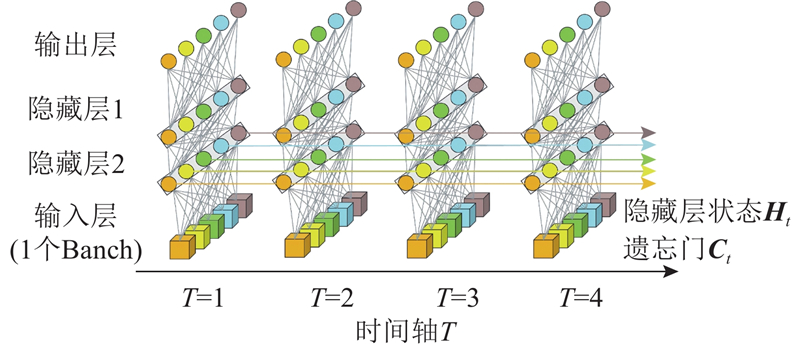
图 1  LSTM神经网络传递图
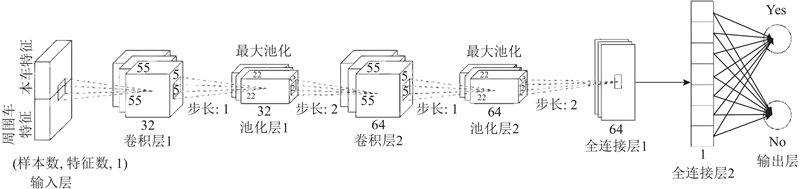
图 2  2-CNN神经网络传递图
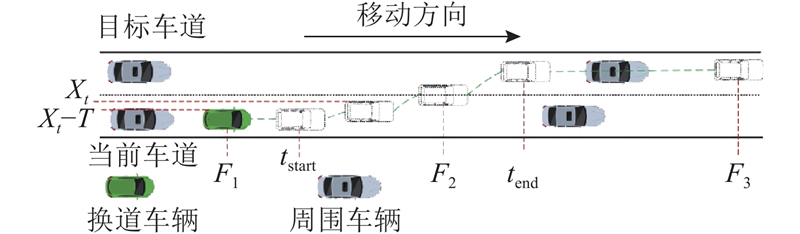
图 3  换道起点确定示意图
实际行为识别结果
真实行为其他行为
真实行为TP(真正例)FN(假负例)
其他行为FP(假正例)TN(真负例)
表 1  混淆矩阵分类
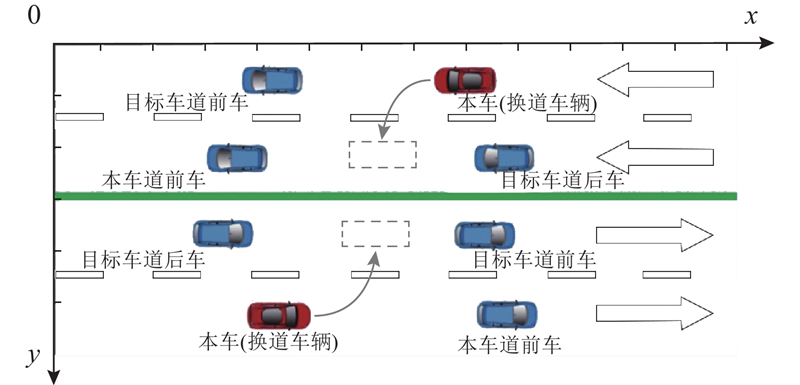
图 4  换道车辆与周围车辆位置关系
T/sAcc/%P/%R/%F1/%
LSTM2-CNNLSTM2-CNNLSTM2-CNNLSTM2-CNN
1.098.8199.2198.2199.5096.0796.7197.1398.09
1.598.9299.0697.1597.1597.8598.5897.5097.86
2.098.6098.6496.6996.1796.1796.9396.4296.55
2.598.6298.4096.4697.5495.8893.4796.1695.46
3.098.2698.6294.3395.3194.3395.7094.3295.50
3.598.1198.5293.6694.9892.9194.5393.2894.75
4.098.5598.4793.6895.0695.9893.8294.8294.43
4.598.1098.4296.6398.2288.8889.8392.5893.84
5.098.4598.9194.0997.5091.6192.3792.8294.86
表 2  不考虑驾驶风格的LSTM和2-CNN模型预测结果
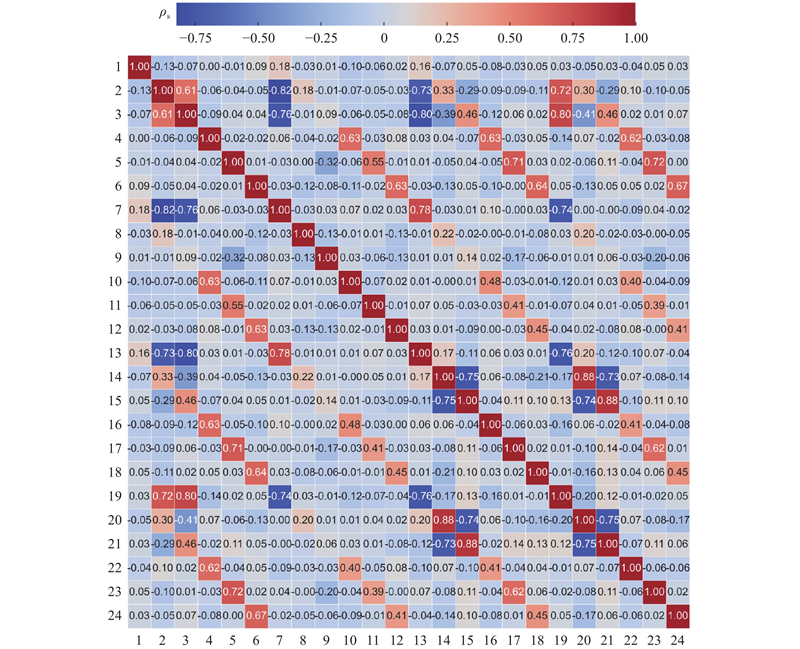
图 5  24个特征变量的斯皮尔曼相关性分析热力图
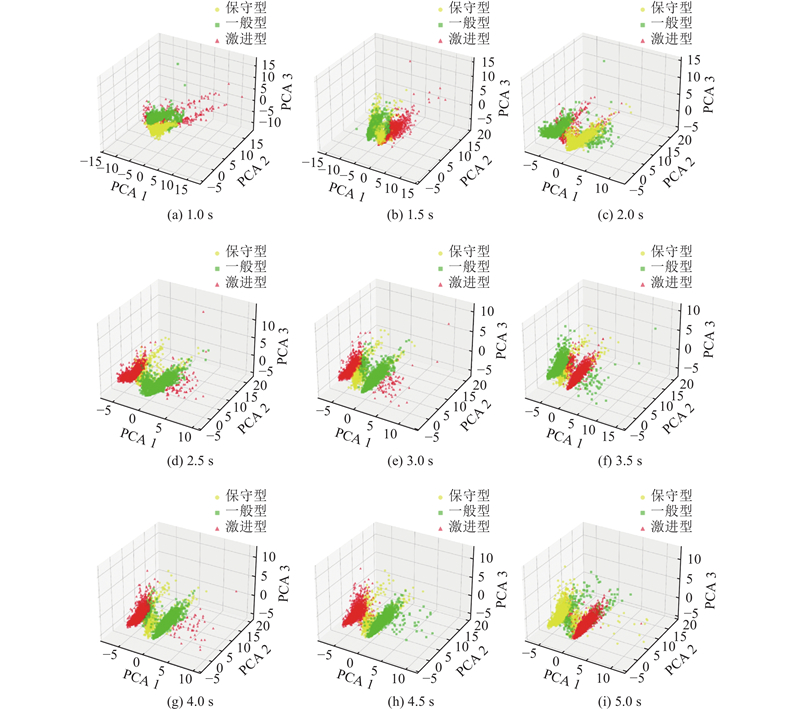
图 6  不同时间窗口的驾驶风格聚类结果
T/s轮廓系数Calinski-Harabasz值Davies-Bouldin值
1.00.5402 249.7090.861
1.50.5442 273.5680.851
2.00.5912 659.6160.781
2.50.5962 696.0600.786
3.00.5952 672.8580.793
3.50.5912 605.5920.814
4.00.5882 538.2920.817
4.50.5842 488.8840.837
5.00.5802 444.6020.852
表 3  不同窗口时间下驾驶风格聚类有效性评价指标
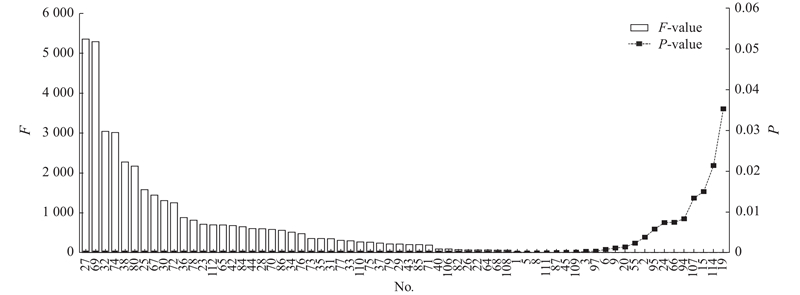
图 7  2.0 s窗口时间下特征变量经ANOVA检验的F值和P值
超参数描述取值
activation激活函数relu
alphaL2正则化参数0.01
batch_size每次更新模型权重时所使用的样本数16
hidden_layer_sizes隐藏层的结构配置(100, 50)
learning_rate_init初始学习率0.001
表 4  考虑驾驶风格的LSTM模型的最优超参数设置
超参数描述取值
filters卷积核数量32
kernel_size卷积核大小5
dense_units全连接层中神经元数量64
learning_rate学习率0.001
表 5  考虑驾驶风格的2-CNN模型的最优超参数设置
T/sAcc/%P/%R/%F1/%
LSTM2-CNNLSTM2-CNNLSTM2-CNNLSTM2-CNN
1.099.0397.7295.9596.3397.8389.2796.8892.68
1.599.3698.3598.7597.2897.5996.4298.1796.85
2.099.7498.2798.9697.1499.5795.8499.2696.48
2.599.7398.9598.9096.4699.5796.5099.2396.48
3.099.5498.0398.5894.3798.8395.1198.7194.74
3.599.5697.5999.7892.7797.3491.1198.5491.93
4.099.5297.4798.1193.7397.5087.3197.8090.40
4.599.3797.5099.0495.2595.2682.6097.1188.34
5.098.5998.1192.2594.3591.2387.2491.7290.64
表 6  考虑驾驶风格的LSTM和2-CNN模型预测结果
图 8  考虑驾驶风格前、后的LSTM与2-CNN模型F1值性能对比
模型t-statisticp-value
LSTM?2.49940.0237
2-CNN2.20570.0424
表 7  LSTM与2-CNN模型的t检验结果
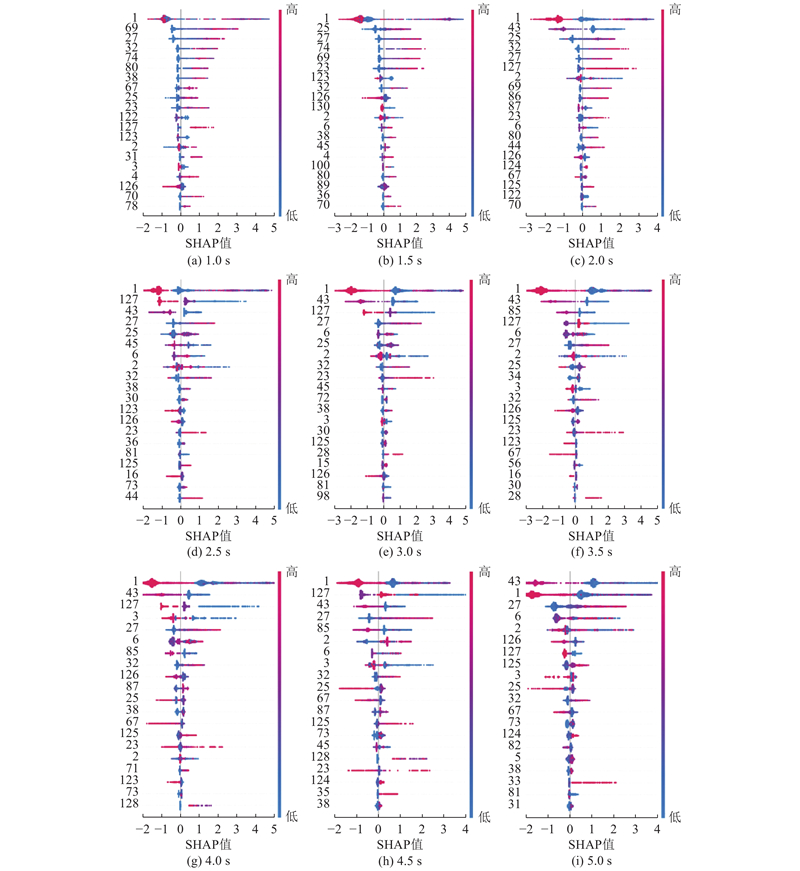
图 9  不同窗口时间下SHAP值与单个特征变量的关系
No.T/s
1.01.52.02.53.03.54.04.55.0
121
1221119
123137121518
124161814
1251817151314138
1261891513181296
127126234327
1282016
129
13010
表 8  各窗口期前20个高贡献特征中车辆长度、交通流及驾驶风格特征的影响排名
RankNo.$\overline{\rm{SHAP}} $Co/%RankNo.$\overline{\rm{SHAP}} $Co/%
111.27919.3811230.1592.41
2430.94114.261260.1592.41
3250.6249.4613800.1432.17
4320.3835.8214440.1412.14
5270.3104.70151260.1221.86
61270.2874.36161240.1191.81
720.2363.5917670.0921.39
8690.2213.36181250.0731.11
9860.1792.72191220.0721.10
10870.1692.5620700.0661.00
表 9  2.0 s窗口时间下前20个贡献度最高的特征值
1 NHTSA. Traffic safety facts 2020: a compilation of motor vehicle crash data from the fatality analysis reporting system and the general estimates system [R]. Washington, DC: National Highway Traffic Safety Administration, 2022.
2 ZHANG Y, ZOU Y, XIE Y, et al Identifying dynamic interaction patterns in mandatory and discretionary lane changes using graph structure[J]. Computer-Aided Civil and Infrastructure Engineering, 2024, 39 (5): 638- 655
doi: 10.1111/mice.13099
3 ZHANG C, WANG W, CHEN Z, et al Shareable driving style learning and analysis with a hierarchical latent model[J]. IEEE Transactions on Intelligent Transportation Systems, 2024, 25 (9): 11471- 11484
doi: 10.1109/TITS.2024.3374771
4 WANG Y, QU W, GE Y, et al Effect of personality traits on driving style: psychometric adaption of the multidimensional driving style inventory in a Chinese sample[J]. PLoS One, 2018, 13 (9): e0202126
doi: 10.1371/journal.pone.0202126
5 ADAVIKOTTU A, VELAGA N R Modeling the impact of driving aggression on lane change performance measures: steering compensatory behavior, lane change execution duration and crash probability[J]. Transportation Research Part F: Traffic Psychology and Behaviour, 2024, 103: 526- 553
doi: 10.1016/j.trf.2024.05.001
6 MOZAFFARI S, ARNOLD E, DIANATI M, et al Early lane change prediction for automated driving systems using multi-task attention-based convolutional neural networks[J]. IEEE Transactions on Intelligent Vehicles, 2022, 7 (3): 758- 770
doi: 10.1109/TIV.2022.3161785
7 XU T, ZHANG Z, WU X, et al Recognition of lane-changing behaviour with machine learning methods at freeway off-ramps[J]. Physica A: Statistical Mechanics and Its Applications, 2021, 567: 125691
doi: 10.1016/j.physa.2020.125691
8 KHELFA B, BA I, TORDEUX A Predicting highway lane-changing maneuvers: a benchmark analysis of machine and ensemble learning algorithms[J]. Physica A: Statistical Mechanics and Its Applications, 2023, 612: 128471
doi: 10.1016/j.physa.2023.128471
9 XUE Q, XING Y, LU J An integrated lane change prediction model incorporating traffic context based on trajectory data[J]. Transportation Research Part C: Emerging Technologies, 2022, 141: 103738
doi: 10.1016/j.trc.2022.103738
10 GONAH N, SALAMA H, ALI M, et al An evaluation of the impact of truck-lane restriction strategies on traffic operation characteristics[J]. Innovative Infrastructure Solutions, 2025, 10 (4): 130
doi: 10.1007/s41062-025-01928-9
11 ROH C G, JEON H, SON B Do heavy vehicles always have a negative effect on traffic flow?[J]. Applied Sciences, 2021, 11 (12): 5520
doi: 10.3390/app11125520
12 KESTING A, TREIBER M, HELBING D General lane-changing model MOBIL for car-following models[J]. Transportation Research Record: Journal of the Transportation Research Board, 2007, 1999 (1): 86- 94
doi: 10.3141/1999-10
13 TOLEDO T, KOUTSOPOULOS H N, BEN-AKIVA M E Modeling integrated lane-changing behavior[J]. Transportation Research Record: Journal of the Transportation Research Board, 2003, 1857 (1): 30- 38
doi: 10.3141/1857-04
14 LI C, CHEN H, XIONG Y, et al Analysis of Chinese typical lane change behavior in car–truck heterogeneous traffic flow from UAV view[J]. Electronics, 2022, 11 (9): 1398
doi: 10.3390/electronics11091398
15 JIA Y, ZHANG Z, LI X, et al Driving style tendency quantification method based on short-term lane change feature extraction[J]. Sustainability, 2025, 17 (8): 3563
doi: 10.3390/su17083563
16 ZHANG Y, CHEN Y, GU X, et al A proactive crash risk prediction framework for lane-changing behavior incorporating individual driving styles[J]. Accident Analysis and Prevention, 2023, 188: 107072
17 GAO K, LI X, HU L, et al Instantaneous lane-changing type aware lane change prediction based on LSTM in mixed traffic scenario[J]. Journal of Circuits, Systems and Computers, 2022, 31 (10): 2250180
doi: 10.1142/S0218126622501808
18 CHEN S, PIAO L, ZANG X, et al Analyzing differences of highway lane-changing behavior using vehicle trajectory data[J]. Physica A: Statistical Mechanics and Its Applications, 2023, 624: 128980
doi: 10.1016/j.physa.2023.128980
19 KRAJEWSKI R, BOCK J, KLOEKER L, et al. The highD dataset: a drone dataset of naturalistic vehicle trajectories on German highways for validation of highly automated driving systems [C]// International Conference on Intelligent Transportation Systems. Maui: IEEE, 2018: 2118–2125.
20 ARBELAITZ O, GURRUTXAGA I, MUGUERZA J, et al An extensive comparative study of cluster validity indices[J]. Pattern Recognition, 2013, 46 (1): 243- 256
doi: 10.1016/j.patcog.2012.07.021
21 BERGSTRA J, BENGIO Y Random search for hyper-parameter optimization[J]. Journal of Machine Learning Research, 2012, 13: 281- 305
[1] 王姝,张海川,虢沧岩,赵轩,郭慧鑫. 考虑驾驶风格的车辆四轮转向和直接横摆力矩控制[J]. 浙江大学学报(工学版), 2025, 59(9): 1942-1953.
[2] 李攀,周兵,柴天,邓园,潘倩兮,吴晓建. 考虑驾驶风格的车辆避障控制系统[J]. 浙江大学学报(工学版), 2024, 58(7): 1377-1386.