| Theory and Method of Mechanical Design |
|


|
|
|
| Hob wear prediction method for TBM based on graph Laplacian regularization deep learning model |
Kaisong WANG1( ),Xuhua GUO1,Wei TANG2,Yiming WEI3,Zhaoyang LI2,Jun ZOU2 ),Xuhua GUO1,Wei TANG2,Yiming WEI3,Zhaoyang LI2,Jun ZOU2 |
1.School of Mechatronics Engineering, Anhui University of Science and Technology, Huainan 232001, China
2.State Key Laboratory of Fluid Power and Mechatronic Systems, Zhejiang University, Hangzhou 310058, China
3.State Key Laboratory of Digital and Intelligent Technology for Unmanned Coal Mining, Anhui University of Science and Technology, Huainan 232001, China |
|
|
|
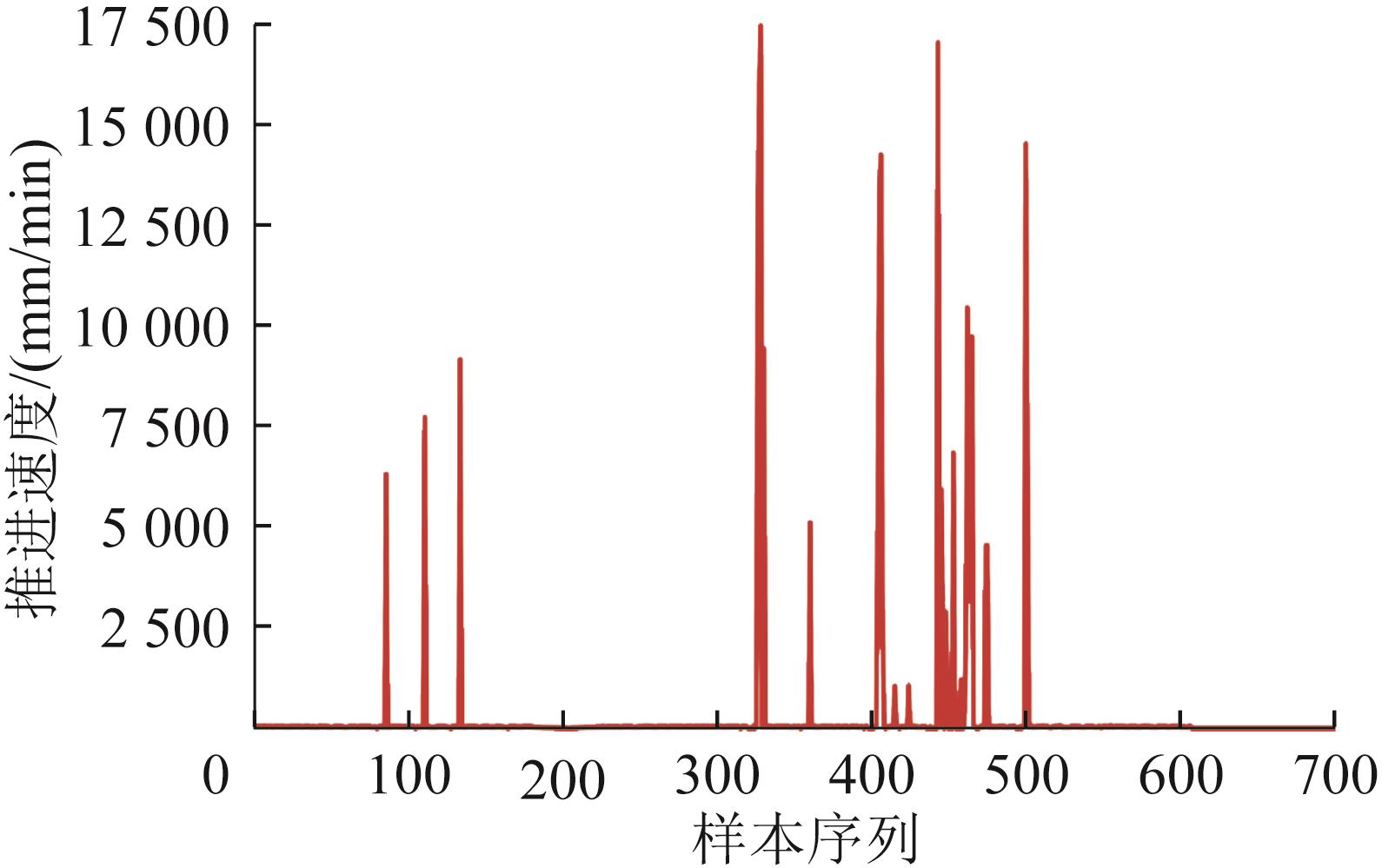
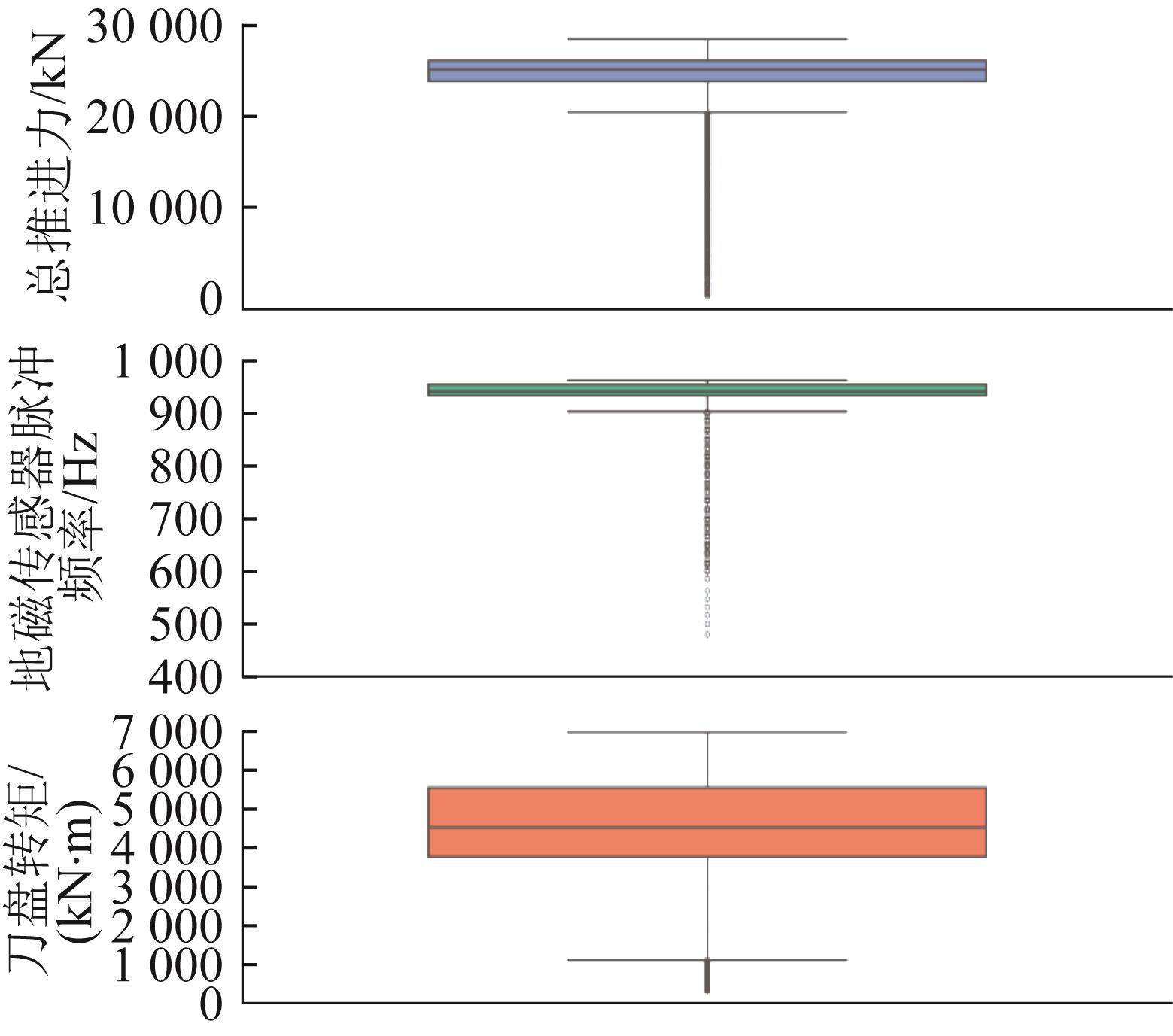
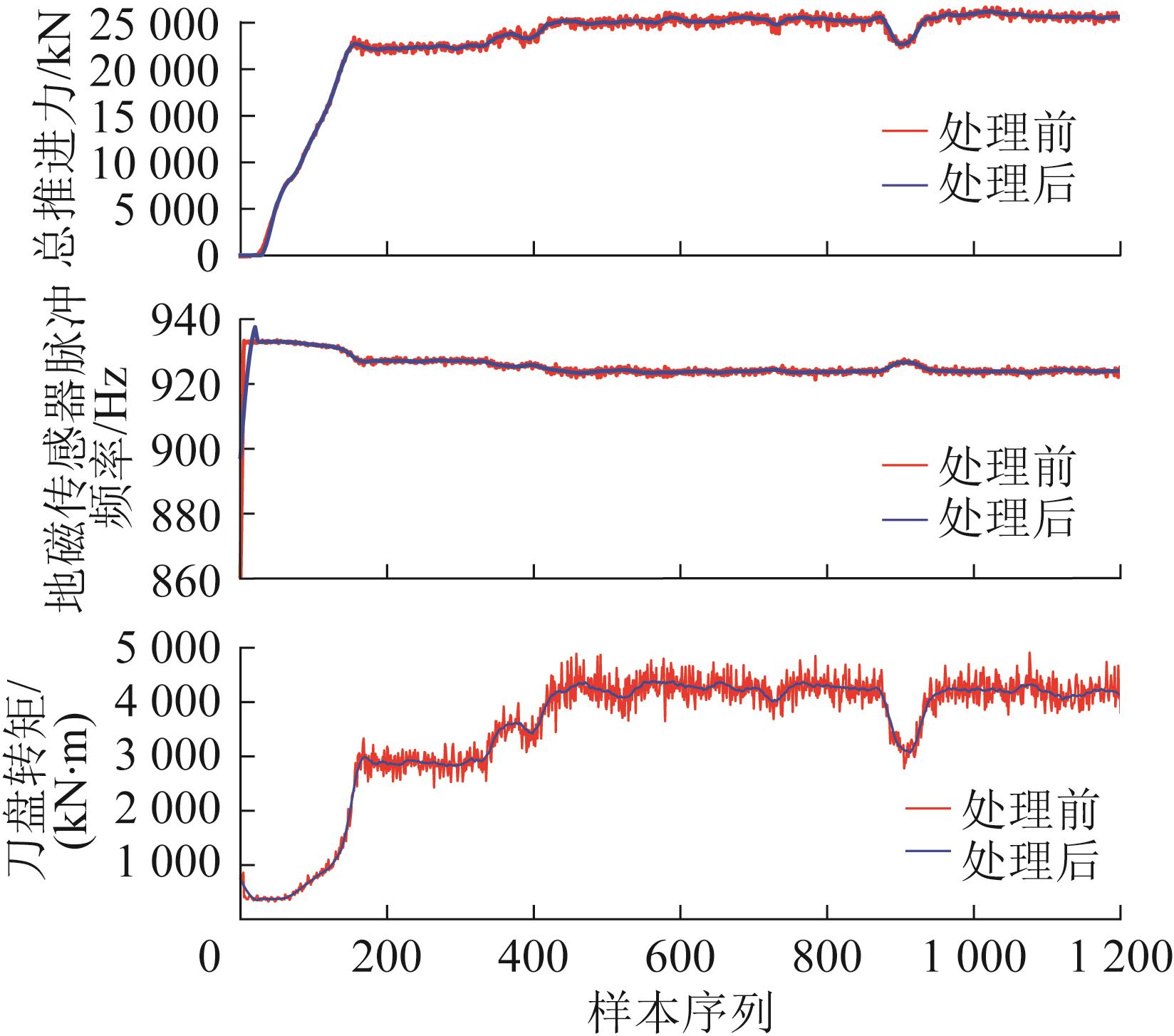
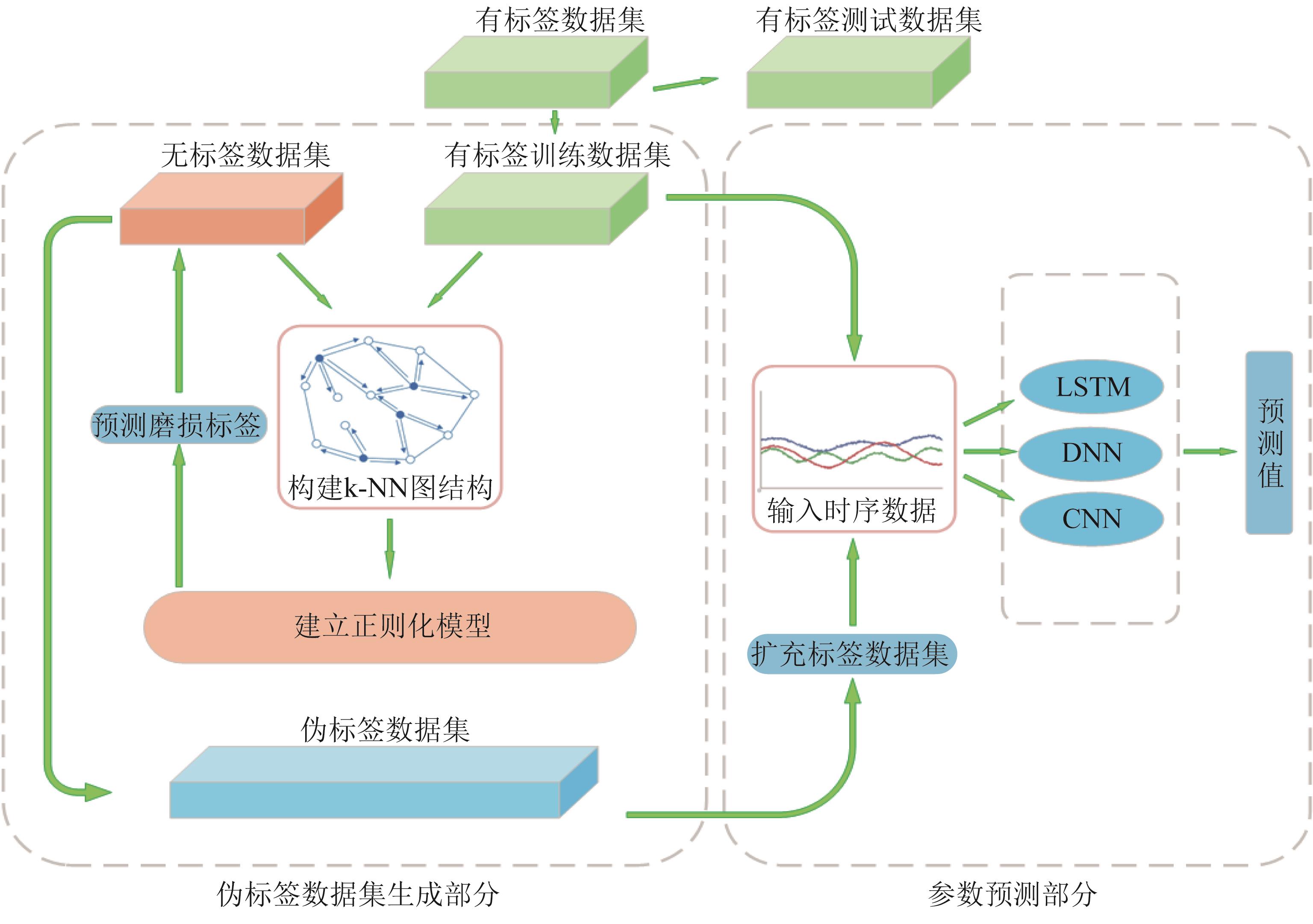
Abstract In response to the problems of low efficiency in manual detection, poor reliability of sensor monitoring, and scarce label data in the wear monitoring of hobs of the full section tunnel boring machine, a prediction method based on graph Laplacian regularization (GLR) deep learning model was proposed. Based on a high-altitude tunnel excavation project, an efficient data preprocessing system was constructed: the excavation cycle dynamic extraction method was used to accurately identify and eliminate non excavation and empty push section data, the quartile method was used to eliminate outliers, the SG (Savitzky-Goloy) filtering for noise reduction was combined, then the data quality was improved. Furthermore, By integrating GLR and deep learning technologies, a data manifold structure was constructed using k-NN (k-nearest neighbor) graph. The Laplacian matrix was used to constrain the smoothness of adjacent sample prediction, generating pseudo-labels with high confidence to expand the training set, and combining with long short-term memory (LSTM), deep neural network (DNN) and convolutional neural networks (CNN) to develop three prediction models: GLR-LSTM, GLR-DNN, and GLR-CNN. The experimental results showed that the GLR-LSTM model had the best prediction performance. Compared with traditional small-sample machine learning methods such as ridge regression, support vector regression and gradient boosting regression tree, the prediction accuracy of the GLR-LSTM model improved significantly. This method can accurately predict the real-time wear rate of the hobs by only requiring the operating parameters such as the TBM cutterhead torque and the total propulsion force, providing technical support for reducing the opening inspection and optimizing maintenance decisions.
|
|
Received: 03 July 2025
Published: 01 March 2026
|
|
|
基于图拉普拉斯正则化深度学习模型的TBM滚刀磨损预测方法
针对全断面隧道掘进机滚刀磨损监测中人工检测效率低、传感器监测可靠性差及标签数据稀缺等问题,提出了一种基于(graph Laplacian regularization,GLR)深度学习模型的预测方法。依托某高原隧道掘进工程,构建了数据高效预处理体系:通过掘进循环动态提取法精准识别并剔除非掘进段和空推段的数据,采用四分位法进行异常值剔除,并结合SG(Savitzky-Goloy)滤波降噪,提升了数据质量;融合GLR和深度学习技术,利用k-NN(k-nearest neighbor,k近邻)图构建数据流形结构,通过拉普拉斯矩阵约束相邻样本的预测平稳性,生成了高置信度伪标签扩充训练集,并分别结合长短期记忆网络(long short-term memory,LSTM)、深度神经网络(deep neural network,DNN)、卷积神经网络(convolutional neural network,CNN),构建了GLR-LSTM、GLR-DNN和GLR-CNN等3种预测模型。实验结果表明,GLR-LSTM模型的预测性能最优,相较岭回归、支持向量机回归和梯度提升回归树等传统小样本机器学习方法,预测精度显著提高。该方法仅需TBM刀盘转矩、总推进力等运行参数即可实现滚刀实时磨损速率的精准预测,为减少开仓检测、优化维护决策提供了技术支撑。
关键词:
全断面隧道掘进机,
图拉普拉斯正则化,
半监督学习,
小样本学习,
长短期记忆网络
|
|
| [[1]] |
尹俊涛, 尚彦军, 傅冰骏, 等. TBM掘进技术发展及有关工程地质问题分析和对策[J]. 工程地质学报, 2005, 13(3): 389-397.
YIN J T, SHANG Y J, FU B J, et al. Development of TBM excavation technology and analysis and countermeasures of related engineering geological problems [J]. Journal of Engineering Geology, 2005, 13 (3): 389-397.
|
|
|
| [[2]] |
丁小彬, 袁霖轩, 杨辉泰, 等. 基于深度学习的滚刀磨损预测模型对比[J]. 同济大学学报(自然科学版), 2025, 53(5): 757-766.
DING X B, YUAN L X, YANG H T, et al. Comparison of roll blade wear prediction models based on deep learning [J]. Journal of Tongji University (Natural Science), 2025, 53(5): 757-766.
|
|
|
| [[3]] |
MO D Y, BAI L P, HUANG W R, et al. TBM disc cutter wear prediction using stratal slicing and IPSO-LSTM in mixed weathered granite stratum[J]. Tunnelling and Underground Space Technology, 2024, 148: 105745.
|
|
|
| [[4]] |
DING X B, XIE Y X, XUE H W, et al. A new approach for developing EPB-TBM disc cutter wear prediction equations in granite stratum using backpropagation neural network[J]. Tunnelling and Underground Space Technology, 2022, 128: 104654.
|
|
|
| [[5]] |
ZHANG N, SHEN S L, ZHOU A N. A new index for cutter life evaluation and ensemble model for prediction of cutter wear[J]. Tunnelling and Underground Space Technology, 2023, 131: 104830.
|
|
|
| [[6]] |
LIU Q S, LIU J P, PAN Y C, et al. A wear rule and cutter life prediction model of a 20-in. TBM cutter for granite: a case study of a water conveyance tunnel in China[J]. Rock Mechanics and Rock Engineering, 2017, 50(5): 1303-1320.
|
|
|
| [[7]] |
杨延栋, 孙振川, 张兵, 等. 基于多个隧道掘进机工程数据回归分析的滚刀磨损评价方法[J]. 中国机械工程, 2021, 32(11): 1370-1376.
YANG Y D, SUN Z C, ZHANG B, et al. Evaluation method for rolling cutter wear based on regression analysis of multiple tunnel boring machine engineering data [J]. China Mechanical Engineering, 2021, 32 (11): 1370-1376.
|
|
|
| [[8]] |
YU H G, TAO J F, HUANG S, et al. A field parameters-based method for real-time wear estimation of disc cutter on TBM cutterhead[J]. Automation in Construction, 2021, 124: 103603.
|
|
|
| [[9]] |
沈熙智, 魏忠良. TBM施工现状分析[J]. 隧道建设, 1998 (4): 40-44.
SHEN X Z, WEI Z L. Analysis of TBM construction status [J]. Tunnel Construction, 1998 (4): 40-44.
|
|
|
| [[10]] |
YAGIZ S. Utilizing rock mass properties for predicting TBM performance in hard rock condition[J]. Tunnelling and Underground Space Technology, 2008, 23(3): 326-339.
|
|
|
| [[11]] |
LIU B, WANG R R, GUAN Z D, et al. Improved support vector regression models for predicting rock mass parameters using tunnel boring machine driving data[J]. Tunnelling and Underground Space Technology, 2019, 91: 102958.
|
|
|
| [[12]] |
黄俊阁. 高磨蚀性硬岩地段敞开式TBM掘进参数优化和适应性研究[J]. 水利水电技术, 2017, 48(8): 90-95.
HUANG J G. Optimization and adaptability study of open TBM excavation parameters in highly abrasive hard rock areas[J]. Water Resources and Hydropower Technology, 2017, 48(8): 90-95.
|
|
|
| [[13]] |
ZHOU Z L, TAN Z S, LI Z L, et al. TBM cutter wear under high-strength surrounding rock conditions: a case study from the second phase of the northern Xinjiang water supply project[J]. Rock Mechanics and Rock Engineering, 2021, 54(9): 5023-5039.
|
|
|
| [[14]] |
KINGMA P D, REZENDE J D, MOHAMED S, et al. Semi-supervised learning with deep generative models[EB/OL].(2014-06-20)[2025-06-25]. .
|
|
|
| [[15]] |
LI Y, PAN Q, WANG S H, et al. Disentangled variational auto-encoder for semi-supervised learning[J]. Information Sciences, 2019, 482: 73-85.
|
|
|
| [[16]] |
SALIMANS T, GOODFELLOW J I, ZAREMBA W, et al. Improved techniques for training GANs[EB/OL]. (2016-06-10)[2025-06-25]. .
|
|
|
| [[17]] |
LI W Y, WANG Z C, LI J Y, et al. Semi-supervised learning based on generative adversarial network: a comparison between good GAN and bad GAN approach[EB/OL].(2019-05-17)[2025-06-25]. .
|
|
|
| [[18]] |
ARAZO E, ORTEGO D, ALBERT P, et al. Pseudo-labeling and confirmation bias in deep semi-supervised learning[EB/OL].(2019-08-08)[2025-06-25]. .
|
|
|
| [[19]] |
BLUM A, MITCHELL T. Combining labeled and unlabeled data with co-training[EB/OL]. [2025-06-25]. .
|
|
|
| [[20]] |
NIU Z Y, JI D H, TAN C L. Learning model order from labeled and unlabeled data for partially supervised classification, with application to word sense disambiguation[J]. Computer Speech & Language, 2007, 21(4): 609-619.
|
|
|
| [[21]] |
HU E L, CHEN S C, YU J K, et al. Two-stage nonparametric kernel leaning: from label propagation to kernel propagation[J]. Neurocomputing, 2011, 74(17): 2725-2733.
|
|
|
| [[22]] |
SCARSELLI F, GORI M, TSOI A C, et al. The graph neural network model[J]. IEEE Transactions on Neural Networks, 2009, 20(1): 61-80.
|
|
|
| [[23]] |
RUIZ L, GAMA F, MARQUES A G, et al. Invariance-preserving localized activation functions for graph neural networks[J]. IEEE Transactions on Signal Processing, 2020, 68: 127-141.
|
|
|
| [[24]] |
ZHAO H M, ZHENG J J, DENG W, et al. Semi-supervised broad learning system based on manifold regularization and broad network[J]. IEEE Transactions on Circuits and Systems I: Regular Papers, 2020, 67(3): 983-994.
|
|
|
|
Viewed |
|
|
|
Full text
|
|
|
|
|
Abstract
|
|
|
|
|
Cited |
|
|
|
|
| |
Shared |
|
|
|
|
| |
Discussed |
|
|
|
|