Please wait a minute...
工程设计学报  2026, Vol. 33 Issue (2): 182-189    DOI: 10.3785/j.issn.1006-754X.2026.05.126
机器人与机构设计     
基于连杆-滑块支撑结构的钻探机器人设计与实验研究
折炜1(),折海成2,程为彬1()
1.长江大学 地球物理与石油资源学院,湖北 武汉 430100
2.长江大学 城市建设学院,湖北 荆州 434023
Design and experimental research of drilling robot based on connecting rod-slider support structure
Wei SHE1(),Haicheng SHE2,Weibin CHENG1()
1.School of Geophysics and Petroleum Resources, Yangtze University, Wuhan 430100, China
2.School of Urban Construction, Yangtze University, Jingzhou 434023, China
 全文: PDF(4660 KB)   HTML
摘要:

随着油气勘探向深地、深海及复杂地质环境推进,现有勘探设备在效率、成本、适应性等方面难以满足勘探要求,研发钻探机器人迫在眉睫。由此,设计了一种基于连杆-滑块支撑结构的钻探机器人。提出了连杆-滑块与支撑板一体化的支撑单元和由丝杠电机驱动的推进单元,该支撑结构可实现径向稳定锚定与独立调姿,推进结构则简单高效;通过机器人静力学分析,验证了结构设计的合理性;利用ADAMS软件进行了刚体动力学仿真,揭示了机器人在管道中的运动姿态与舵机力矩特性;通过3D打印技术制作了样机,在仿井管道环境中开展了性能测试。实验结果表明:该机器人具备良好的蠕动前行能力,单个运动周期为7 s,步长达7.98 mm;其支撑机构锚定可靠,在140~155 mm管径范围内最大锚定力为96.4 N,并能在倾斜管道中保持稳定。研究结果为管道机器人的设计提供了新思路,对推动井下探测装备的智能化发展具有积极意义。

关键词: 钻探机器人支撑结构伸缩结构动力学仿真    
Abstract:

As oil and gas exploration extends to deep earth, deep sea and complex geological environments, the conventional exploration equipment struggles to meet exploration demands for efficiency, cost and adaptability. Therefore, the development of drilling robots is extremely urgent. A drilling robot based on connecting rod-slider support structure was designed. A support unit integrating a connecting rod-slider and a support plate, as well as a propulsion unit driven by a lead screw motor, were proposed. The support structure enabled stable radial anchoring and independent attitude adjustment, while the propulsion structure was simple and efficient. Through the static analysis of the robot, the rationality of the structural design was verified. The rigid body dynamics simulation was conducted using the ADAMS software, which revealed the motion posture of the robot in the pipe and the torque characteristics of the steering gears. A prototype was manufactured using 3D printing technology, and performance tests were conducted in a simulated well pipe environment. The experimental results showed that this robot had excellent crawling forward capability. The single movement cycle lasted for 7 s and the step length was 7.98 mm. Its supporting structure was firmly anchored, the maximum anchoring force within the pipe diameter range of 140-155 mm was 96.4 N, and could also remain stable in inclined pipes. The research results have provided new ideas for the design of pipe robots and have positive implications for promoting the intelligent development of underground exploration equipment.

Key words: drilling robot    support structure    telescopic structure    dynamics simulation
收稿日期: 2025-03-31 出版日期: 2026-04-28
CLC:  TH 122  
基金资助: 湖北省重点研发计划资助项目(2020BAB094)
通讯作者: 程为彬     E-mail: 793425181@qq.com;wbcheng@yangtzeu.edu.cn
作者简介: 折 炜(2000—),男,硕士生,从事钻探机器人研究,E-mail: 793425181@qq.com
服务  
把本文推荐给朋友
加入引用管理器
E-mail Alert
RSS
作者相关文章  
折炜
折海成
程为彬

引用本文:

折炜,折海成,程为彬. 基于连杆-滑块支撑结构的钻探机器人设计与实验研究[J]. 工程设计学报, 2026, 33(2): 182-189.

Wei SHE,Haicheng SHE,Weibin CHENG. Design and experimental research of drilling robot based on connecting rod-slider support structure[J]. Chinese Journal of Engineering Design, 2026, 33(2): 182-189.

链接本文:

https://www.zjujournals.com/gcsjxb/CN/10.3785/j.issn.1006-754X.2026.05.126        https://www.zjujournals.com/gcsjxb/CN/Y2026/V33/I2/182

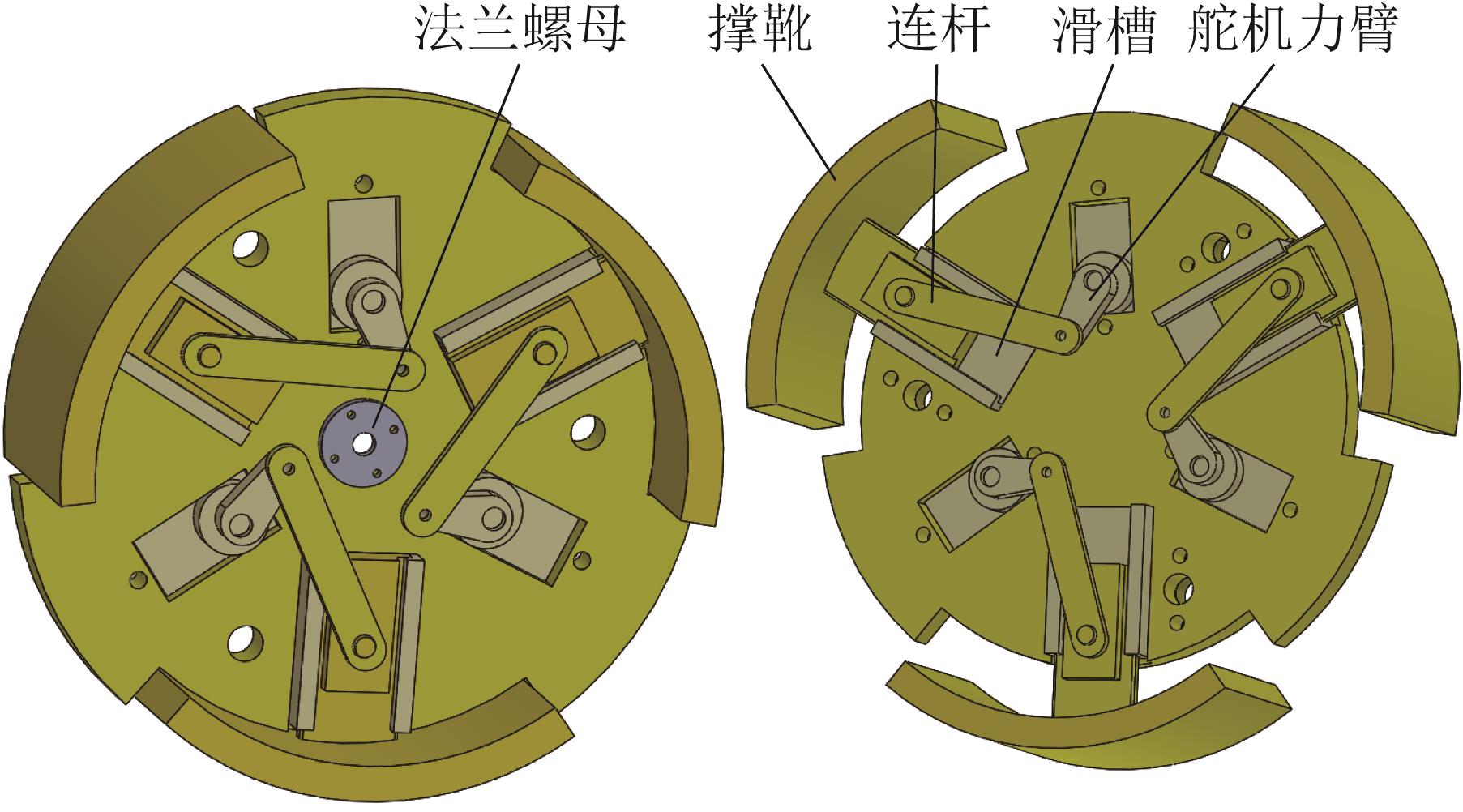
图1  支撑单元结构
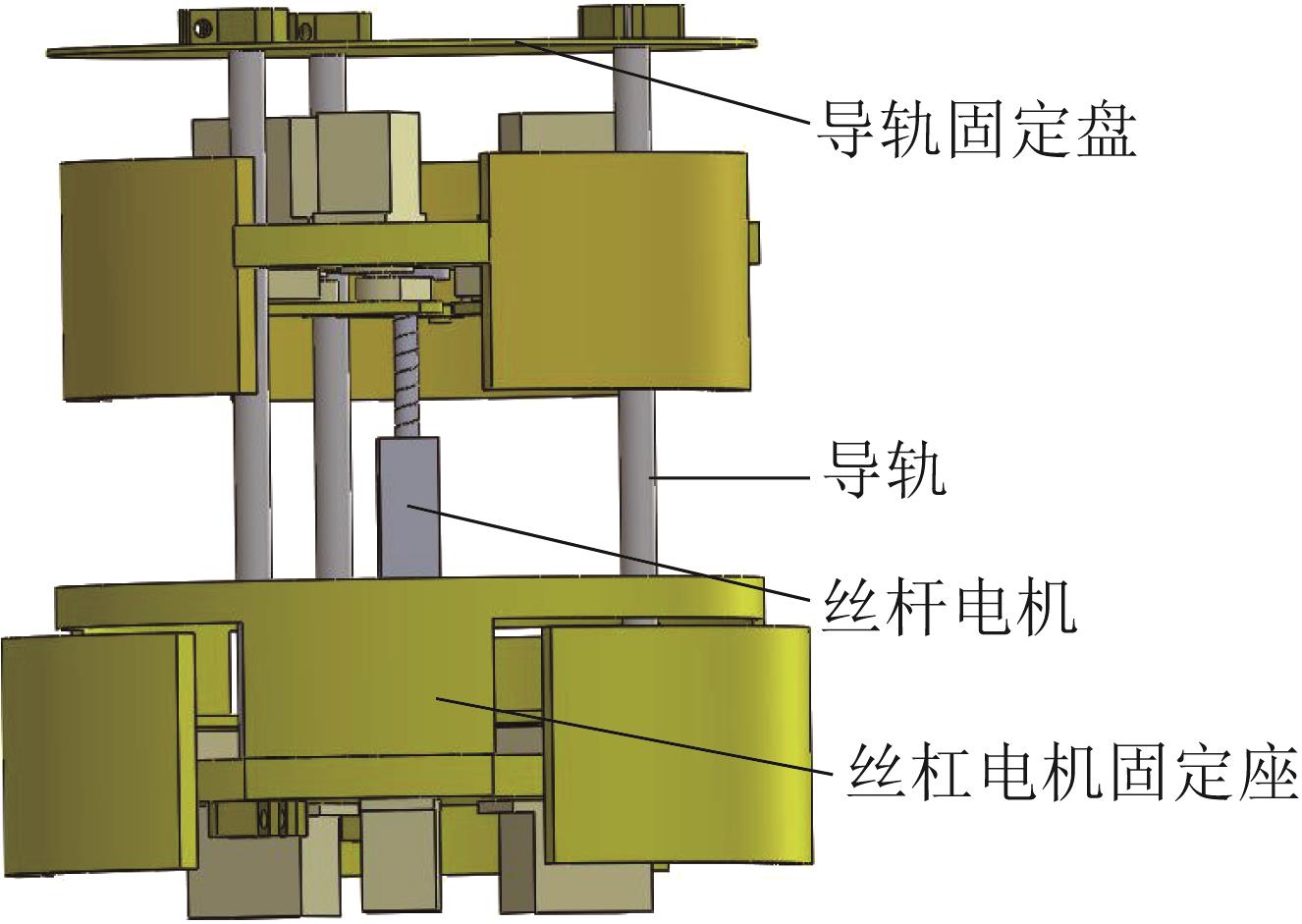
图2  推进单元结构
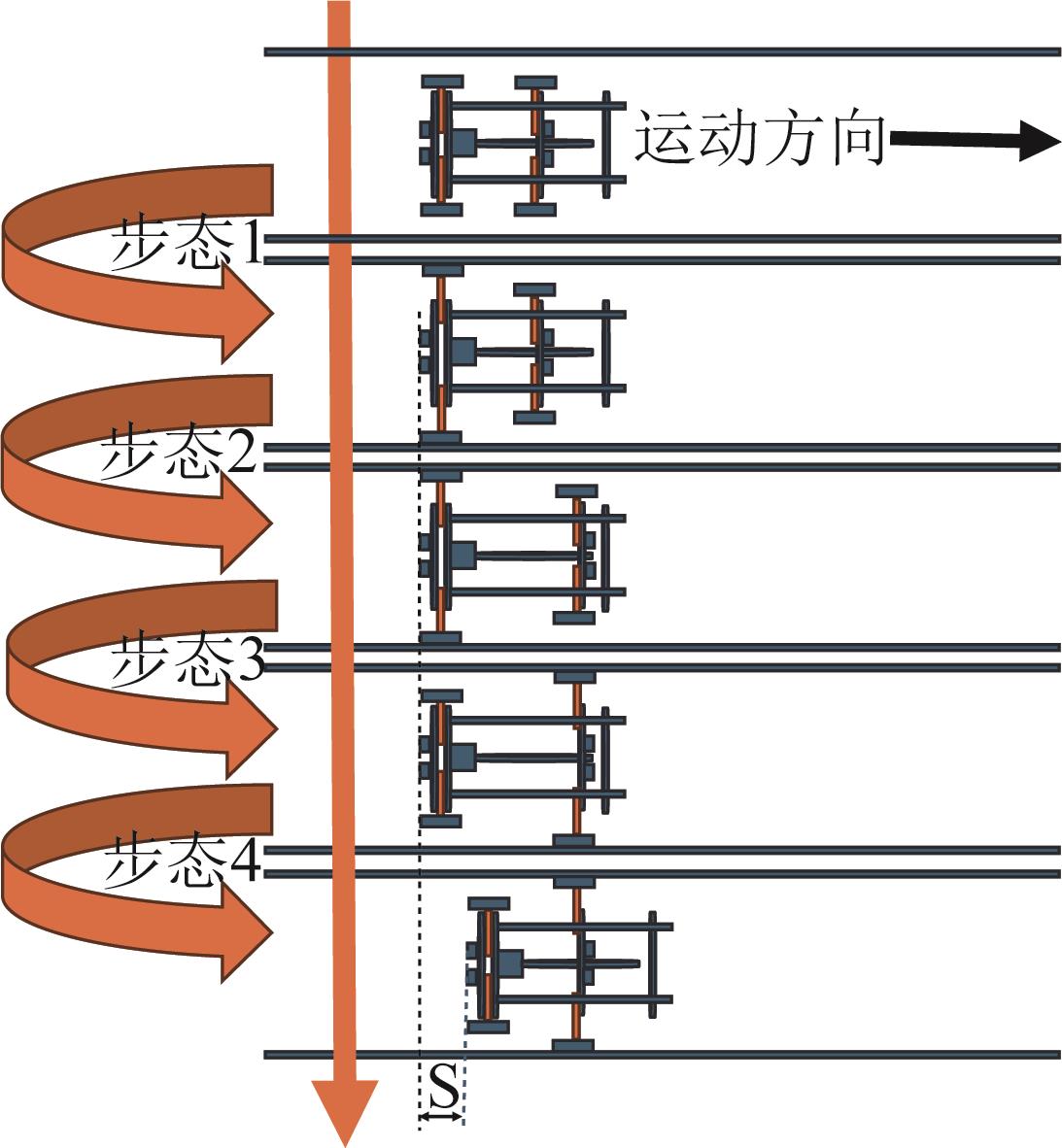
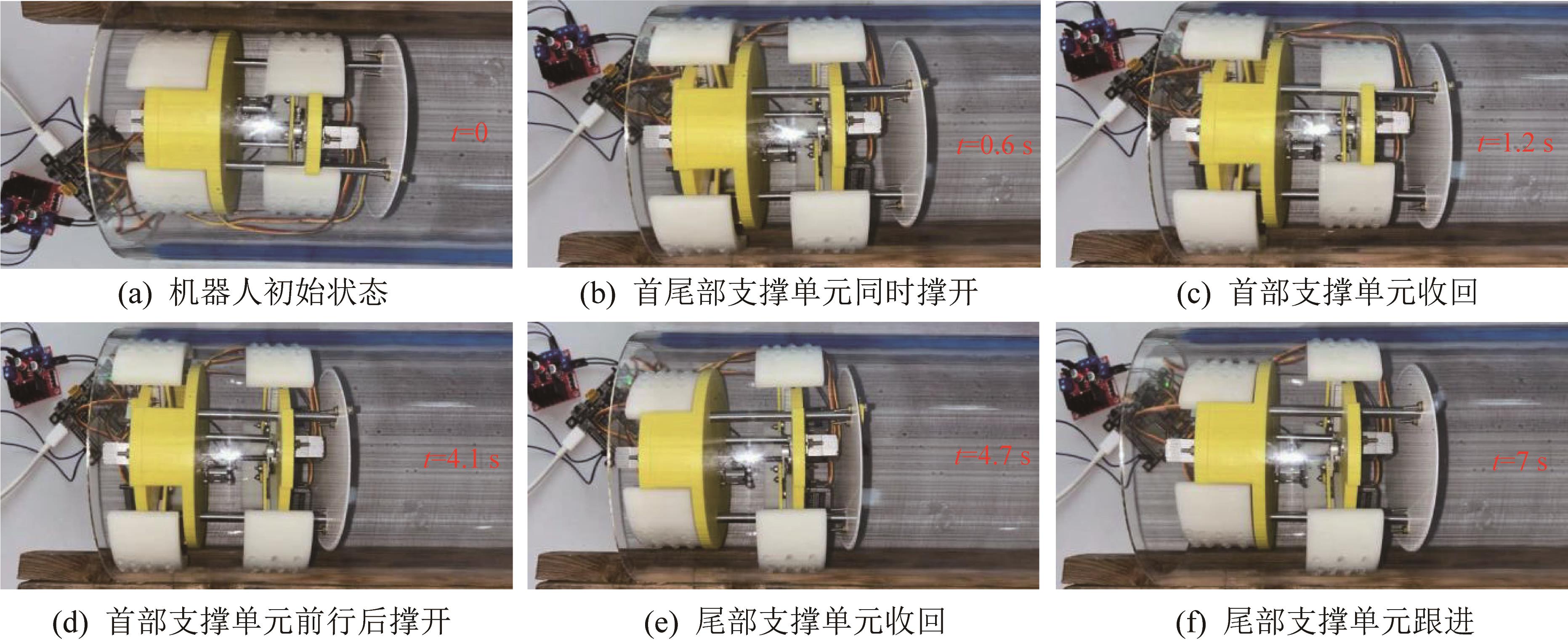
图3  机器人蠕动前行步态
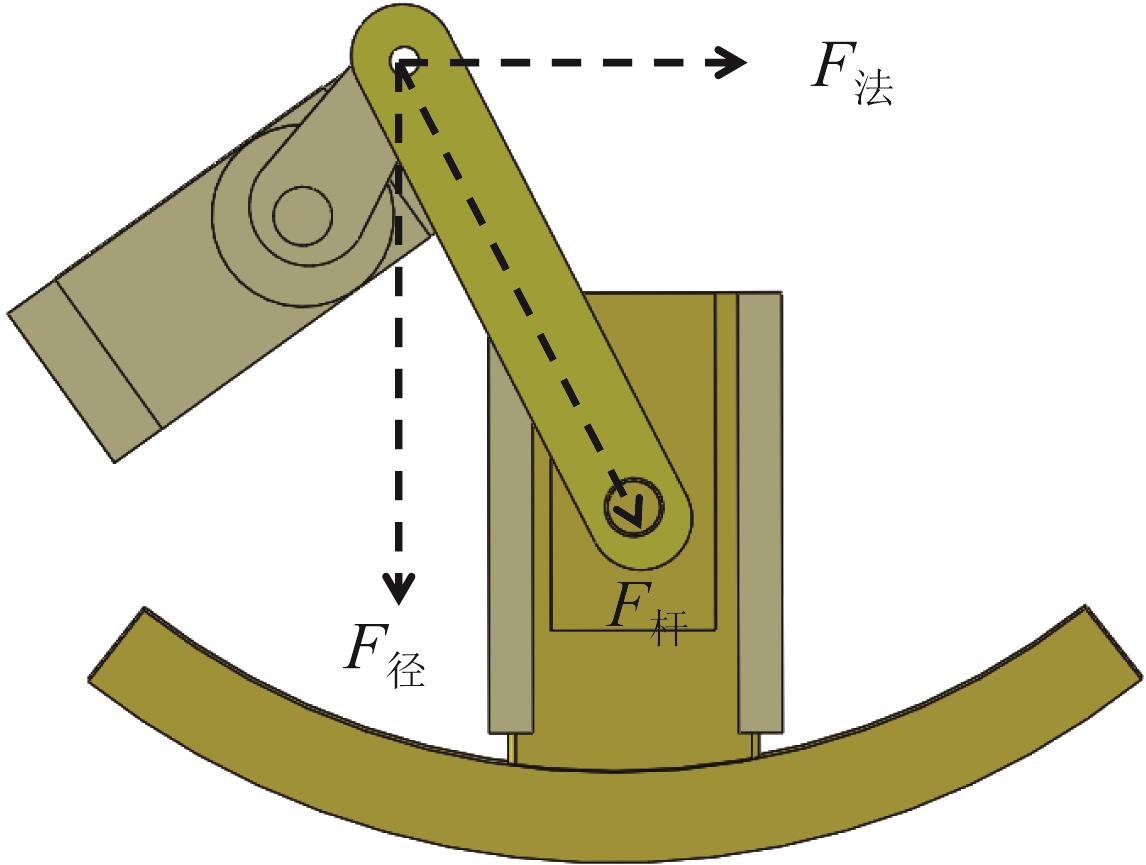
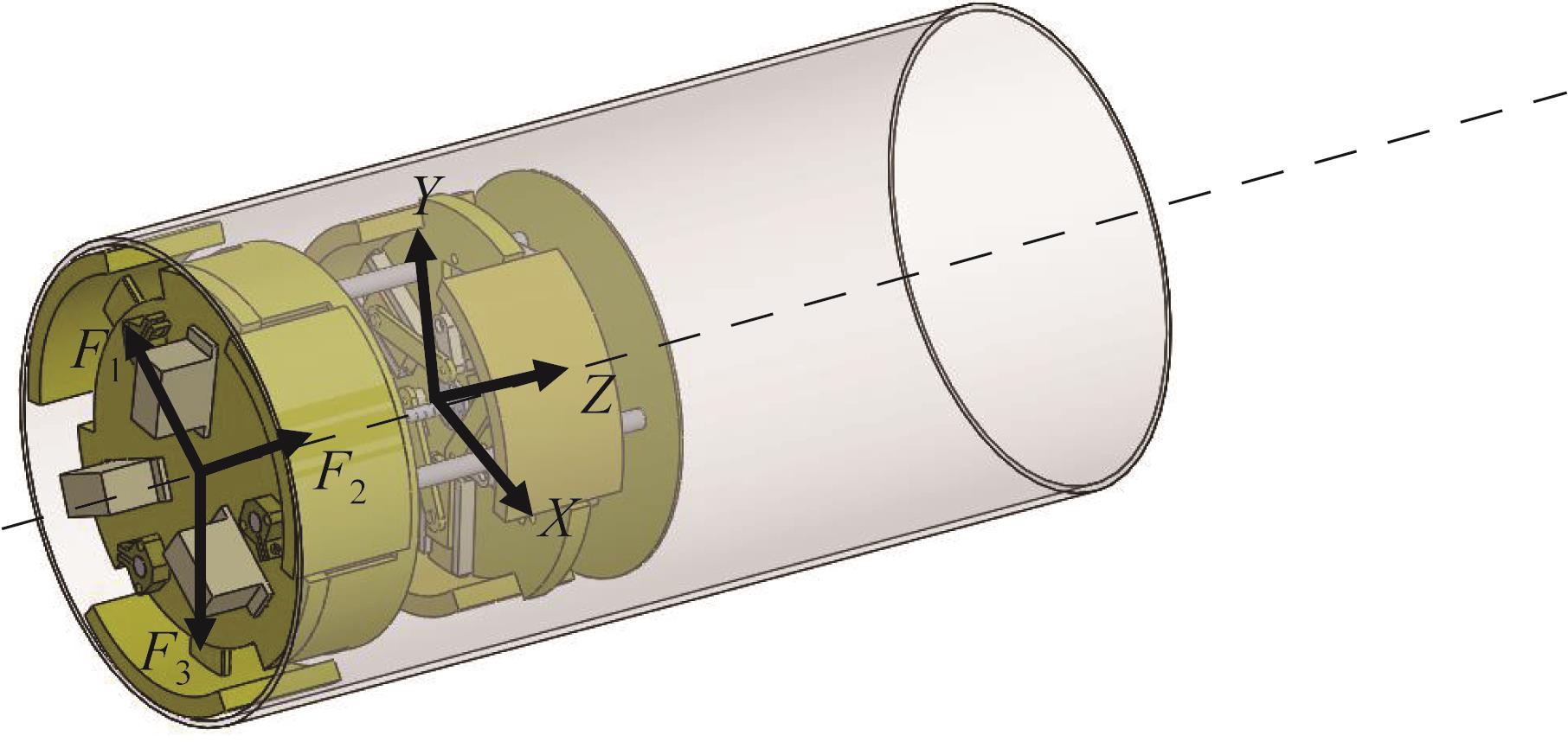
图4  支撑结构受力
图5  机器人轴向受力
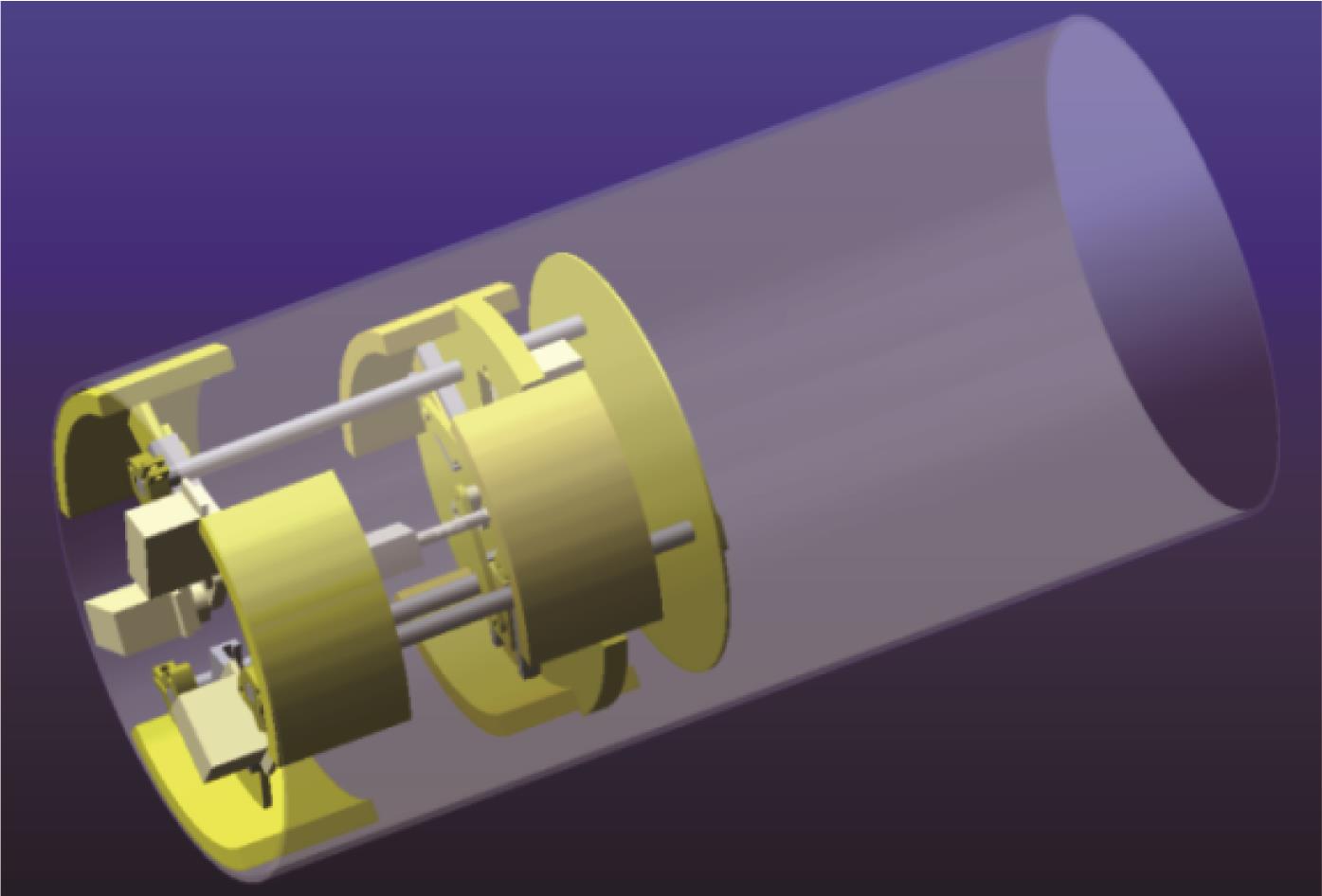
图6  机器人ADAMS仿真环境示意图
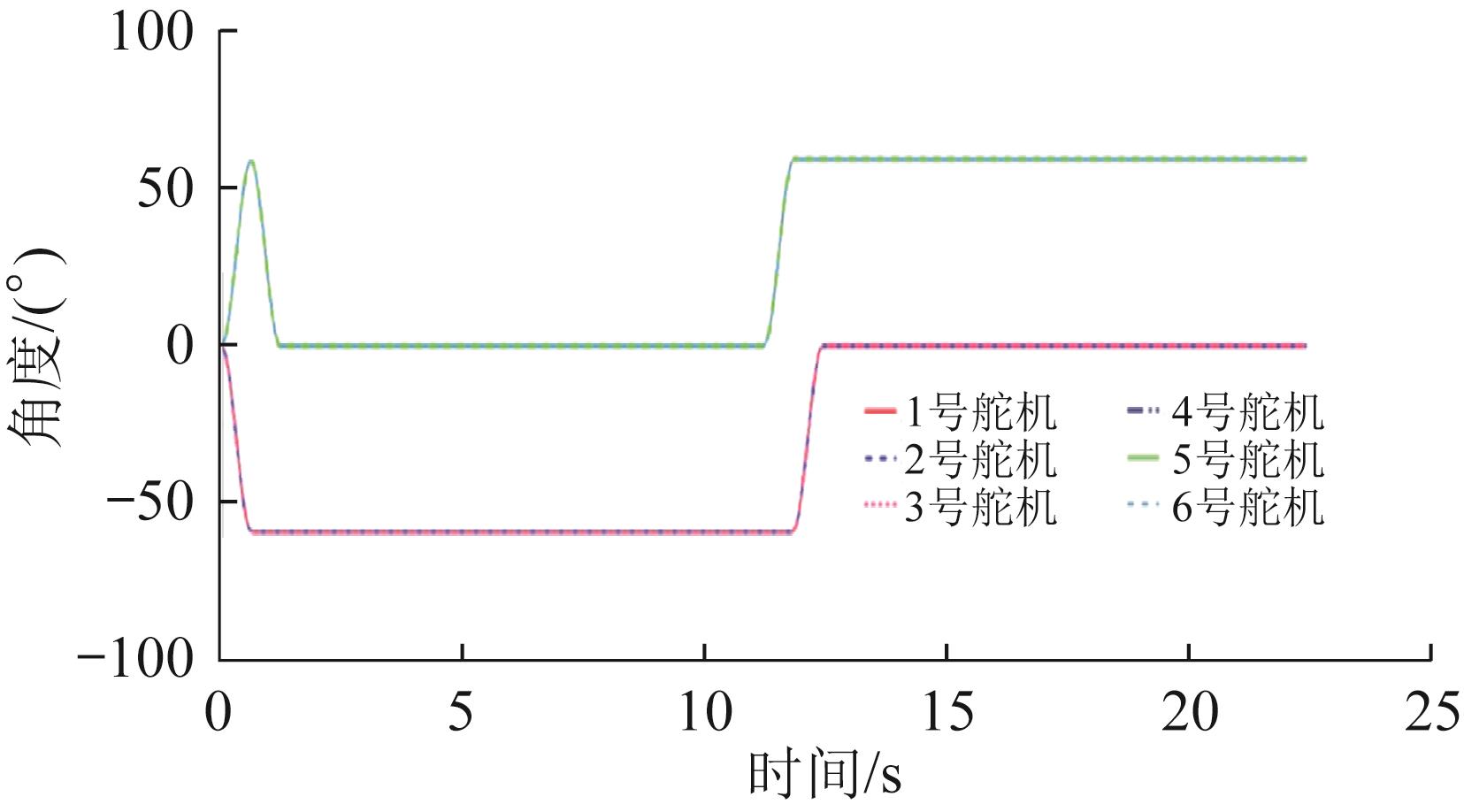
图7  舵机旋转角度
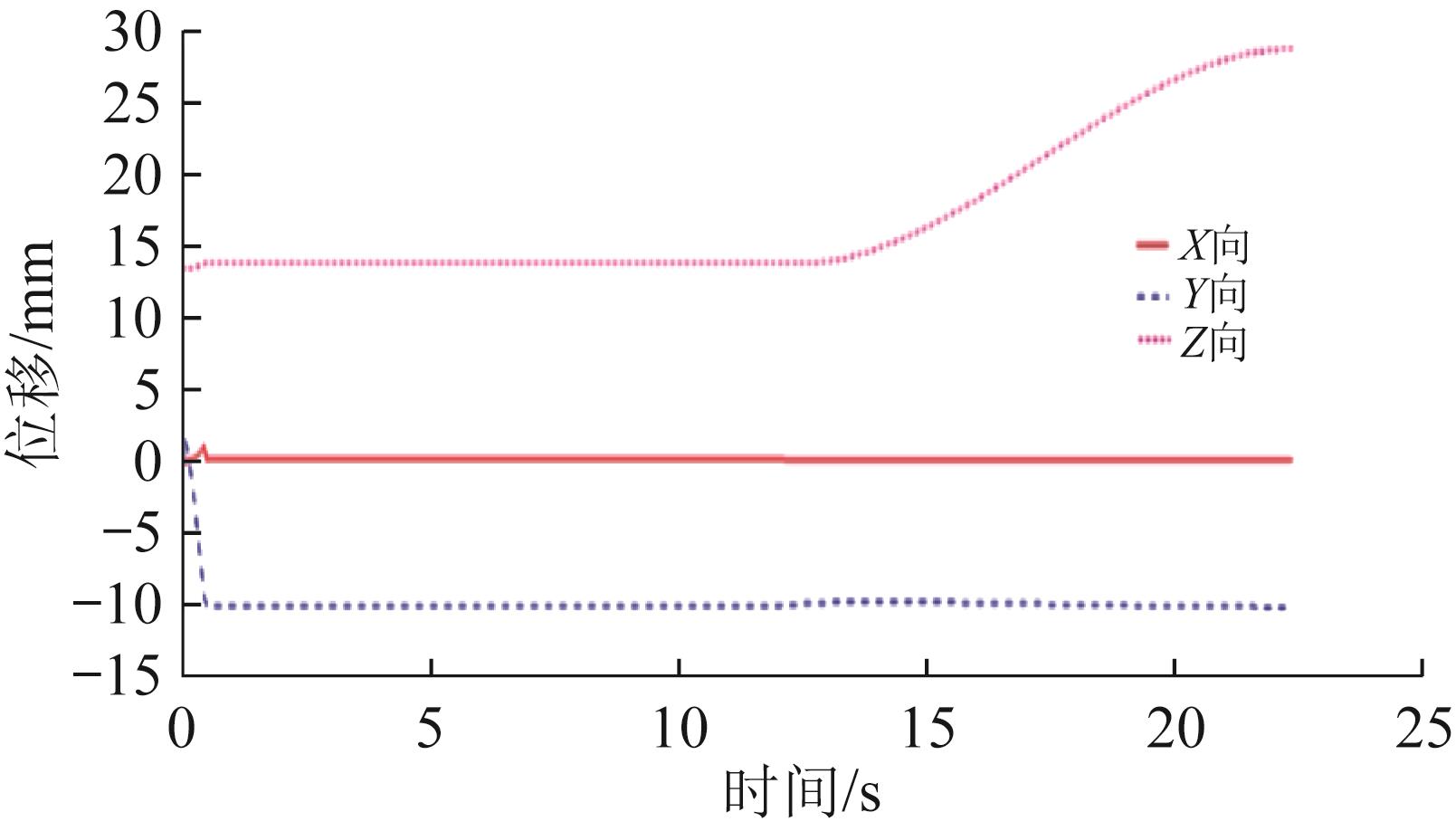
图8  机器人 X 、 Y 、 Z 向位移
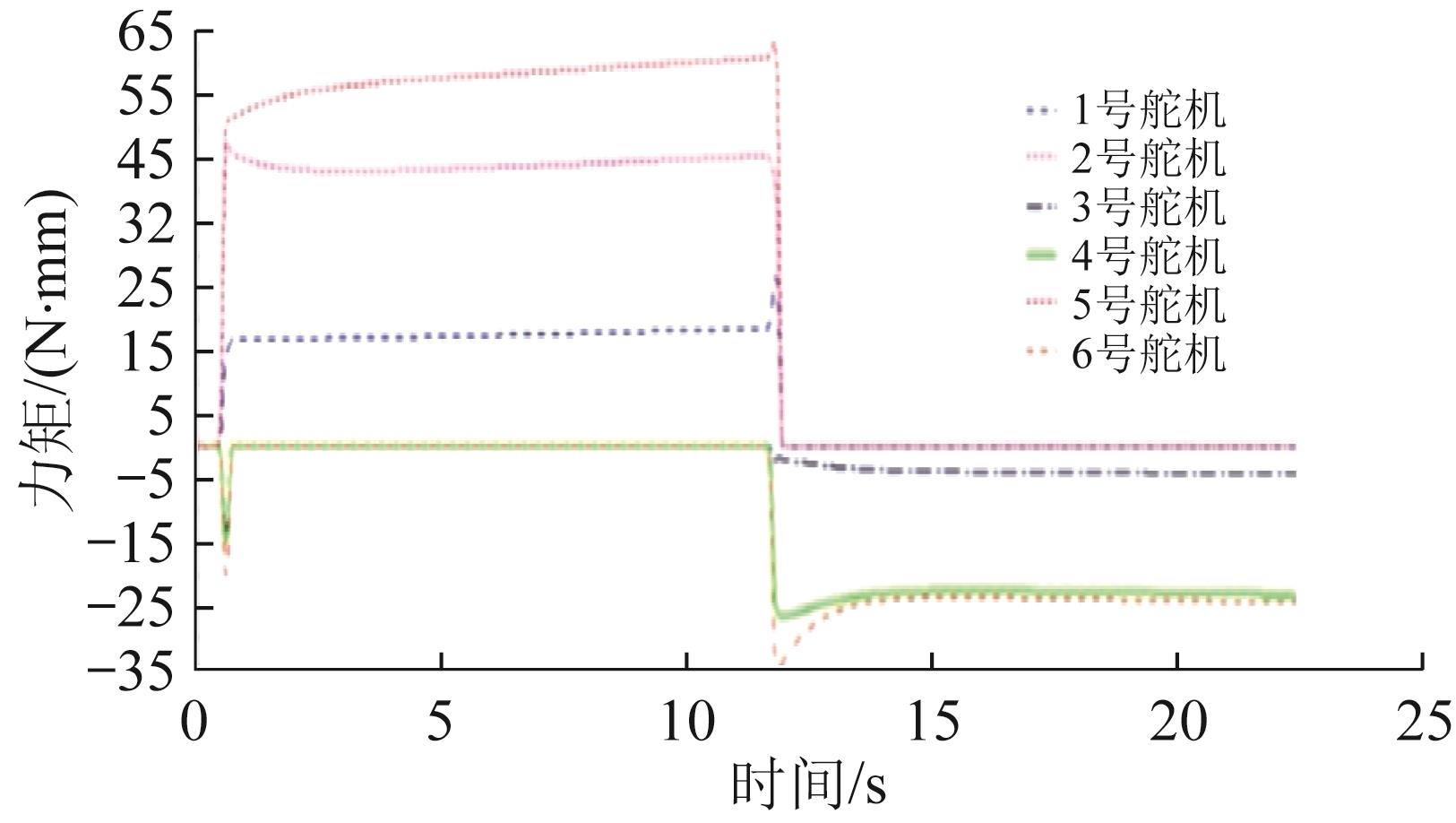
图9  舵机力矩
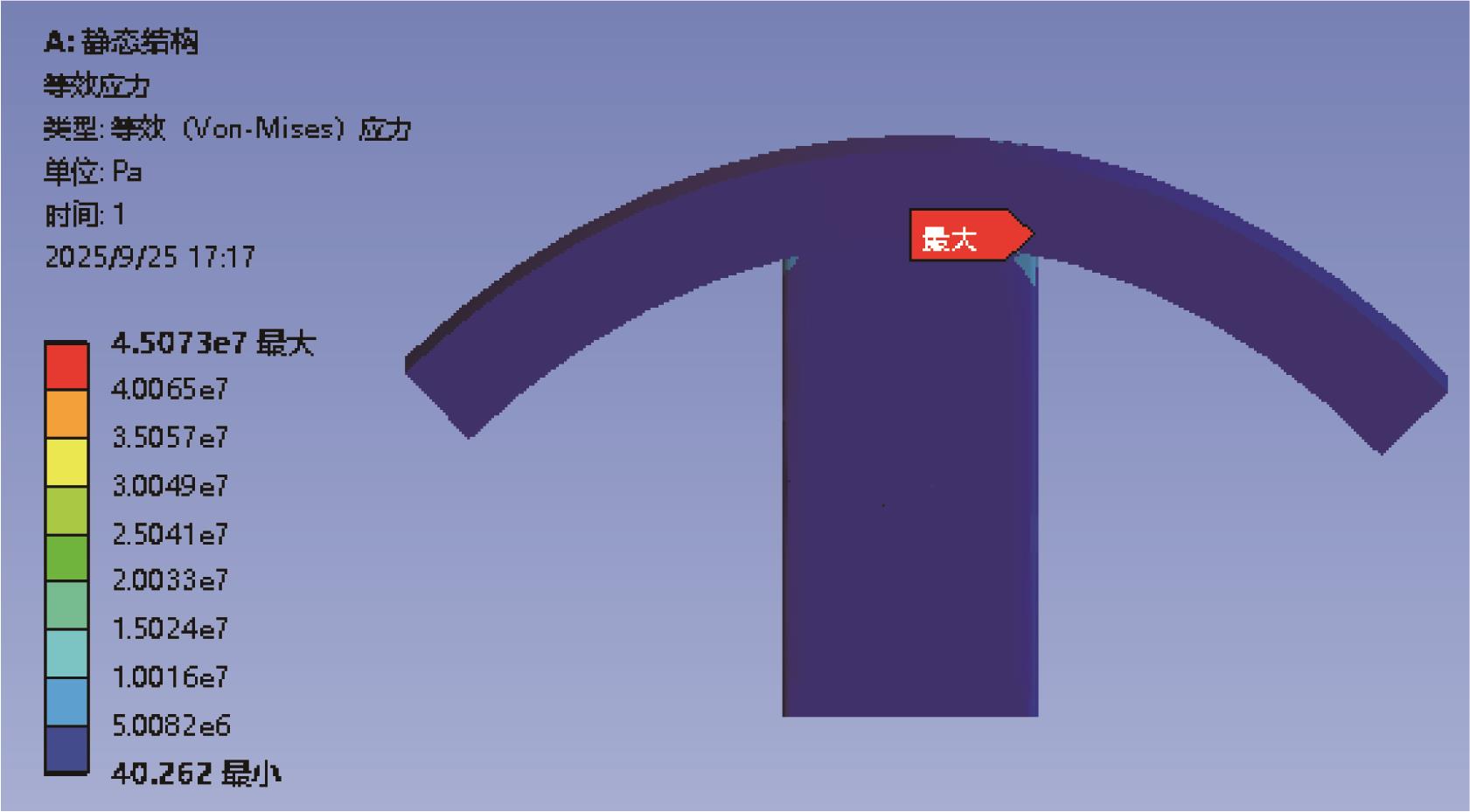
图10  撑靴表面等效应力云图
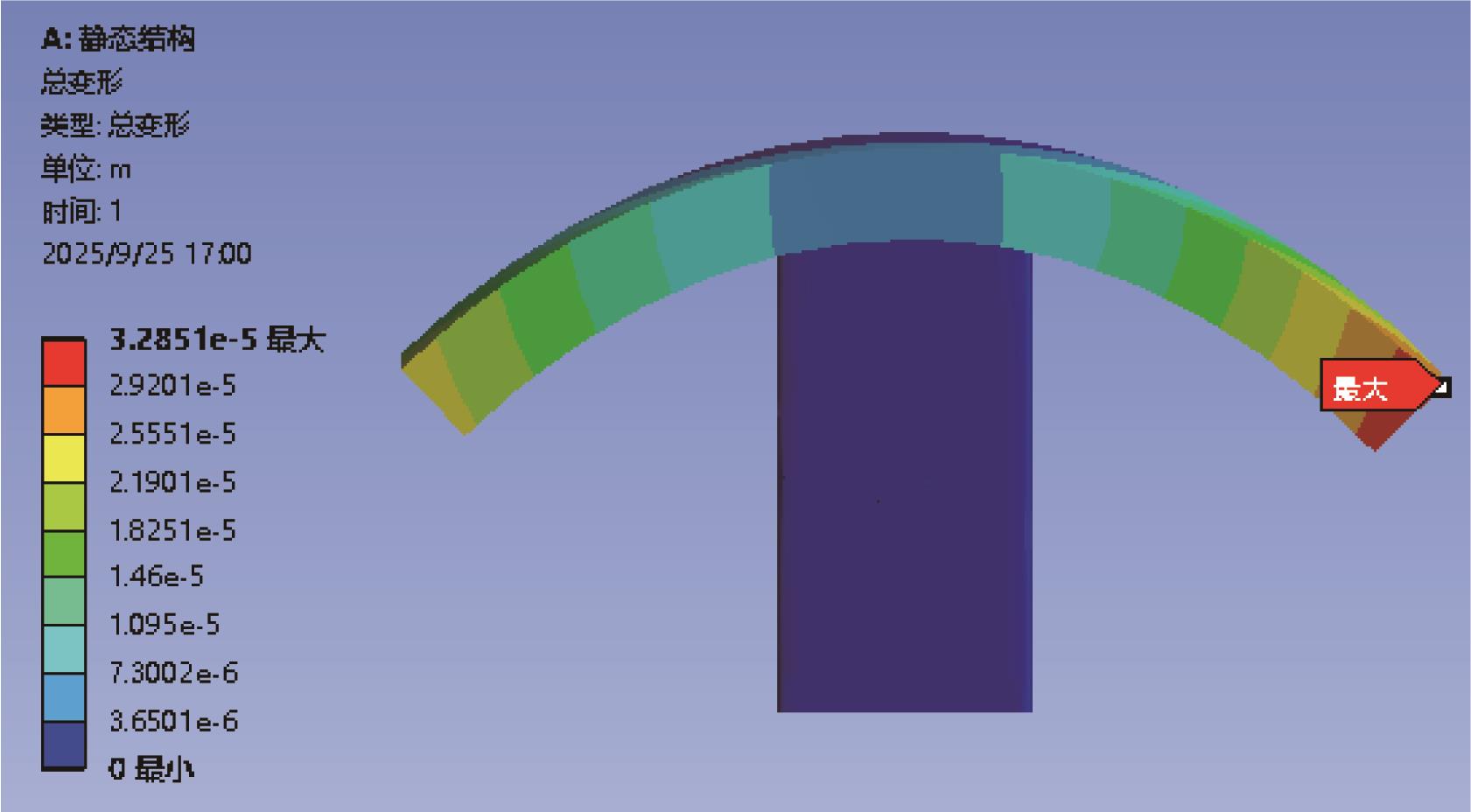
图11  撑靴表面变形云图
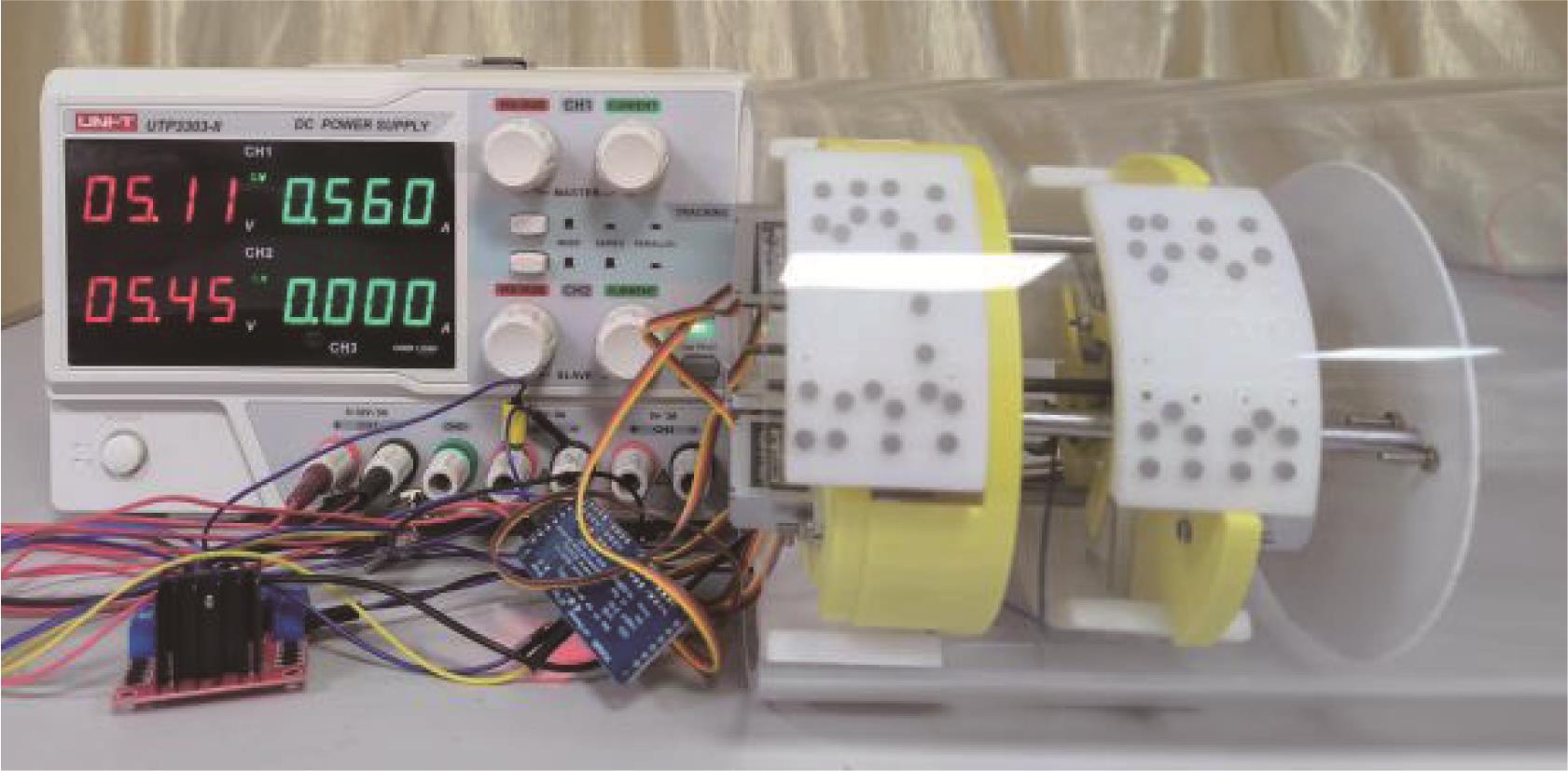
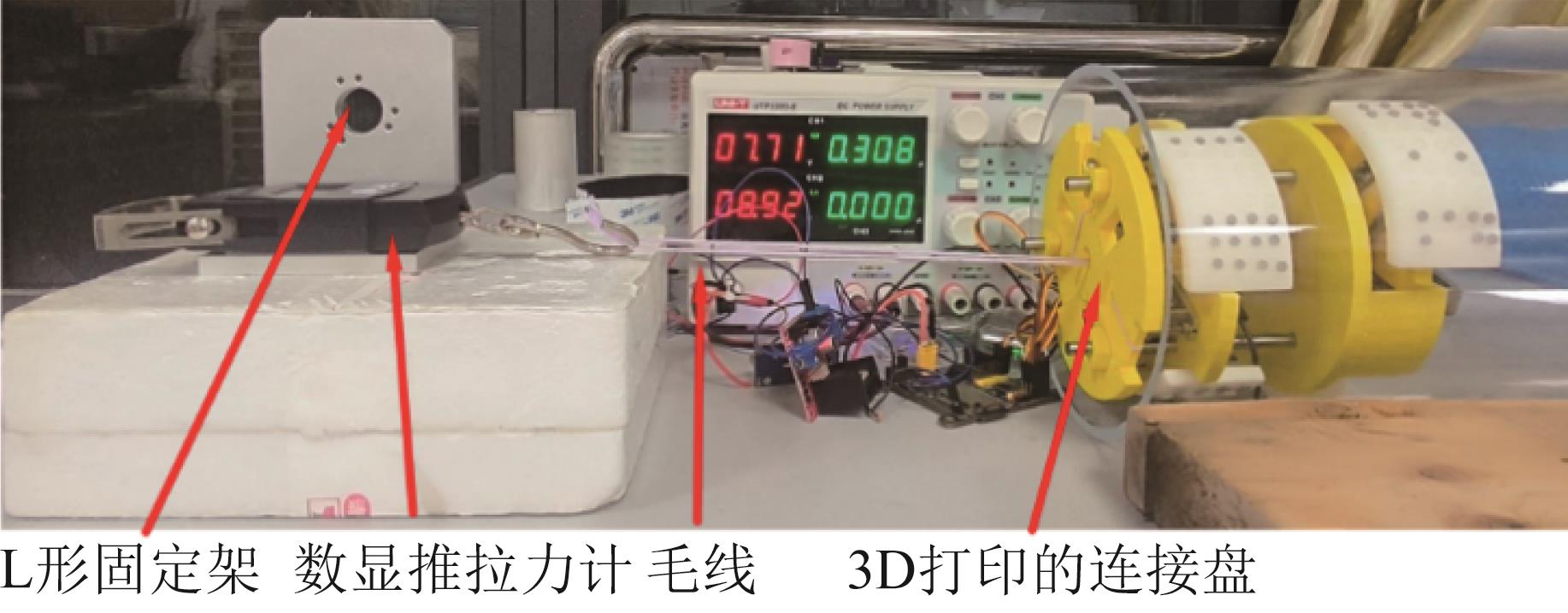
图12  舵机性能测试平台
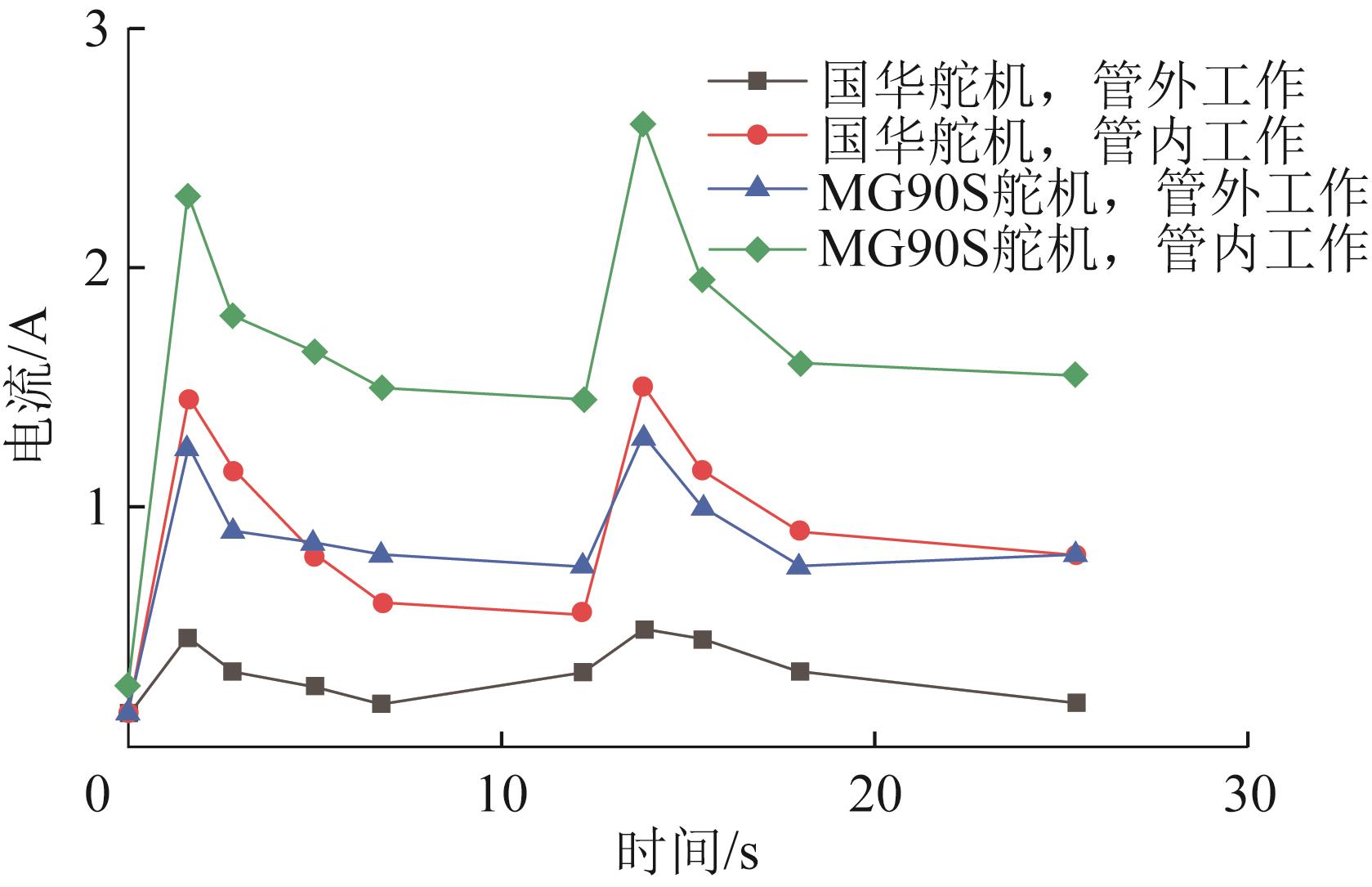
图13  机器人工作时舵机电流变化
图14  支撑单元性能测试平台
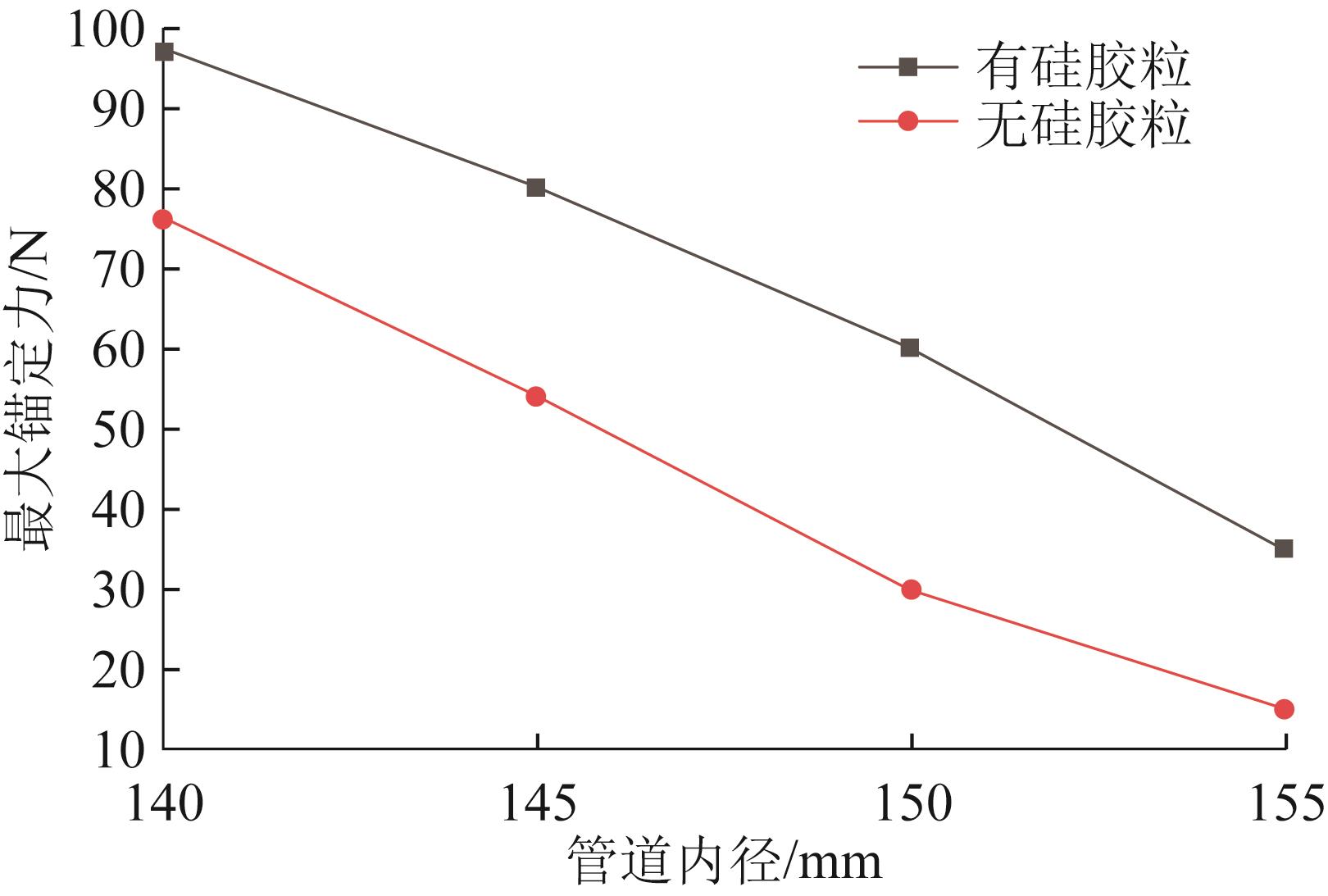
图15  支撑单元最大锚定力与管道内径的关系
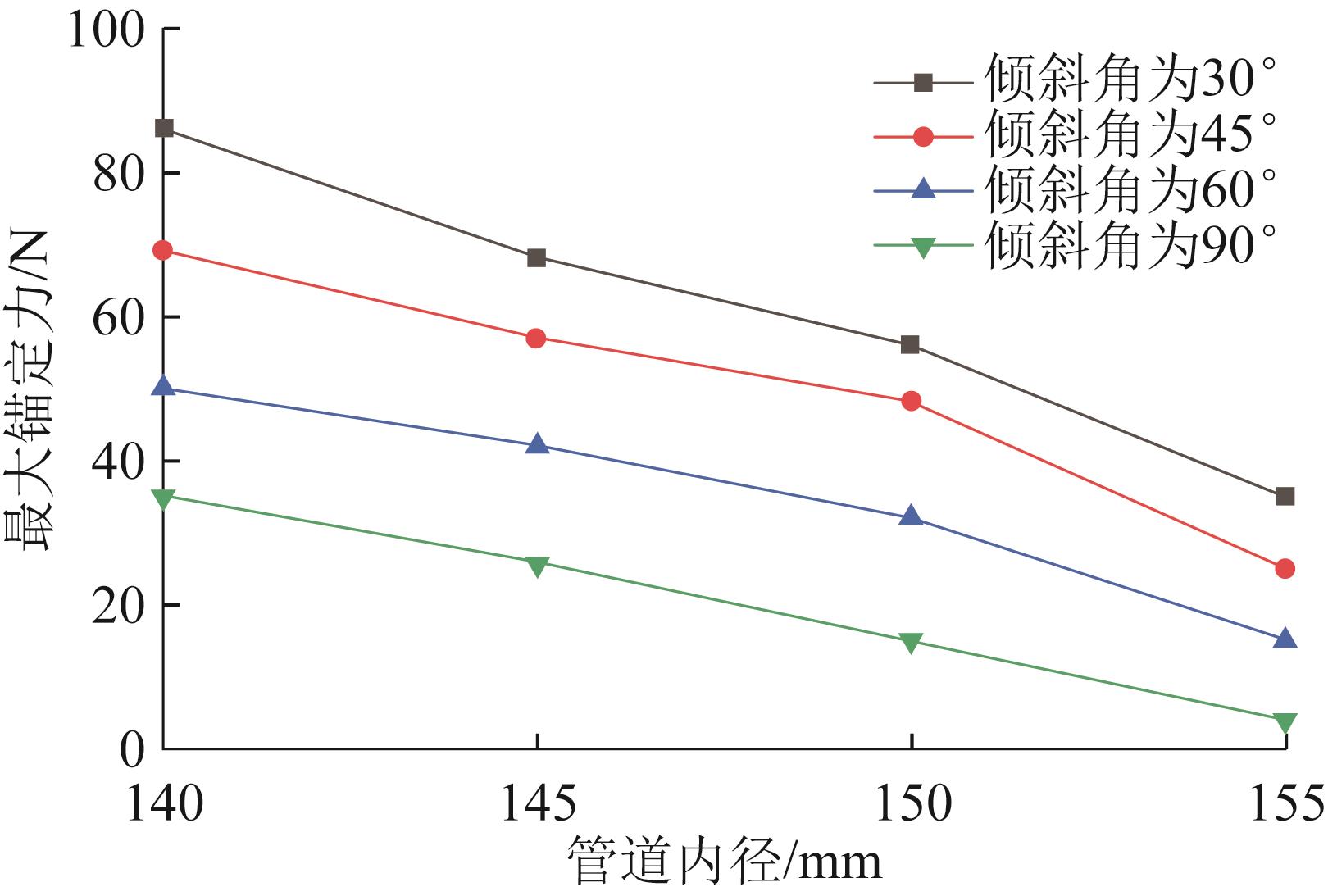
图16  支撑单元最大锚定力与管道倾斜角的关系
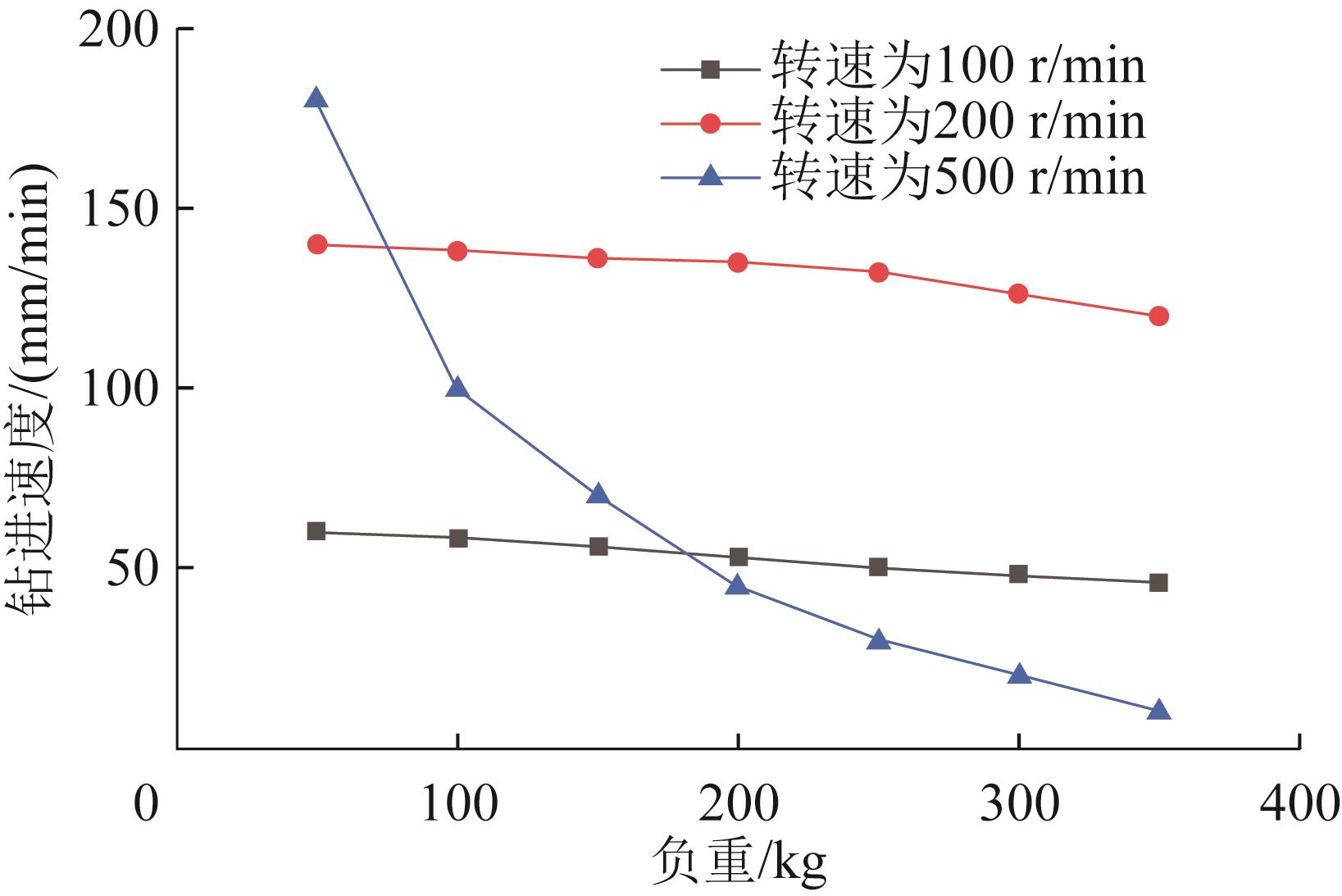
图17  机器人钻进速度与负重的关系
图18  机器人钻进实验
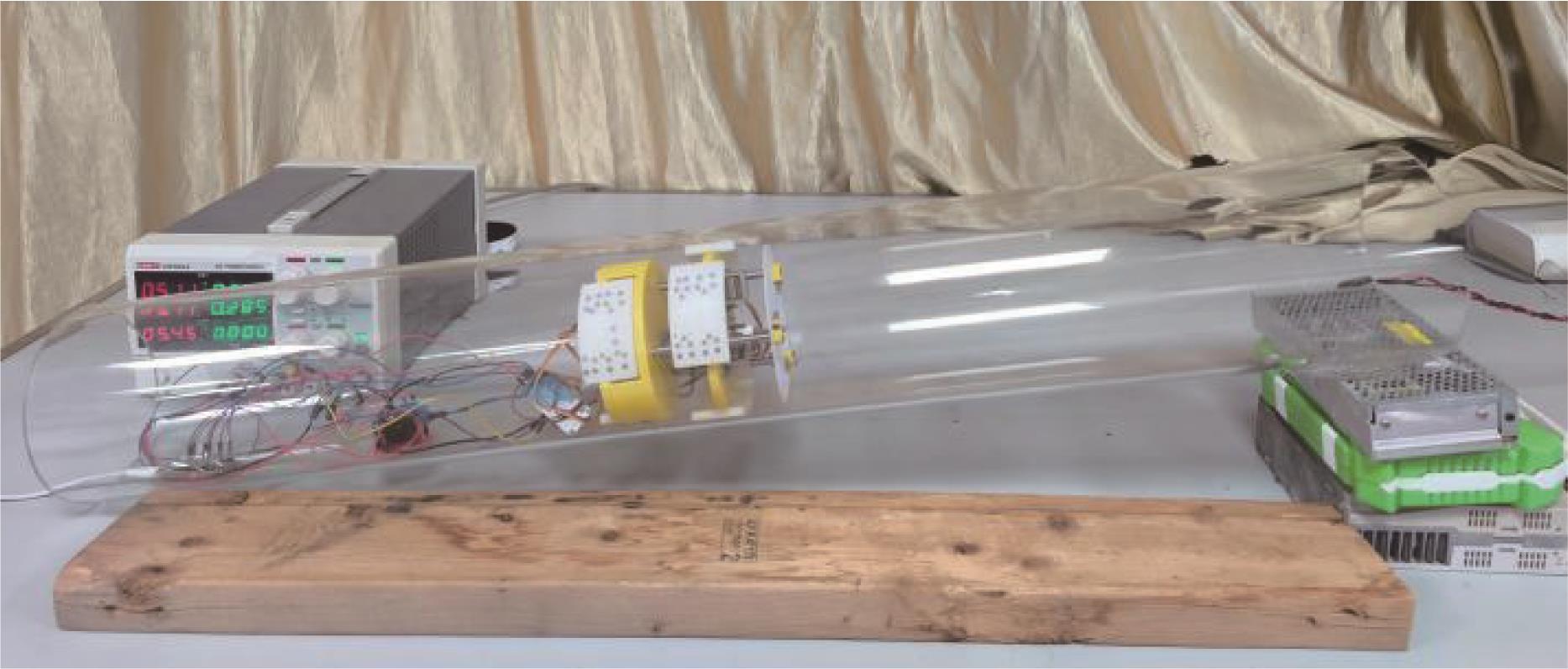
图19  机器人在倾斜管道内双向运动实验
  
  
[1] VERMA A, KAIWART A, DUBEY N D, et al. A review on various types of in-pipe inspection robot[J]. Materials Today: Proceedings, 2022, 50: 1425-1434.
[2] KAHNAMOUEI J T, MOALLEM M. A comprehensive review of in-pipe robots[J]. Ocean Engineering, 2023, 277: 114260.
[3] RUSU C, TATAR M O. Adapting mechanisms for in-pipe inspection robots: a review[J]. Applied Sciences, 2022, 12(12): 6191.
[4] 韩奉林, 费磊, 刘伟. 仿尺蠖软体机器人设计与制造[J]. 机械设计, 2021, 38(9): 15-20.
HAN F L, FEI L, LIU W. Design and manufacture of inchworm-like soft robots[J]. Journal of Machine Design, 2021, 38(9): 15-20.
[5] ZHAO Y W, HUANG H R, YUAN W Z, et al. Worm-inspired, untethered, soft crawling robots for pipe inspections[J]. Soft Robotics, 2024, 11(4): 639-649.
[6] TANG Z J, LU J Q, WANG Z, et al. Development of a new multi-cavity pneumatic-driven earthworm-like soft robot[J]. Robotica, 2020, 38(12): 2290-2304.
[7] ZHANG X H, HUANG M Y, LEI M Y, et al. Improved rapid-expanding-random-tree-based trajectory planning on drill ARM of anchor drilling robots[J]. Machines, 2023, 11(9): 858.
[8] SUN S Y, MAO S R, XUE X S, et al. Research on obstacle-avoidance trajectory planning for drill and anchor materials handling by a mechanical arm on a coal mine drilling and anchoring robot[J]. Sensors, 2024, 24(21): 6866.
[9] LEI M Y, ZHANG X H, YANG W J, et al. High-precision drilling by anchor-drilling robot based on hybrid visual servo control in coal mine[J]. Mathematics, 2024, 12(13): 2059.
[10] JEON K W, JUNG E J, BAE J H, et al. Development of an in-pipe inspection robot for large-diameter water pipes[J]. Sensors, 2024, 24(11): 3470.
[11] KENZHEKHAN A, BAKYTZHANOVA A, OMIRBAYEV S, et al. Design and development of an in-pipe mobile robot for pipeline inspection with AI defect detection system[C]//2023 23rd International Conference on Control, Automation and Systems. IEEE, 2023: 579-584.
[12] DAS R, BABU S P M, VISENTIN F, et al. An earthworm-like modular soft robot for locomotion in multi-terrain environments[J]. Scientific Reports, 2023, 13: 1571.
[13] JUNG J T, REITERER A. Improving sewer damage inspection: development of a deep learning integration concept for a multi-sensor system[J]. Sensors, 2024, 24(23): 7786.
[14] PENG Y H, NABAE H, FUNABORA Y, et al. Controlling a peristaltic robot inspired by inchworms[J]. Biomimetic Intelligence and Robotics, 2024, 4(1): 100146.
[15] 王超, 焦洋, 潘成勇, 等. 排水管道检监测技术、装备及方法综述[J]. 科技和产业, 2025, 25(23): 100-110.
WANG C, JIAO Y, PAN C Y, et al. Review of detection and monitoring technology, equipment and methods of drainage pipeline[J]. Science Technology and Industry, 2025, 25(23): 100-110.
[1] 陈积明,熊浩鑫,程源钒,陈堃,胡俊峰. 基于双稳态结构的仿青蛙游动机器人设计与性能分析[J]. 工程设计学报, 2026, 33(1): 56-64.
[2] 韩伟涛,温涛,刘磊,胡俊峰. 基于Kresling折纸结构的软体管道机器人设计[J]. 工程设计学报, 2025, 32(1): 72-81.
[3] 田立勇,敖华,于宁,唐瑞. 更换托辊机器人履带式底盘的仿真与优化[J]. 工程设计学报, 2024, 31(5): 603-613.
[4] 孙宝印,郝永平,张誉瀚,李子洋. 基于数字孪生的热电池保温棉自动缠绕系统研究[J]. 工程设计学报, 2024, 31(4): 538-546.
[5] 杨开科,罗俊鹏,马文静,耿远超,王德恩,袁强. 高带宽压电片变形镜的动力学仿真与优化方法研究[J]. 工程设计学报, 2024, 31(1): 130-136.
[6] 陈洋, 任成祖, 邓晓帆, 陈光, 靳新民. 基于双盘直槽研磨的圆柱滚子自转运动研究[J]. 工程设计学报, 2021, 28(2): 179-189.
[7] 魏雅君, 邱国梁, 丁广和, 杨亮, 刘桁. 一种重载码垛机器人结构优化设计方法[J]. 工程设计学报, 2020, 27(3): 332-339.
[8] 江漪, 彭飞, 卢屹东, 张瑞龙. 新型平置电动防护门设计和仿真分析[J]. 工程设计学报, 2019, 26(5): 513-519.
[9] 崔雪斌, 张宏, 石涛. 基于链环不均匀系数的履带车辆行驶平顺性分析[J]. 工程设计学报, 2018, 25(1): 71-78.
[10] 陈清华,董长帅,徐曼曼,王开松,王传礼. 矿用液压吊装机变幅机构动力学仿真分析[J]. 工程设计学报, 2015, 22(5): 337-343.
[11] 陈清华,董长帅,徐曼曼,王开松,王传礼. 矿用液压吊装机变幅机构动力学仿真分析[J]. 工程设计学报, 2015, 22(4): 337-343.
[12] 惠记庄, 魏芳胜, 高凯, 丁香. 基于ADAMS的冗余驱动并联机器人动力学仿真研究[J]. 工程设计学报, 2012, 19(5): 362-365.
[13] 方水光, 邵丹璐, 金英连, 王斌锐. 柔性仿人机械臂设计与动力学仿真[J]. 工程设计学报, 2012, 19(4): 307-311.
[14] 赵丽娟, 王乘云. 采煤机截割部建模与动力学仿真研究[J]. 工程设计学报, 2010, 17(2): 119-123.
[15] 王伟, 刘世炳, 陈涛, 左铁钏. 新型无阀微泵扩张微流道中流体动力学特性的仿真分析[J]. 工程设计学报, 2005, 12(4): 223-226.